Reliance Green Energy, RBI Stance Drive Market Today
TABLE OF CONTENTS
- Reading Overview

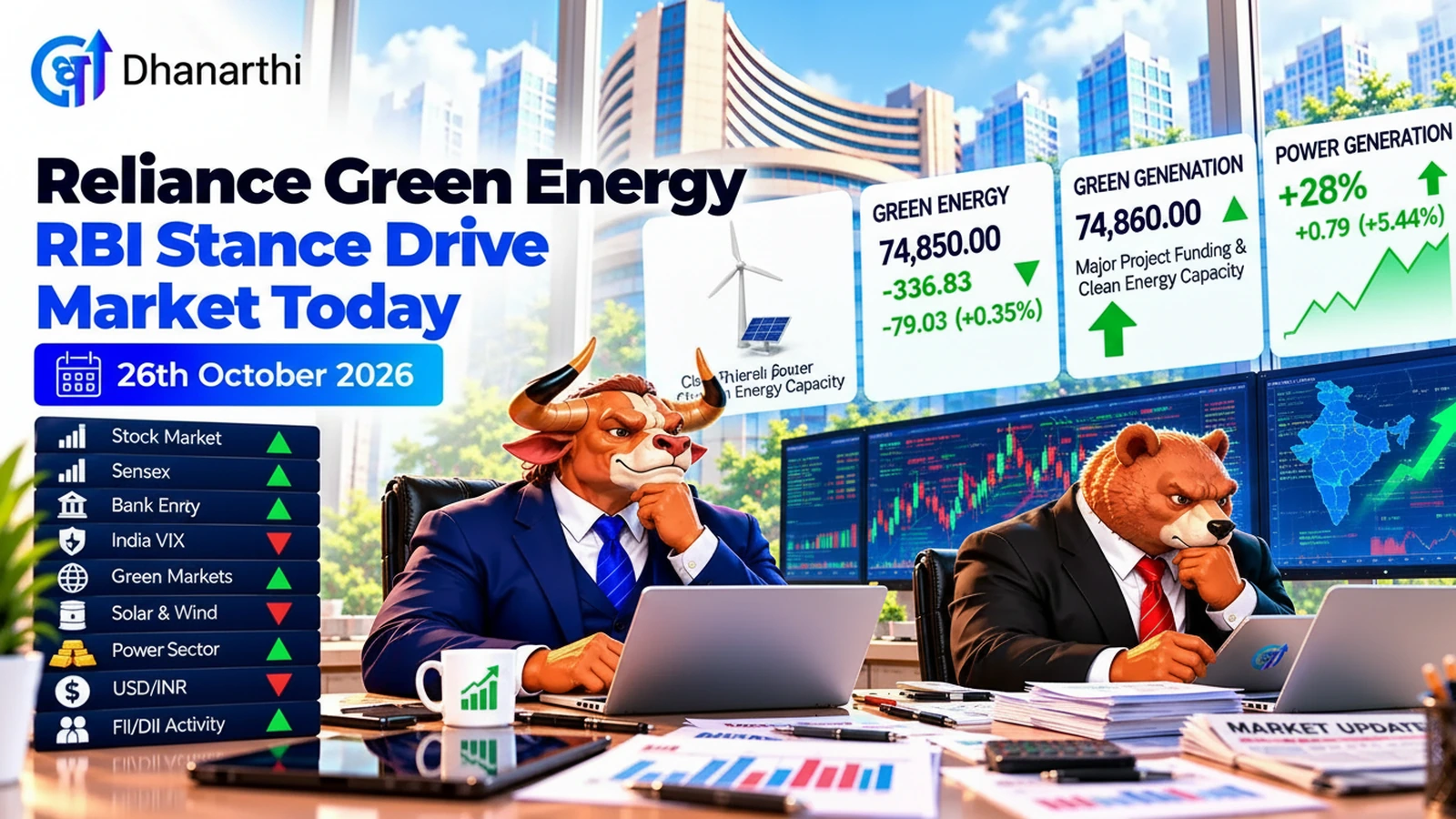
Indian benchmark indices opened lower today, extending previous session losses, as investors digested fresh corporate announcements and macroeconomic signals. Reliance Industries' multi-billion dollar investment in green energy projects provided a significant boost to the conglomerate's shares, while the Reserve Bank of India Governor's hawkish comments on inflation hinted at prolonged elevated interest rates, influencing broader market sentiment. Early trading saw profit booking, with Nifty 50 and Sensex both in negative territory.
Key highlights
- Reliance Industries: Announced a multi-billion dollar investment in a new green hydrogen and solar manufacturing complex in Gujarat, driving its shares higher.
- RBI Governor: Signaled a cautious stance on inflation, indicating that interest rates might remain elevated for longer to bring inflation within target.
- Tata Motors: Secured a substantial order for 1,500 electric buses from the Uttar Pradesh State Road Transport Corporation (UPSRTC).
- Indian Indices: Nifty 50 and Sensex opened lower, extending losses from the previous session amid continued foreign institutional investor (FII) selling.
- Crude Oil: Global Brent crude futures edged higher, trading near $92 per barrel, raising concerns about India's import bill and domestic inflation.
Reliance Industries Unveils Mega Green Energy Investment
Reliance Industries Limited (RIL) is making headlines this morning with the announcement of a significant multi-billion dollar investment aimed at bolstering its green energy ambitions. The conglomerate plans to establish a new, state-of-the-art green hydrogen and solar manufacturing complex in Jamnagar, Gujarat. This strategic move is a crucial step towards RIL's ambitious target of achieving net-zero carbon emissions by 2030 and solidifying its position in the rapidly expanding renewable energy sector.
What happened
According to an official company statement released early today and subsequently filed with the National Stock Exchange (NSE), the new complex will integrate advanced manufacturing facilities for electrolysers, fuel cells, and solar photovoltaic modules. The investment underscores RIL's commitment to developing a comprehensive green energy ecosystem, from production to deployment. The project is expected to create thousands of direct and indirect jobs, contributing significantly to local employment and economic growth in the region.
Why it matters
This massive investment is poised to have a multi-faceted impact. For Reliance Industries, it reinforces its diversification strategy beyond traditional oil-to-chemicals businesses and positions it as a key player in India's energy transition. For the broader Indian economy, it represents a substantial boost to the domestic manufacturing of critical renewable energy components, reducing reliance on imports and enhancing energy security. The move also aligns with the Indian government's push for green energy adoption and could attract further foreign investment into the sector. RIL shares reacted positively to the news, opening higher on the bourses, reflecting investor confidence in the company's long-term growth trajectory in the green energy space.
RBI Governor Signals Prolonged Hawkish Stance on Inflation
The Reserve Bank of India (RBI) Governor delivered a cautious message on inflation this morning, indicating that the central bank might maintain its hawkish monetary policy stance for a longer duration than previously anticipated. In an early address, the Governor reiterated the RBI's unwavering commitment to bringing retail inflation within its mandated target band of 2-6%.
What happened
The Governor highlighted persistent inflationary pressures, particularly stemming from volatile food prices and elevated global commodity costs, including crude oil. While acknowledging India's robust economic growth, he emphasized that these inflationary headwinds necessitate a continued "withdrawal of accommodation" in monetary policy. This statement suggests that the current high interest rate regime could persist, with any rate cuts potentially pushed further into the future. The RBI's primary focus remains on anchoring inflation expectations and ensuring price stability, which is deemed crucial for sustainable long-term economic growth.
Why it matters
This hawkish commentary from the RBI Governor has significant implications for Indian markets and the economy. For businesses, particularly those reliant on borrowing, the prospect of prolonged high interest rates could translate into higher financing costs, potentially impacting investment decisions and profitability. Consumers might also face higher loan EMIs and reduced purchasing power. The banking sector, while benefiting from higher net interest margins in the short term, could eventually see an uptick in non-performing assets if economic activity slows significantly. The market reacted with a degree of caution, as the comments reinforce expectations of a tight liquidity environment, which can weigh on equity valuations, especially for growth-oriented sectors.
More stocks and market news
Tata Motors: Major Electric Bus Order Win
Tata Motors (Commercial Vehicles Business Unit) announced today that it has secured a substantial order for 1,500 electric buses from the Uttar Pradesh State Road Transport Corporation (UPSRTC). The comprehensive order includes the supply, operation, and maintenance of these electric buses for a period of 12 years. This significant win further solidifies Tata Motors' leadership in India's electric mobility segment and supports the government's initiatives to promote green public transportation across states. The company's shares were in focus following the announcement, reflecting positive investor sentiment towards its EV growth strategy.
Indian Market Opens Lower Amid FII Selling
Indian benchmark indices, Nifty 50 and Sensex, opened marginally lower today, extending the downward trend observed in the previous session. Early trading saw profit booking across various sectors, contributing to the cautious market sentiment. Foreign Institutional Investors (FIIs) continued their selling spree, remaining net sellers in the Indian equity markets during the last trading session. This sustained outflow of foreign capital has been a contributing factor to the recent volatility and downward pressure on the broader market.
Crude Oil Prices Edge Higher on Global Tensions
Global crude oil prices, specifically Brent futures, witnessed an uptick overnight and in early Asian trade, with prices hovering around $92 per barrel. The rise is primarily attributed to escalating geopolitical tensions in the Middle East and concerns over potential supply disruptions from key oil-producing regions. Elevated crude oil prices pose a significant challenge for India, a major oil importer, as they can inflate the country's import bill, widen the current account deficit, and exert upward pressure on domestic inflation, impacting consumer spending and corporate input costs.
Market context
As of 10:00 AM IST on October 26, 2026, the Nifty 50 was trading around 22,580, down approximately 0.4%, while the Sensex was at 74,850, also showing a decline of about 0.35%. The broader market saw midcap and smallcap indices under pressure. India VIX, the volatility index, edged higher, signaling increased investor anxiety. Global markets presented a mixed picture, with Asian peers largely flat to negative, influenced by global economic uncertainties and commodity price movements. Brent crude futures were trading near $92 per barrel, and the Indian Rupee showed minor depreciation against the US Dollar.
Why these stories matter
Today's market movements are a direct reflection of a confluence of corporate strategy, macroeconomic policy, and global factors. Reliance's green energy investment highlights the growing importance of ESG (Environmental, Social, and Governance) factors and India's commitment to renewable energy, potentially attracting long-term capital. The RBI's hawkish stance underscores the persistent challenge of inflation, which dictates the cost of capital and consumer spending, impacting earnings across sectors. Tata Motors' EV order reinforces the accelerating shift towards electric mobility in India's public transport, creating opportunities for ancillary industries. The overall market sentiment, influenced by FII flows and crude oil prices, remains crucial for short-term trading and investor confidence.
What to watch next
- Reliance Industries: Further details on project timelines and funding for the green energy complex.
- RBI: Upcoming inflation data releases and any subsequent statements from monetary policy committee members for clues on future rate actions.
- Tata Motors: Execution of the electric bus order and potential for similar large-scale orders from other state transport undertakings.
- FII Flows: Continued monitoring of foreign institutional investment trends for signs of reversal or sustained selling pressure.
- Global Crude Oil: Developments in geopolitical situations that could impact oil supply and prices.
Sources
- NSE India: Reliance Industries Ltd. Announcements
- Reserve Bank of India: Press Releases
- BSE India: Tata Motors Ltd. Announcements
FAQ
1. What is Reliance Industries' latest investment?
Reliance Industries Limited (RIL) has announced a multi-billion dollar investment to establish a new green hydrogen and solar manufacturing complex in Jamnagar, Gujarat. This project aims to boost India's renewable energy capacity and support RIL's net-zero carbon emissions goal by 2030.
2. What is the RBI's current stance on inflation and interest rates?
The RBI Governor has signaled a hawkish stance on inflation, indicating that interest rates might remain elevated for a longer period to bring retail inflation within the target band of 2-6%. This suggests a continued "withdrawal of accommodation" in monetary policy.
3. Which company secured a large electric bus order today?
Tata Motors (Commercial Vehicles Business Unit) has secured a significant order for 1,500 electric buses from the Uttar Pradesh State Road Transport Corporation (UPSRTC), including supply, operation, and maintenance for 12 years.
4. Why are Indian markets trading lower today?
Indian markets opened lower today due to profit booking across various sectors and continued selling by Foreign Institutional Investors (FIIs) in the previous session. Cautious sentiment also stems from the RBI's hawkish inflation outlook and rising crude oil prices.
5. How do rising crude oil prices affect India?
Rising crude oil prices negatively impact India, a major oil importer, by increasing its import bill, potentially widening the current account deficit, and fueling domestic inflation. This can lead to higher input costs for businesses and reduced consumer purchasing power.
Disclaimer
Disclaimer: This article is for educational purposes only. It does not constitute investment advice. Please consult a SEBI-registered financial advisor before making investment decisions.