Infosys Secures Major Deal, RBI Tightens Unsecured Loan Norms as Nifty Extends Losses
TABLE OF CONTENTS
- Reading Overview

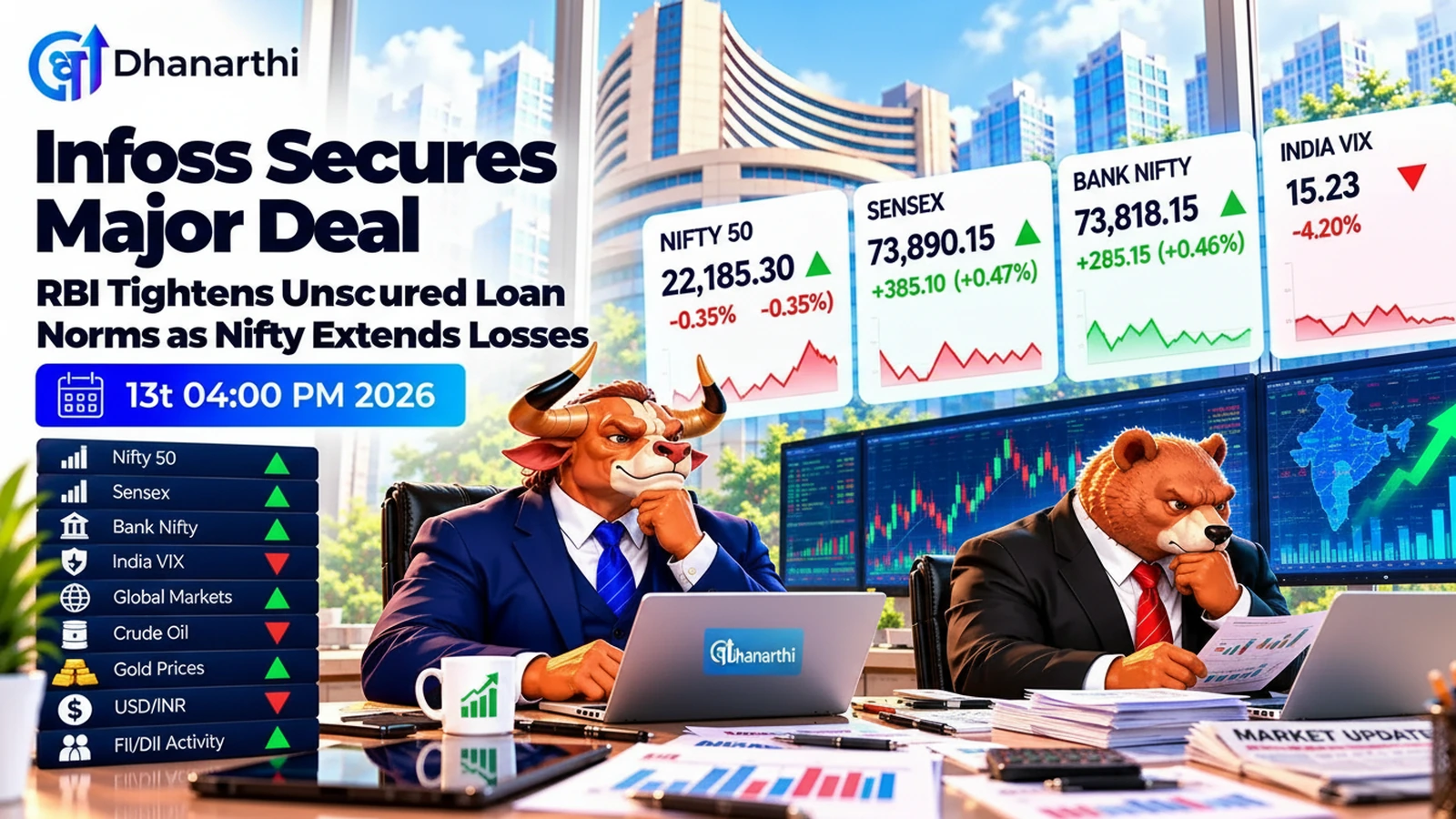
Indian markets witnessed a mixed trend this afternoon, with the Nifty 50 extending losses for a third consecutive session amidst sustained foreign institutional investor (FII) selling, while specific sectors saw upward momentum. Technology major Infosys announced a significant multi-year deal valued at over $1.2 billion, propelling its shares higher and providing a boost to the IT sector. Concurrently, the Reserve Bank of India (RBI) introduced stricter provisioning norms for unsecured retail loans, a move expected to impact the lending strategies of banks and NBFCs.
Key highlights
- Infosys: Shares surged over 3.5% after securing a major $1.25 billion digital transformation deal with a global automotive client.
- RBI Policy: The central bank mandated higher risk weights for unsecured retail loans, including personal loans and credit cards, for banks and NBFCs.
- Nifty 50: The benchmark index declined by 0.45% to close at 22,185, marking its third straight day of losses, primarily due to FII outflows.
- Crude Oil: Brent crude futures climbed above $95 per barrel, raising concerns about India's import bill and potential inflationary pressures.
- Tata Motors: Stock gained 2.1% following positive reports on strong festive season sales, particularly for its electric vehicle (EV) segment.
Infosys Bags $1.25 Billion Deal, Boosts IT Sector Sentiment
Infosys Ltd. saw its shares jump over 3.5% on Tuesday afternoon, closing at ₹1,685.50 on the NSE, following the announcement of a substantial new deal win. The Bengaluru-based IT services giant confirmed a multi-year digital transformation contract with a leading global automotive manufacturer, valued at approximately $1.25 billion (around ₹10,400 crore). The deal, spanning five years, involves Infosys providing end-to-end digital engineering services, cloud migration, and AI-driven automation solutions to enhance the client's operational efficiency and accelerate its digital roadmap.
What the filing says
According to the regulatory filing submitted to the National Stock Exchange (NSE) and Bombay Stock Exchange (BSE) post-market hours yesterday, the agreement underscores Infosys's growing capabilities in the automotive sector and its strategic focus on large-scale digital transformation projects. The company stated that the engagement would leverage its proprietary platforms and expertise in next-generation technologies to drive innovation and cost efficiencies for the client.
Why it matters
This significant order win comes at a crucial time for the Indian IT sector, which has faced headwinds from global macroeconomic uncertainties and cautious client spending. The deal not only provides a strong revenue visibility for Infosys but also signals a potential revival in large deal momentum, which could positively impact other IT majors. Analysts view this as a testament to the resilience of demand for digital services, especially in areas like cloud, AI, and data analytics. The positive sentiment from this announcement helped the Nifty IT index pare some of its earlier losses, closing marginally higher.
What to watch next
Investors will be closely watching Infosys's upcoming investor calls for further details on the deal's execution timeline and its potential impact on the company's revenue and margin guidance for the current fiscal year. The market will also monitor if this deal triggers similar announcements from peers, indicating a broader recovery in IT spending.
RBI Tightens Norms for Unsecured Retail Loans, Impacts Banks and NBFCs
The Reserve Bank of India (RBI) today announced a significant regulatory measure, increasing the risk weights for unsecured retail loans, including personal loans and credit card receivables, for both commercial banks and Non-Banking Financial Companies (NBFCs). The central bank mandated an increase in risk weights by 25 percentage points, raising them from 100% to 125% for banks and from 100% to 125% for NBFCs on such exposures. This move aims to curb the rapid growth in these segments and address potential asset quality concerns.
What happened
The RBI's circular, issued this afternoon, highlighted the need for prudence amidst the accelerated growth observed in the unsecured retail loan portfolio over the past few quarters. The increased risk weights mean that banks and NBFCs will now have to set aside more capital for every unsecured loan disbursed, effectively making such lending more expensive and potentially slowing down its growth. The directive applies to all new and existing exposures, with immediate effect.
Why it matters
This regulatory intervention is expected to have a notable impact on the profitability and lending strategies of financial institutions, particularly those with a high concentration of unsecured retail loans. Banks and NBFCs may respond by tightening their lending criteria, increasing interest rates on personal loans and credit cards, or re-evaluating their focus areas. While the move is designed to strengthen the financial system by mitigating risks, it could lead to a moderation in credit growth in the unsecured retail segment. Shares of several private sector banks and NBFCs with significant retail exposure traded lower post the announcement, reflecting investor concerns over potential margin compression.
What to watch next
Market participants will be keen to observe the immediate impact on credit growth figures for the upcoming quarters. Financial institutions will likely provide clarity on their revised lending policies and capital adequacy positions in their next earnings calls. The RBI's stance on other forms of credit and its broader implications for financial stability will also remain a key focus.
More stocks and market news
Crude Oil Surges Above $95, Fuels Inflation Concerns
Brent crude futures extended their rally today, trading above $95 per barrel, marking a multi-month high. The surge is attributed to escalating geopolitical tensions in the Middle East and concerns over tightening global supply, particularly after recent production cuts by major oil-producing nations. This rise in crude prices is a significant headwind for India, a major oil importer, as it could exacerbate inflationary pressures and widen the current account deficit. Sectors like aviation, paints, and automobiles are likely to face increased input costs, potentially impacting their profitability.
Nifty 50 Extends Losses on FII Outflows
The Nifty 50 index closed down by 0.45% at 22,185 points, extending its losing streak for the third consecutive trading session. The broader market sentiment remained subdued, largely influenced by persistent selling pressure from Foreign Institutional Investors (FIIs), who have been net sellers in the Indian equity market for the past few days. Global market weakness, driven by concerns over higher-for-longer interest rates in developed economies, also contributed to the cautious mood among domestic investors. Mid-cap and small-cap indices also witnessed profit booking.
Tata Motors Gains on Strong Festive Sales Reports
Shares of Tata Motors climbed 2.1% to ₹987.30 on the NSE today, buoyed by positive reports regarding its festive season sales performance. Early indications suggest robust demand for its passenger vehicles, especially in the electric vehicle (EV) segment, which continues to gain traction. While official sales figures are yet to be released, market analysts are anticipating strong Q3 FY27 numbers, driven by new model launches and increased consumer spending during the festive period. The positive outlook for its EV portfolio further strengthened investor confidence.
Market context
As of 04:00 PM IST on October 13, 2026, the Nifty 50 closed at 22,185.30, down 0.45%, while the Sensex ended at 73,890.15, a decline of 0.38%. The Nifty Bank index also fell by 0.62% to 48,975.40. The India VIX, a measure of market volatility, rose slightly by 1.10% to 12.85, indicating some increase in investor apprehension. Globally, Asian markets largely traded lower, and European markets opened in the red, reflecting concerns over global interest rates and economic growth. Brent crude oil was trading around $95.20 per barrel.
Why these stories matter
The Infosys deal underscores the continued demand for digital transformation services, offering a positive signal for the IT sector's revenue outlook amidst global uncertainties. The RBI's move on unsecured loans highlights the regulator's proactive approach to financial stability, potentially reining in aggressive lending practices but also impacting credit growth for banks and NBFCs. The persistent FII selling and rising crude oil prices remain key macro concerns, influencing overall market direction and potentially impacting India's economic fundamentals, while specific company performances like Tata Motors' sales provide stock-specific opportunities.
What to watch next
- Further FII and DII activity data for market direction cues.
- Official festive season sales figures from auto and consumer durable companies.
- Any additional statements or clarifications from the RBI regarding the new risk weight norms.
- Global crude oil price movements and their impact on domestic fuel prices.
- Upcoming Q2 FY27 earnings announcements from other major Indian corporates.
Sources
- NSE India: Infosys Ltd.
- Moneycontrol: Infosys shares surge after winning $1.25 billion deal
- The Economic Times: RBI tightens norms for unsecured retail loans
- Business Standard: Crude oil prices climb above $95 amid supply concerns
- Reuters: Indian shares fall as FIIs sell, RBI tightens loan rules
FAQ
1. What is the significance of the Infosys deal for the IT sector?
The $1.25 billion deal secured by Infosys is significant as it signals continued demand for digital transformation services, particularly in cloud, AI, and automation. This large order win provides revenue visibility for Infosys and could indicate a broader revival in large deal momentum across the Indian IT sector, boosting investor confidence amidst global economic uncertainties.
2. How will the RBI's new norms for unsecured loans affect banks and NBFCs?
The RBI's decision to increase risk weights for unsecured retail loans means banks and NBFCs must allocate more capital for these loans. This will likely make unsecured lending more expensive, potentially leading to tighter lending standards, higher interest rates for consumers, and a moderation in the growth of personal loans and credit cards. It aims to strengthen the financial system by mitigating risks associated with rapid growth in this segment.
3. Why are crude oil prices rising, and what is its impact on India?
Crude oil prices are rising due to escalating geopolitical tensions and concerns over global supply tightening, following production cuts by major oil-producing nations. For India, a significant oil importer, higher crude prices are a major concern as they can lead to increased import bills, exacerbate inflationary pressures, and potentially widen the current account deficit, impacting the overall economy and specific sectors like aviation and manufacturing.
4. What caused the Nifty 50 to fall today?
The Nifty 50 fell today, extending its losses for the third consecutive session, primarily due to sustained selling pressure from Foreign Institutional Investors (FIIs). Global market weakness, driven by concerns over prolonged high interest rates in major economies, also contributed to the cautious sentiment among domestic investors, leading to profit booking across various segments.
5. What is the latest news on Tata Motors shares?
Tata Motors shares gained today following positive reports about its strong festive season sales performance. While official figures are awaited, early indications suggest robust demand for its passenger vehicles, especially its electric vehicle (EV) segment. This positive outlook on sales and the growing traction of its EV portfolio contributed to the stock's upward movement.
Disclaimer
Disclaimer: This article is for educational purposes only. It does not constitute investment advice. Please consult a SEBI-registered financial advisor before making investment decisions.