Indian Market Live Update at 10:00 AM IST
TABLE OF CONTENTS
- Reading Overview

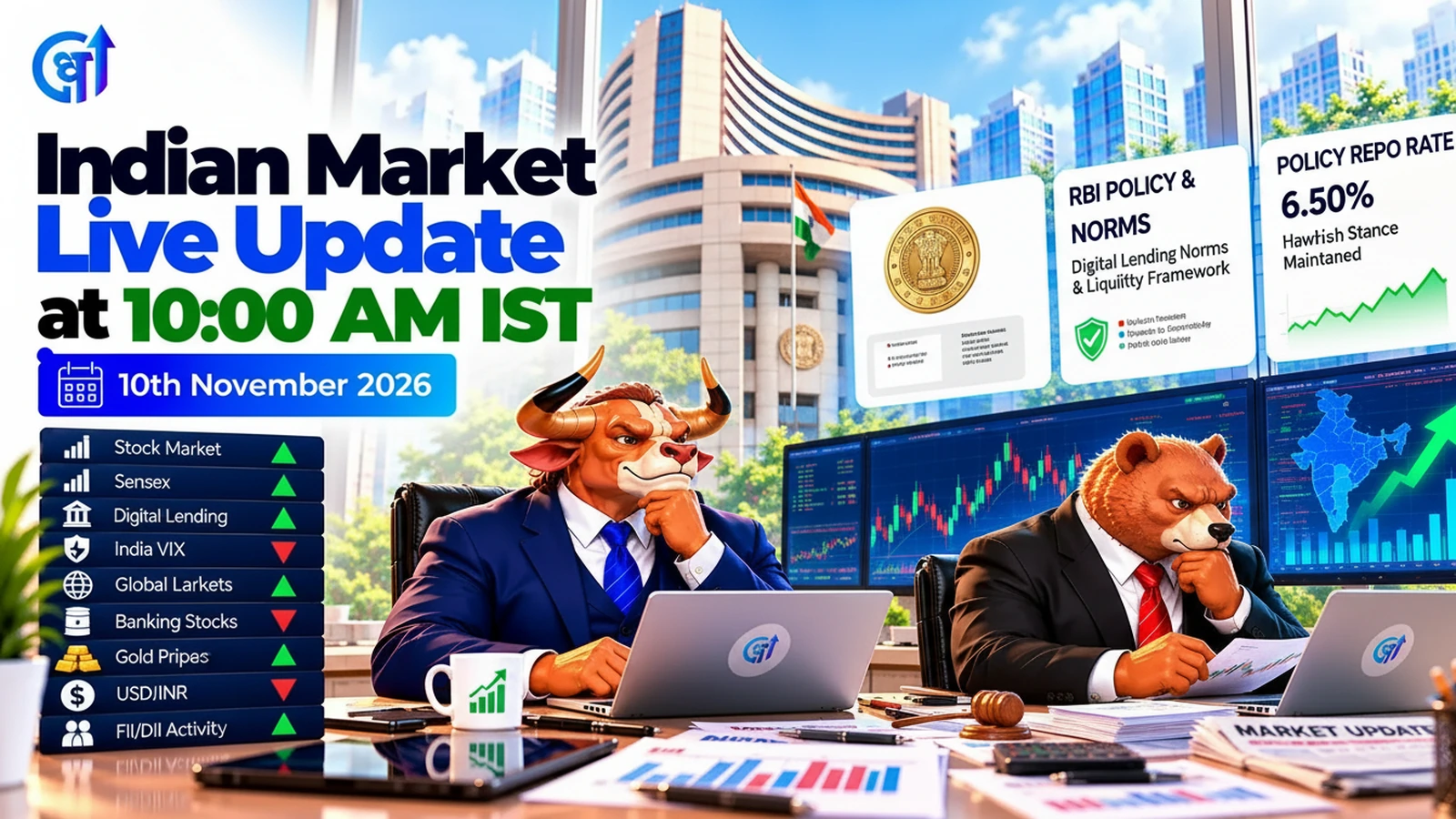
RBI Unveils Strict Digital Lending Rules; Reliance Inks Major Green Energy Pact
The Reserve Bank of India (RBI) has introduced comprehensive new guidelines for digital lending platforms, aiming to enhance consumer protection and ensure fair practices in the rapidly evolving fintech space. This significant regulatory move is expected to reshape the landscape for online lenders. Meanwhile, Reliance Industries' green energy ambitions received a major boost with its subsidiary signing a strategic partnership with a European firm for advanced electrolyser manufacturing. Indian benchmark indices, the Nifty 50 and Sensex, are trading with a cautious bias this morning, influenced by global cues and selective profit booking.
Key highlights
- RBI Digital Lending: New guidelines mandate transparency, data privacy, and a cooling-off period for digital loans, impacting fintech operations.
- Reliance Industries: Subsidiary inks a multi-billion dollar partnership with a European firm for green hydrogen electrolyser manufacturing in India.
- HDFC Bank: Reports robust Q2FY27 loan growth, with gross advances up 16.5% year-on-year, though Net Interest Margin (NIM) remains a key focus.
- IT Sector: TCS secures a significant multi-year digital transformation deal valued at over $750 million from a US client, boosting sectoral sentiment.
- Nifty 50: Trading flat to negative at 22,850, as investors await fresh triggers and global market direction.
RBI Tightens Reins on Digital Lending with New Guidelines
The Reserve Bank of India (RBI) has released a comprehensive framework for digital lending, marking a pivotal step towards regulating the burgeoning online credit market. The new guidelines, effective immediately, aim to safeguard consumers from predatory practices, enhance transparency, and ensure responsible lending by fintech companies and regulated entities. This move comes after growing concerns over high interest rates, opaque charges, aggressive recovery tactics, and data privacy issues associated with some digital lending apps.
Key Provisions and Impact
The RBI's framework mandates that all loan disbursals and repayments must be executed directly between the borrower and the Regulated Entity (RE), eliminating the practice of funds flowing through third-party loan service providers (LSPs). This is a significant step towards increasing accountability. Furthermore, the guidelines introduce a mandatory "cooling-off" period, allowing borrowers to exit a loan by paying the principal amount without penalty within a specified timeframe.
Transparency is a core focus, with lenders now required to provide a Key Fact Statement (KFS) to borrowers before loan sanction, detailing all terms, conditions, interest rates, and fees in a clear and understandable manner. The new rules also strictly prohibit automatic increases in credit limits without explicit borrower consent. On the data privacy front, digital lending apps can only collect data that is "necessary and relevant" for the loan product, with explicit consent from the borrower. Access to mobile phone resources like contacts or call logs is strictly prohibited.
Why it matters
This regulatory intervention is expected to bring much-needed discipline to the digital lending ecosystem. While it may increase compliance costs for fintech players and potentially lead to some consolidation, it is ultimately seen as a positive step for the long-term health and credibility of the sector. For consumers, it offers enhanced protection against exploitative practices and greater clarity on loan terms. Investors will be watching how existing digital lenders adapt to these stricter norms and how it impacts their business models and profitability in the coming quarters. The move is likely to foster greater trust in digital lending, potentially expanding the market to a wider base of informed borrowers.
Reliance New Energy Forges Strategic Alliance for Green Hydrogen
Reliance New Energy Limited (RNEL), a wholly-owned subsidiary of Reliance Industries Limited (RIL), has announced a significant strategic partnership with a leading European renewable energy technology firm for the joint development and manufacturing of advanced electrolysers in India. This multi-billion dollar collaboration underscores RIL's aggressive push into the green energy sector and its commitment to India's energy transition goals.
Details of the Partnership
The agreement involves a joint venture to establish a giga-factory in Jamnagar, Gujarat, dedicated to producing state-of-the-art electrolysers based on the European partner's proprietary technology. These electrolysers are crucial for producing green hydrogen through water electrolysis, a key component in decarbonizing hard-to-abate sectors like steel, cement, and heavy transportation. The initial phase of the project targets an annual manufacturing capacity of 5 GW, with plans for rapid expansion to 10 GW by 2030.
The partnership aims to leverage the European firm's technological expertise and RIL's manufacturing prowess and extensive market reach. This collaboration is expected to significantly reduce the cost of green hydrogen production in India, making it more competitive globally. RIL's broader strategy involves establishing an integrated green energy ecosystem, encompassing solar PV manufacturing, energy storage, and fuel cell production, with green hydrogen as a central pillar.
Market Implications
This development is a strong positive for Reliance Industries, reinforcing its position as a frontrunner in India's clean energy transition. The stock is likely to see positive sentiment as investors factor in the long-term growth potential of its new energy vertical. The partnership also aligns with India's National Green Hydrogen Mission, which aims to make the country a global hub for green hydrogen production and export. This move could attract further investments into India's renewable energy manufacturing sector and create a robust domestic supply chain for critical green technologies. The successful execution of this venture could significantly contribute to India's decarbonization targets and energy security.
More stocks and market news
HDFC Bank: Strong Q2FY27 Loan Growth Amid NIM Scrutiny
HDFC Bank, India's largest private sector lender, reported robust provisional loan growth for the second quarter of the financial year 2027. The bank's gross advances grew by an impressive 16.5% year-on-year, reaching approximately ₹27.5 lakh crore as of September 30, 2026. This growth was primarily driven by strong demand in both retail and corporate segments. Deposits also saw healthy growth, rising by 19.2% year-on-year to ₹31.8 lakh crore. Despite the strong headline numbers, investor focus remains keenly on the bank's Net Interest Margin (NIM), which has faced pressure in recent quarters due to rising funding costs and integration effects. Analysts will be closely watching the official Q2 results for clarity on NIM trends and asset quality.
IT Sector: TCS Bags Major US Digital Transformation Deal
Tata Consultancy Services (TCS) has announced a significant multi-year deal with a leading US-based Fortune 500 company for a comprehensive digital transformation initiative. The deal, valued at over $750 million, involves leveraging TCS's expertise in cloud migration, artificial intelligence, and data analytics to modernize the client's core IT infrastructure and enhance customer experience. This large contract win signals continued strong demand for digital services from global enterprises, providing a positive sentiment boost for the broader Indian IT sector. Shares of TCS and other major IT players saw early gains, reflecting optimism about the sector's deal pipeline and resilience amidst global economic uncertainties.
Nifty 50: Cautious Opening as Global Cues Weigh
Indian benchmark indices opened with a cautious tone this morning, with the Nifty 50 hovering around the 22,850 mark and the Sensex trading marginally lower. The subdued sentiment is largely attributed to mixed global cues, particularly anticipation ahead of key US inflation data later this week, which could influence the US Federal Reserve's monetary policy stance. Profit booking was observed in select banking and auto stocks, while defensive sectors like pharmaceuticals showed some resilience. The India VIX, a measure of market volatility, edged up slightly, indicating some investor apprehension. Traders are likely to remain watchful for fresh domestic triggers and global market developments throughout the session.
Market context
As of 10:00 AM IST, the Nifty 50 was trading at 22,850.20, down 0.15%, while the BSE Sensex was at 75,580.45, down 0.18%. The Nifty Bank index was largely flat. The India VIX rose marginally to 13.85, suggesting a slight increase in market volatility. In global markets, Asian equities were mixed, while US futures indicated a cautious start ahead of inflation data. Brent crude oil was trading around $86.50 per barrel, with the Indian Rupee holding steady against the US Dollar at approximately 83.30.
Why these stories matter
The RBI's digital lending guidelines are crucial for fostering a responsible and sustainable fintech ecosystem in India, directly impacting consumer trust and the operational models of numerous lending platforms. Reliance's green energy partnership highlights the accelerating pace of India's energy transition and the significant investment opportunities in renewable technologies, positioning the company and the nation for future growth. HDFC Bank's performance remains a bellwether for the banking sector, while large deal wins by IT majors like TCS underscore the continued global demand for digital transformation services, which is vital for India's export-driven IT industry. The cautious market sentiment reflects broader global economic uncertainties and the need for fresh domestic catalysts.
What to watch next
- RBI Digital Lending: Market participants will monitor how fintech companies adapt to the new regulations and potential consolidation in the sector.
- Reliance Green Energy: Further announcements regarding the timeline for the electrolyser giga-factory and future green hydrogen projects.
- HDFC Bank: The bank's official Q2FY27 earnings release and management commentary on Net Interest Margins (NIMs) and asset quality.
- Global Markets: US inflation data and subsequent reactions from global central banks will be key drivers for market sentiment.
- Corporate Earnings: The ongoing Q2FY27 earnings season will provide further insights into corporate performance across various sectors.
Sources
FAQ
1. What are the key changes in RBI's new digital lending guidelines?
The RBI's new guidelines mandate direct loan disbursal and repayment between borrower and regulated entity, introduce a cooling-off period, require a Key Fact Statement for transparency, and strictly regulate data collection by digital lending apps.
2. How will Reliance Industries' new green energy partnership impact the company?
The partnership with a European firm for advanced electrolyser manufacturing will significantly boost Reliance's green hydrogen ambitions, accelerate its net-zero goals, and position it as a leader in India's clean energy transition, potentially enhancing long-term growth prospects.
3. What is the current outlook for HDFC Bank after its Q2FY27 loan growth update?
HDFC Bank reported strong loan and deposit growth for Q2FY27. While the headline numbers are robust, investor attention remains on the bank's Net Interest Margin (NIM) and its trajectory, which will be crucial for its profitability outlook.
4. Why is the Indian IT sector seeing positive sentiment today?
The Indian IT sector is experiencing positive sentiment following a major multi-year digital transformation deal secured by TCS from a US client, signaling continued strong demand for IT services globally.
5. What factors are influencing the cautious market opening in India today?
The cautious opening in Indian markets is primarily influenced by mixed global cues, particularly anticipation ahead of key US inflation data, and some profit booking in domestic equities.
6. What does the RBI's "cooling-off" period mean for digital loan borrowers?
The "cooling-off" period allows borrowers to exit a digital loan by repaying the principal amount without incurring any penalty within a specified timeframe, providing greater flexibility and protection.
7. How does the new RBI framework address data privacy concerns in digital lending?
The RBI framework strictly limits digital lending apps to collecting only "necessary and relevant" data with explicit borrower consent, prohibiting access to sensitive mobile phone resources like contacts or call logs.
Disclaimer: This article is for educational purposes only. It does not constitute investment advice. Please consult a SEBI-registered financial advisor before making investment decisions.