HDFC Bank Q2 Results Outperform, RBI Tightens Unsecured Loan Norms
TABLE OF CONTENTS
- Reading Overview

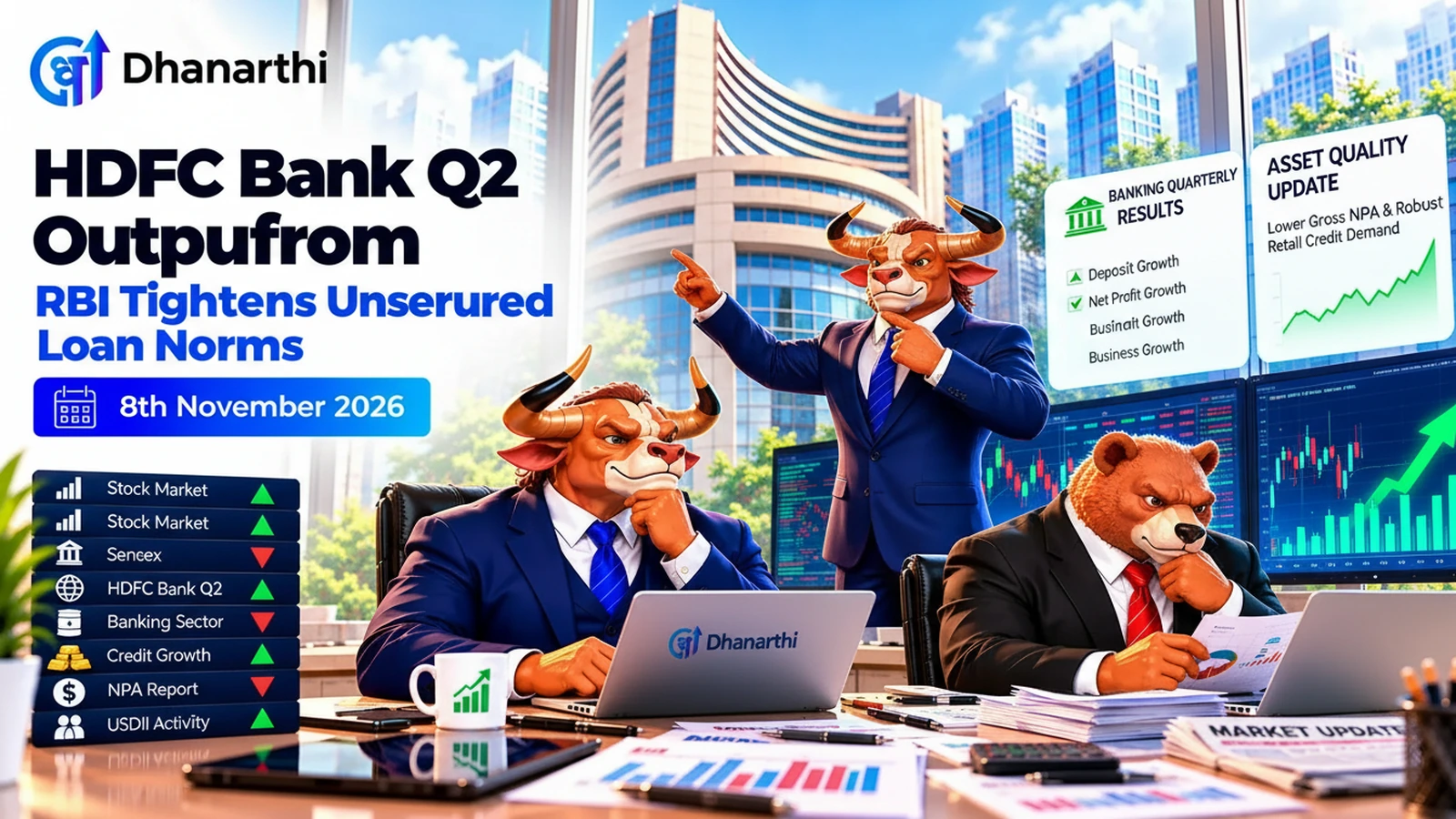
Indian markets are reacting to a mix of corporate earnings and regulatory developments this morning. HDFC Bank reported stronger-than-expected Q2 FY27 results, driven by robust net interest income growth and improved asset quality, providing a boost to financial stocks. Simultaneously, the Reserve Bank of India (RBI) announced stricter prudential norms for unsecured retail loans, which is expected to impact NBFCs and certain private banks. The Nifty 50 and Sensex are trading with cautious optimism, digesting these key updates in the current trading session.
Key highlights
- HDFC Bank: Q2 FY27 net profit rose 18% year-on-year, surpassing analyst estimates, with Net Interest Income (NII) growing by 16%.
- RBI Regulation: New guidelines introduce higher risk weights for unsecured retail loans across banks and NBFCs, aiming to curb potential risks.
- Infrastructure Sector: Government signals accelerated spending on key infrastructure projects, boosting sentiment for cement, steel, and capital goods firms.
- Crude Oil: Brent crude futures climbed above $95 per barrel on global supply concerns, raising inflation worries for India.
- Market Sentiment: Broader markets show mixed trends, with banking stocks reacting to both HDFC Bank's strong performance and the RBI's new norms.
HDFC Bank Delivers Strong Q2 FY27 Performance, Boosts Financials
HDFC Bank, India's largest private sector lender, announced its second-quarter results for the financial year 2026-27, reporting a net profit of ₹18,500 crore, an 18% year-on-year increase, significantly exceeding market expectations. The bank's Net Interest Income (NII) grew by 16% to ₹38,200 crore, driven by healthy loan growth across retail and corporate segments and a stable Net Interest Margin (NIM) of 3.95%. This robust performance comes as a relief to investors, who have been closely watching the bank's post-merger integration progress and its ability to maintain growth momentum.
Key numbers and performance drivers
The bank's gross non-performing assets (NPAs) improved marginally to 1.12% from 1.17% in the previous quarter, while net NPAs stood at 0.28%, indicating stable asset quality. Provisions for the quarter were ₹3,200 crore, slightly lower than anticipated, reflecting the improved asset health. Deposit growth remained strong at 20% year-on-year, with Current Account Savings Account (CASA) ratio holding steady at 37.5%. The loan book expanded by 19% year-on-year, with retail loans growing by 22% and wholesale loans by 15%.
Market reaction and outlook
Following the announcement, HDFC Bank shares saw a positive uptick in early trading, contributing to a broader rally in the banking sector. Analysts noted that the results underscore the bank's operational efficiency and successful integration efforts post-merger. The strong deposit accretion and controlled asset quality are seen as key positives, positioning the bank well for future growth amidst a competitive lending environment. Investors will now be looking for further clarity on the bank's long-term growth strategy and its outlook on credit demand and interest rate trajectory.
RBI Tightens Prudential Norms for Unsecured Retail Loans
In a significant move aimed at curbing potential risks in the rapidly expanding unsecured retail lending segment, the Reserve Bank of India (RBI) today announced stricter prudential norms for banks and Non-Banking Financial Companies (NBFCs). The central bank has increased the risk weights for unsecured consumer credit exposure by 25 percentage points, making it more expensive for lenders to extend such loans. This measure applies to personal loans, credit card receivables, and other unsecured retail advances, excluding housing, education, vehicle, and gold loans.
Impact on lenders and borrowers
The revised risk weights mean that banks and NBFCs will need to set aside more capital for every unsecured loan disbursed, potentially impacting their capital adequacy ratios and profitability from this segment. Analysts suggest that this could lead to a moderation in the growth of unsecured retail loans, which have seen a significant surge in recent years. For borrowers, this might translate into slightly higher interest rates or stricter eligibility criteria for personal loans and credit cards as lenders adjust their risk appetite and pricing strategies.
Why the RBI acted
The RBI's decision comes amidst concerns over the rapid expansion of unsecured credit, which could pose systemic risks if not adequately managed, especially in a rising interest rate environment. While the growth in retail credit has been a key driver for economic activity, the central bank aims to ensure that lending practices remain prudent and sustainable. This move is seen as a pre-emptive measure to strengthen the financial system's resilience against potential asset quality deterioration in the unsecured lending portfolio. The central bank has been consistently monitoring the credit growth trends and had previously cautioned against exuberance in certain segments.
More stocks and market news
Infrastructure Sector: Government Signals Accelerated Spending
The Indian government has reiterated its commitment to accelerating infrastructure development, with fresh announcements indicating a fast-tracking of key projects in roads, railways, and urban development. This renewed push is expected to significantly benefit sectors like cement, steel, and capital goods. Companies such as Larsen & Toubro, UltraTech Cement, and JSW Steel are likely to see increased order inflows and demand, driving positive sentiment in these segments. The move aligns with the government's long-term vision to boost economic growth and create employment opportunities through capital expenditure.
Crude Oil: Brent Surges Past $95 on Supply Worries
Global crude oil prices witnessed a sharp uptick, with Brent crude futures crossing the $95 per barrel mark in morning trade. The surge is primarily attributed to escalating geopolitical tensions in the Middle East and concerns over tightening global supply. For India, a major oil importer, this rise in crude prices poses a significant challenge, potentially exacerbating inflationary pressures and widening the current account deficit. Oil marketing companies (OMCs) like Indian Oil Corporation, BPCL, and HPCL could face margin pressures if retail fuel prices are not adjusted in line with international rates.
Market context
As of 12:00 PM IST, the Nifty 50 was trading around 22,850, up by 0.3%, while the BSE Sensex gained approximately 180 points to trade at 75,600. The Nifty Bank index saw a modest rise, buoyed by HDFC Bank's results but tempered by RBI's new norms. India VIX, the volatility index, remained largely stable around 12.5. Global markets showed mixed cues, with Asian peers trading cautiously. The Indian Rupee strengthened slightly against the US Dollar, trading at 83.20, while gold prices remained firm.
Why these stories matter
HDFC Bank's strong earnings provide a crucial positive signal for the banking sector and broader market sentiment, indicating resilience in corporate performance. The RBI's tightening of unsecured loan norms highlights regulatory vigilance, aiming to ensure financial stability and sustainable credit growth, which is vital for long-term economic health. The government's infrastructure push promises a demand boost for core industries, while rising crude oil prices remain a key macro concern, potentially impacting inflation and corporate input costs across sectors.
What to watch next
- RBI's next steps: Further clarifications or FAQs on the unsecured loan norms.
- Corporate earnings: Upcoming Q2 FY27 results from other major banks and NBFCs.
- Government spending: Specific project announcements and execution timelines for infrastructure.
- Global oil markets: Developments in geopolitical situations and their impact on crude supply.
Sources
- Moneycontrol: HDFC Bank Q2 FY27 Results: Net Profit Jumps 18% YoY to Rs 18,500 Cr, Beats Estimates
- The Economic Times: RBI Hikes Risk Weights for Unsecured Retail Loans by 25 bps
- Business Standard: HDFC Bank Q2 Results: Strong NII, Asset Quality Drive Profit Growth
- Livemint: RBI Tightens Norms for Unsecured Loans: What it Means for Banks, NBFCs, and Borrowers
- Reuters: India Infrastructure Push, Crude Oil Surge Dominate Market Talk
FAQ
1. How did HDFC Bank perform in Q2 FY27?
HDFC Bank reported a net profit of ₹18,500 crore for Q2 FY27, marking an 18% year-on-year increase, surpassing analyst expectations. Its Net Interest Income (NII) grew by 16% to ₹38,200 crore, supported by healthy loan growth and stable asset quality.
2. What are the new RBI norms for unsecured retail loans?
The RBI has increased risk weights for unsecured consumer credit exposure by 25 percentage points for banks and NBFCs. This means lenders will need to set aside more capital for personal loans, credit card receivables, and similar unsecured advances, making such lending more expensive.
3. Which sectors will benefit from the government's infrastructure push?
Sectors like cement, steel, and capital goods are expected to benefit significantly from the government's accelerated infrastructure spending. Companies involved in road construction, railway projects, and urban development are likely to see increased demand and order inflows.
4. Why are crude oil prices rising today?
Brent crude futures have surged past $95 per barrel due to heightened geopolitical tensions in the Middle East and concerns over tightening global oil supply. This rise impacts India by potentially increasing inflation and widening the current account deficit.
5. How will the RBI's new norms affect borrowers?
Borrowers might face slightly higher interest rates or stricter eligibility criteria for personal loans and credit cards as banks and NBFCs adjust their lending policies and pricing strategies in response to the increased capital requirements.
6. What is the current market sentiment in India?
The Indian market sentiment is cautiously optimistic, balancing positive corporate earnings from HDFC Bank with the implications of RBI's stricter lending norms. Broader indices are showing modest gains, with sector-specific movements based on news flow.
Disclaimer: This article is for educational purposes only. It does not constitute investment advice. Please consult a SEBI-registered financial advisor before making investment decisions.