RBI Signals Continued Vigilance on Inflation; IT Sector Buoyed by Global Cues
TABLE OF CONTENTS
- Reading Overview

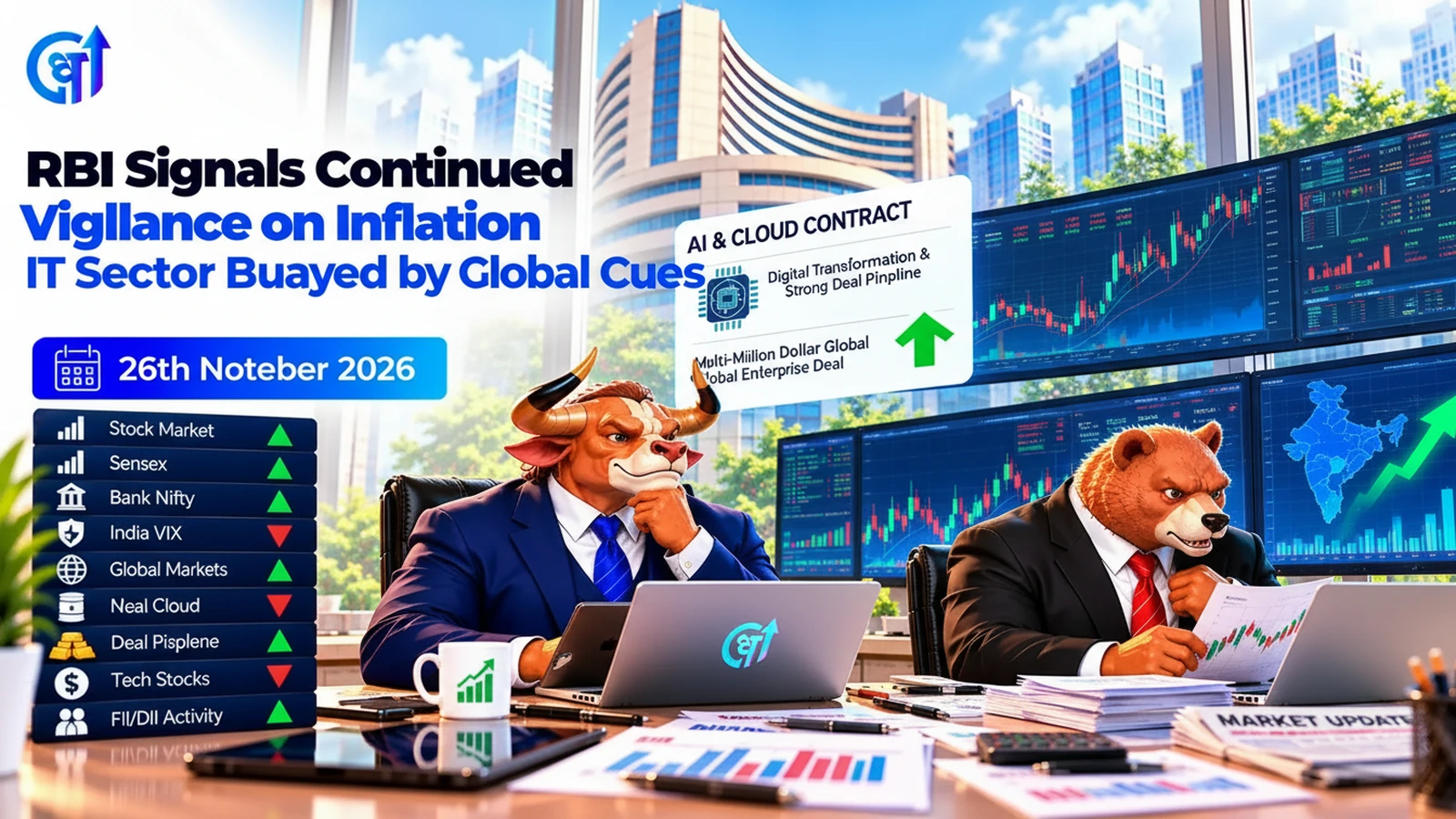
Indian markets opened cautiously this morning as investors digested the Reserve Bank of India Governor's latest remarks, which underscored a commitment to inflation control, suggesting a prolonged period of elevated interest rates. Meanwhile, the IT sector showed early resilience, buoyed by positive overnight cues from US tech stocks and a significant deal win reported by a mid-cap firm. The Nifty 50 and Sensex traded with a mixed bias in early deals, reflecting a cautious sentiment amid global crude oil price surges and specific stock movements.
Key highlights
- RBI Monetary Policy: Governor Shaktikanta Das reiterated a data-dependent approach to inflation, signaling no immediate pivot to rate cuts.
- IT Sector: Nifty IT index gained in early trade, driven by a strong Nasdaq close and Persistent Systems' new multi-year digital transformation deal.
- Crude Oil Prices: Brent crude surged past $90 a barrel in Asian trading, raising concerns over India's inflation and current account deficit.
- HDFC Bank: Analyst reports project robust loan growth for Q3 FY27, providing a positive sentiment boost for the banking giant.
- Market Open: Nifty 50 traded around 22,850 while Sensex hovered near 75,500 in the first hour of trading, indicating cautious optimism.
RBI Governor Signals Prolonged Inflation Fight, Dampening Rate Cut Hopes
Reserve Bank of India (RBI) Governor Shaktikanta Das delivered a clear message this morning, emphasizing the central bank's unwavering commitment to achieving its inflation target. In an address at a financial summit held in Mumbai, Governor Das stated that the RBI would maintain a "data-dependent and vigilant" stance, indicating that any premature easing of monetary policy could jeopardize the progress made in taming price pressures. His remarks suggest that the market's expectations for imminent interest rate cuts might be premature, reinforcing a "higher for longer" interest rate scenario for the Indian economy.
The Governor highlighted the persistence of food inflation and the potential for global commodity price volatility to transmit into domestic prices as key risks. He stressed that while headline inflation has moderated, the journey to the 4% target is not yet complete and requires sustained policy attention. This hawkish tone from the central bank chief is likely to influence bond markets, potentially leading to an uptick in government bond yields as investors recalibrate their rate cut expectations. Rate-sensitive sectors such as real estate, automobiles, and consumer discretionary goods could face headwinds as borrowing costs are expected to remain elevated for a longer duration. Analysts believe the RBI's focus remains squarely on price stability, even if it means sacrificing some growth momentum in the short term.
Why it matters
The RBI's stance is crucial for investor sentiment and economic planning. A prolonged period of higher interest rates impacts corporate borrowing costs, consumer spending, and overall economic growth. For investors, this implies a continued preference for sectors with strong balance sheets and pricing power, while highly leveraged companies might face increased pressure. The central bank's cautious approach also signals its readiness to act decisively if inflationary pressures resurface, providing a degree of long-term stability but potentially limiting near-term market upside driven by rate cut hopes.
IT Sector Shines on Positive Global Cues and Key Deal Win
India's information technology (IT) sector started the trading day on a positive note, drawing strength from a robust performance by US tech stocks overnight and a significant new business announcement from a prominent mid-cap IT services provider. The Nasdaq Composite closed higher in the US session, signaling renewed investor confidence in technology companies globally. This positive sentiment translated into early gains for the Nifty IT index, which outperformed the broader market in the initial hours of trading.
Adding to the sector's optimism, Persistent Systems announced a multi-year, multi-million dollar digital transformation deal with a leading global financial services firm. The deal, details of which were disclosed in an early morning exchange filing, involves leveraging advanced cloud technologies and AI-driven solutions to modernize the client's core operations. This win underscores the continued demand for digital transformation services and highlights the strong deal pipeline for Indian IT companies, particularly in specialized areas. Shares of Persistent Systems reacted positively to the news, trading with significant gains. Other IT majors and mid-cap peers also saw buying interest, with investors anticipating similar deal momentum across the industry.
What the deal signifies
The Persistent Systems deal is indicative of the ongoing trend where enterprises are investing heavily in digital capabilities to enhance efficiency and customer experience. It reinforces the narrative that despite global economic uncertainties, technology spending remains a priority for businesses. For the Indian IT sector, such deals are crucial for revenue growth and maintaining healthy order books, providing visibility into future earnings. The focus will now shift to other IT companies to see if they can replicate similar deal wins and maintain their growth trajectory in the current fiscal year.
More stocks and market news
Crude Oil Surges Past $90, Raising Inflation Concerns
Brent crude futures climbed above $90 a barrel in early Asian trading on Thursday, marking a significant psychological and economic threshold. The surge is primarily attributed to escalating geopolitical tensions in the Middle East, particularly concerns over potential supply disruptions from key oil-producing regions. This rise in global oil prices poses a considerable challenge for India, a major net importer of crude. Higher oil prices could exacerbate inflationary pressures domestically, widen the current account deficit, and potentially impact the profitability of oil marketing companies (OMCs) if retail fuel prices are not adjusted commensurately.
HDFC Bank Loan Growth Projections Spark Optimism
HDFC Bank, India's largest private sector lender, is in focus today following positive analyst reports circulating in the market. These reports project robust loan growth for the bank in the third quarter of the current fiscal year (Q3 FY27), driven by strong retail credit demand and a gradual pickup in corporate lending. The optimistic outlook on loan book expansion, coupled with stable asset quality expectations, is providing a fillip to HDFC Bank shares. This positive sentiment could also spill over to other banking stocks, potentially bolstering the Nifty Bank index amidst broader market caution.
Market context
As of 10:00 AM IST, the Nifty 50 was trading around 22,850, showing marginal gains, while the BSE Sensex hovered near 75,500. The Nifty Bank index also saw some buying interest, largely supported by HDFC Bank. The India VIX, a measure of market volatility, remained relatively stable, indicating a cautious but not panicky sentiment. Globally, Asian markets presented a mixed picture, with some indices tracking Wall Street's overnight gains while others remained subdued. The US Dollar Index (DXY) was largely flat, while the Indian Rupee opened slightly weaker against the dollar, influenced by crude oil price movements.
Why these stories matter
The RBI Governor's comments are pivotal as they set the tone for monetary policy, directly influencing borrowing costs for businesses and consumers, and impacting valuations across rate-sensitive sectors. The IT sector's resilience, driven by global tech trends and specific deal wins, highlights India's continued strength in digital services, offering a defensive play amidst broader market uncertainties. The surge in crude oil prices is a critical macro factor that could derail inflation control efforts and pressure corporate margins, while positive projections for a banking behemoth like HDFC Bank can significantly influence overall financial sector sentiment and market stability.
What to watch next
- RBI's next MPC meeting: Market participants will keenly watch for further cues on interest rate trajectory.
- Global crude oil prices: Continued geopolitical developments and their impact on oil supply will be a key monitorable.
- Q3 FY27 earnings season: Upcoming corporate results, especially from banking and IT sectors, will provide further clarity on business health.
- Government bond yields: Monitor movement in yields as rate cut expectations are recalibrated.
Sources
FAQ
1. What did the RBI Governor say about inflation today?
The RBI Governor reiterated the central bank's commitment to achieving its inflation target, emphasizing a data-dependent and vigilant approach. He signaled that premature easing of monetary policy could be detrimental, suggesting that interest rates might remain elevated for longer.
2. Why is the IT sector performing well today?
The IT sector is performing well due to positive overnight cues from US tech stocks, which closed higher, and a significant multi-year digital transformation deal announced by mid-cap IT firm Persistent Systems. This indicates continued demand for IT services.
3. How do rising crude oil prices affect India?
Rising crude oil prices negatively affect India as it is a major oil importer. It can lead to higher domestic inflation, widen the current account deficit, and impact the profitability of oil marketing companies if they cannot pass on the increased costs to consumers.
4. What is the outlook for HDFC Bank's loan growth?
Analyst reports suggest a robust loan growth outlook for HDFC Bank in Q3 FY27, driven by strong retail demand and a pickup in corporate credit. This positive projection is contributing to optimism around the bank's stock.
5. What are the key risks for the Indian market today?
Key risks for the Indian market today include the RBI's hawkish stance on inflation potentially leading to prolonged higher interest rates, the surge in global crude oil prices impacting macro-economic stability, and any further escalation of geopolitical tensions.
6. Will the RBI cut interest rates soon?
Based on the RBI Governor's latest statements, expectations for immediate interest rate cuts appear to be premature. The central bank is focused on ensuring inflation is durably within its target range before considering any policy easing.
Disclaimer
Disclaimer: This article is for educational purposes only. It does not constitute investment advice. Please consult a SEBI-registered financial advisor before making investment decisions.