Indian Market Live Update at 10:00 AM IST
TABLE OF CONTENTS
- Reading Overview

Reliance Unveils Green Energy Push; RBI Maintains Hawkish Stance Amid Rising Crude Prices
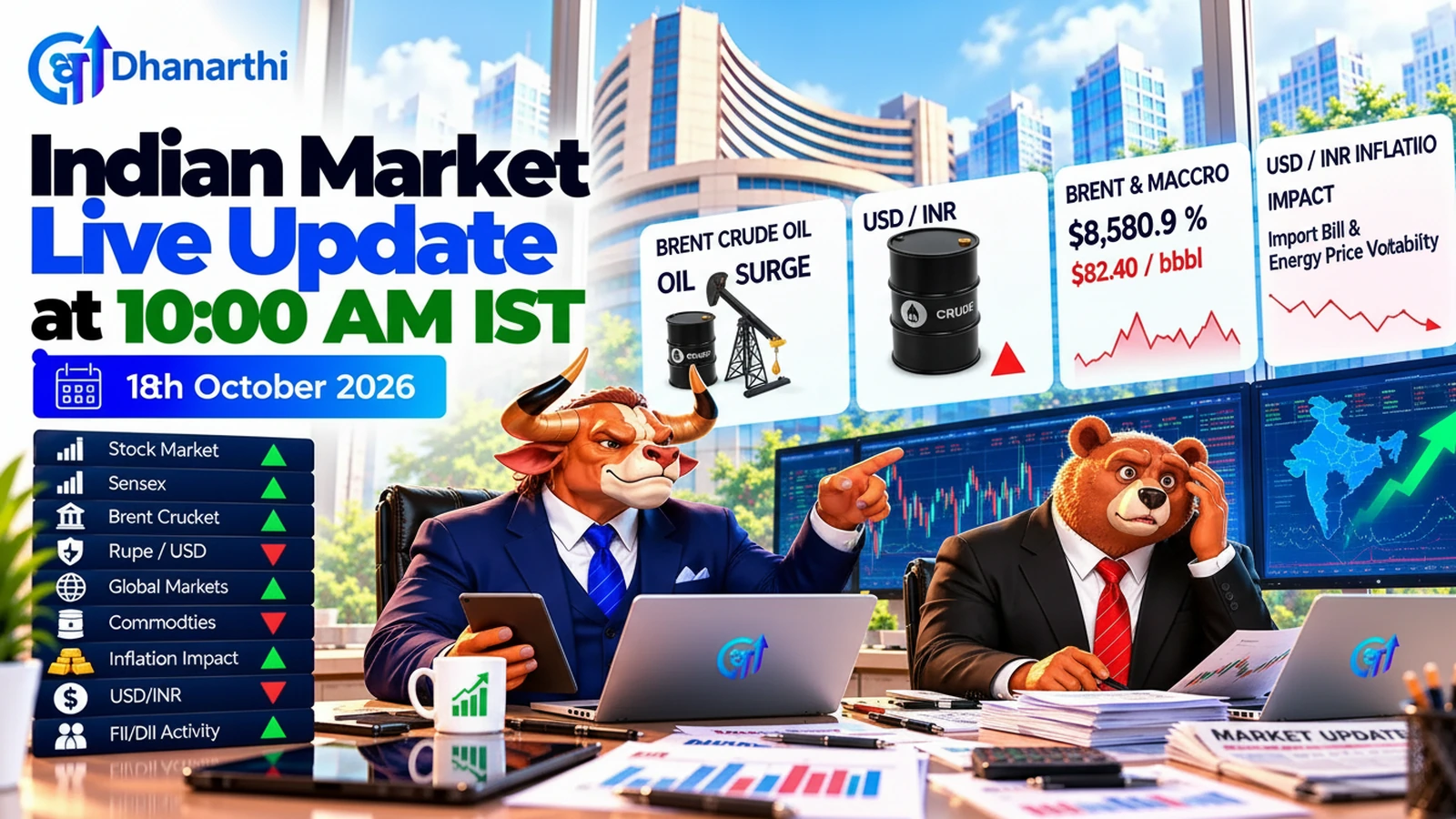
The Indian market opened cautiously this morning, with the Nifty 50 hovering around the 23,500 mark, as investors digested fresh corporate and macroeconomic developments. Reliance Industries is set to announce a substantial ₹75,000 crore investment in green hydrogen and solar manufacturing, signaling a major push into renewable energy. Meanwhile, RBI Governor Shaktikanta Das reiterated the central bank's firm stance on inflation control, leading to a slight uptick in bond yields, while global crude oil prices surged past $95 a barrel, raising concerns about India's economic outlook.
Key highlights
- Reliance Industries: Expected to announce a ₹75,000 crore investment in green hydrogen and solar manufacturing, boosting renewable energy sector sentiment.
- RBI Governor: Shaktikanta Das emphasized continued vigilance on inflation, causing the 10-year government bond yield to rise by 3-4 basis points.
- Crude Oil Prices: Brent crude surged past $95/barrel overnight due to geopolitical tensions, posing inflationary risks for India.
- Nifty 50: Traded flat to marginally lower in early morning trade, hovering around 23,500 amidst mixed global cues and domestic news.
- SEBI: Released a consultation paper proposing stricter disclosure norms for Foreign Portfolio Investors (FPIs) with concentrated holdings.
Reliance Industries to Invest ₹75,000 Crore in Green Energy Expansion
Reliance Industries Ltd (RIL) is poised to make a significant announcement today regarding a substantial investment of ₹75,000 crore into its green energy initiatives. The conglomerate plans to channel these funds primarily into expanding its green hydrogen production capabilities and scaling up solar module manufacturing. This strategic move underscores RIL's commitment to India's ambitious net-zero emissions targets and its own long-term vision for a sustainable energy future.
What happened
Sources close to the development indicate that RIL will formally unveil the investment plan later this morning, likely through an exchange filing or a press conference. This fresh capital infusion is expected to accelerate RIL's efforts to establish a fully integrated new energy ecosystem, encompassing solar, hydrogen, and battery storage solutions. The company has previously outlined aggressive targets in the renewable energy space, aiming to become a global leader in green energy production and technology.
Why it matters
This massive investment by India's largest company is a significant catalyst for the country's green energy transition. It signals strong corporate confidence in the sector's growth potential and is expected to attract further investments, foster technological innovation, and create numerous job opportunities. For RIL, the move opens new avenues for growth beyond its traditional oil-to-chemicals and telecom businesses, positioning it at the forefront of the global energy transformation. Investors will be keenly watching the specifics of the plan, including timelines, capacity targets, and potential partnerships, which could significantly impact RIL's valuation and the broader renewable energy market. Shares of Reliance Industries are expected to be in sharp focus today, with analysts anticipating a positive reaction to the news.
RBI Governor Reiterates Inflation Vigilance; Bond Yields Edge Higher
Reserve Bank of India (RBI) Governor Shaktikanta Das, in an early morning address at a prominent financial conclave, reaffirmed the central bank's unwavering commitment to maintaining price stability. Governor Das stated that while headline inflation has shown signs of moderation, core inflation remains persistent, necessitating a cautious and vigilant approach to monetary policy. His remarks have been interpreted by market participants as a clear signal that the RBI is not yet ready to ease its hawkish stance.
What happened
Following Governor Das's comments, the yield on the benchmark 10-year Indian government bond edged higher, rising by 3-4 basis points in early trade. This immediate market reaction reflects the expectation that the central bank will likely maintain higher interest rates for a longer duration to effectively anchor inflation expectations. The Governor emphasized that the fight against inflation is far from over and that the RBI would prioritize price stability to ensure sustainable economic growth in the medium term.
Why it matters
The RBI's continued hawkish posture has significant implications for various segments of the Indian economy and financial markets. For businesses, a prolonged period of higher interest rates could translate into increased borrowing costs, potentially impacting investment and expansion plans. Rate-sensitive sectors such as banking, auto, and real estate will be particularly sensitive to this outlook. While the focus on inflation control is crucial for long-term economic health, the immediate market sentiment might lean towards caution, especially among investors anticipating earlier rate cuts. The central bank's stance also influences foreign institutional investor (FII) flows, as higher real interest rates can make Indian debt more attractive, but concerns about economic growth could temper equity inflows.
More stocks and market news
Global Crude Oil Prices Surge Past $95/Barrel
Global crude oil prices witnessed a significant uptick overnight and continued their upward trajectory in early Asian trading, with Brent crude futures crossing the critical $95 per barrel mark. The surge is primarily attributed to heightened geopolitical tensions in the Middle East, which have fueled concerns about potential supply disruptions, alongside tighter global supply forecasts. For India, a net importer of crude oil, this development presents fresh headwinds. Higher crude prices are likely to exacerbate inflationary pressures, widen the current account deficit, and increase the import bill, potentially impacting the profitability of oil marketing companies and the broader economy.
SEBI Proposes Stricter Disclosure Norms for High-Risk FPIs
The Securities and Exchange Board of India (SEBI) has released a consultation paper this morning, proposing enhanced disclosure requirements for Foreign Portfolio Investors (FPIs). The proposed norms target FPIs with concentrated holdings in Indian companies, particularly those where beneficial ownership structures raise concerns about potential circumvention of regulatory limits or money laundering. The move aims to bolster transparency and integrity in the market. While currently a consultation paper, if implemented, these stricter rules could influence FPI investment strategies, potentially leading to some rebalancing of portfolios, especially in mid-cap and small-cap segments where concentrated FPI holdings are more prevalent.
Tata Motors Secures Major EV Bus Order from Karnataka
Tata Motors announced this morning that it has received a substantial order for 1,000 electric buses from the Karnataka State Road Transport Corporation (KSRTC). This significant win further solidifies Tata Motors' leadership position in India's rapidly expanding electric commercial vehicle segment. The order is expected to be executed over the next 12-18 months and will contribute positively to the company's order book and revenue projections. This development highlights the growing adoption of electric vehicles in public transportation and provides a strong positive catalyst for Tata Motors shares, reinforcing investor confidence in its EV strategy.
Market context
The Nifty 50 opened marginally lower at 23,490 and traded range-bound, reflecting a cautious sentiment. The Sensex also saw minor fluctuations. Broader markets, however, showed some resilience, with the Nifty Midcap 100 and Smallcap 100 indices trading with slight gains, indicating selective buying interest. The India VIX, a measure of market volatility, edged up slightly, suggesting increased investor apprehension. Globally, Asian markets presented a mixed picture, influenced by ongoing concerns about global inflation and central bank policies. The Indian Rupee remained relatively stable against the US Dollar in early trade.
Why these stories matter
These developments collectively paint a picture of an Indian market navigating both significant growth opportunities and macroeconomic challenges. Reliance's green energy push underscores the private sector's role in India's decarbonization journey and opens new investment themes. The RBI's firm stance on inflation, coupled with rising crude prices, highlights the persistent battle against price pressures, which will dictate monetary policy and borrowing costs. Meanwhile, SEBI's proposed FPI norms aim to enhance market integrity, while Tata Motors' EV order showcases the accelerating transition to electric mobility, offering specific company-level growth catalysts.
What to watch next
- Further details and official statements from Reliance Industries regarding their green energy investment plan.
- Upcoming inflation data releases and RBI's commentary for cues on future monetary policy actions.
- Global crude oil price movements and their impact on India's macroeconomic indicators.
- Market reaction to SEBI's proposed FPI disclosure norms and the feedback received during the consultation period.
- Quarterly earnings announcements from key companies, particularly in the banking and IT sectors.
Sources
- Moneycontrol: Reliance Industries to announce major green energy investment plan today, shares in focus
- Economic Times: RBI Governor Das reiterates focus on inflation control, bond yields react
- Reuters: Global crude oil prices surge past $95/barrel on Middle East tensions
- Business Standard: SEBI proposes stricter norms for FPI investments in certain sectors
- Financial Express: Tata Motors secures large EV bus order from state transport undertaking
FAQ
1. What is Reliance Industries' latest investment plan?
Reliance Industries is expected to announce a significant investment of ₹75,000 crore into its green energy ventures, specifically focusing on expanding green hydrogen production and solar module manufacturing. This move aligns with India's net-zero goals and RIL's strategic shift towards sustainable energy.
2. How did the RBI Governor's comments impact the market?
RBI Governor Shaktikanta Das's remarks on continued vigilance against sticky core inflation led to a 3-4 basis point rise in the 10-year Indian government bond yield. This indicates market expectations of a prolonged hawkish monetary policy stance, potentially affecting interest-rate sensitive sectors.
3. Why are crude oil prices rising, and what is the impact on India?
Global crude oil prices, particularly Brent, have surged past $95 per barrel due to escalating geopolitical tensions in the Middle East and tighter supply forecasts. For India, a major oil importer, this rise poses risks of higher inflation, a wider current account deficit, and increased import costs.
4. What are SEBI's new proposals for FPIs?
SEBI has released a consultation paper proposing stricter disclosure requirements for Foreign Portfolio Investors (FPIs) that hold concentrated positions in Indian companies. The aim is to enhance transparency and address concerns related to beneficial ownership and potential regulatory circumvention.
5. What is the significance of Tata Motors' new EV bus order?
Tata Motors has secured a major order for 1,000 electric buses from KSRTC, reinforcing its leadership in the electric commercial vehicle segment. This order is a positive catalyst for the company, boosting its order book and revenue outlook, and reflecting the growing adoption of EVs in public transport.
Disclaimer: This article is for educational purposes only. It does not constitute investment advice. Please consult a SEBI-registered financial advisor before making investment decisions.