Indian Market Live Update at 02:00 PM IST
TABLE OF CONTENTS
- Reading Overview

Sensex Rebounds Over 800 Points; TCS Q2 Results Drive IT Sector Rally
Direct answer
The Indian equity markets witnessed a strong rebound on Friday, with the Sensex climbing over 800 points and the Nifty surpassing 22,500, recovering significantly from Thursday's sharp sell-off. This recovery was largely propelled by robust gains in the IT sector, following Tata Consultancy Services (TCS) reporting better-than-expected Q2 FY27 results, including a 4% sequential rise in net profit to ₹13,884 crore and strong AI-related revenue. Despite the market's positive momentum, persistent concerns over elevated crude oil prices and a weakening rupee continue to influence investor sentiment.
Key highlights
- Nifty 50: Traded above 22,500, up over 1.15% by 1:00 PM IST, recovering from Thursday's 1.64% decline.
- BSE Sensex: Gained over 800 points, rising 1.16% to 72,421.37 by 1:00 PM IST, after falling 1.44% in the previous session.
- TCS Q2 FY27 Results: Reported consolidated net profit of ₹13,884 crore, up 4% QoQ, with revenue rising 11.2% YoY, exceeding market estimates.
- Nifty IT Index: Surged over 2.3% by afternoon trade, leading sectoral gains, buoyed by TCS earnings and a broader rebound.
- Crude Oil: Brent crude hovered near $104 per barrel, maintaining pressure on India's import bill and inflation outlook.
TCS Q2 FY27 Outperforms, Igniting IT Sector Rally
Tata Consultancy Services (TCS) delivered a strong performance in the second quarter of fiscal year 2027, reporting a consolidated net profit of ₹13,884 crore, marking a 4% sequential increase from the previous quarter. This figure surpassed market expectations, providing a significant boost to investor confidence in the IT giant. The company's revenue from operations for Q2 FY27 stood at ₹73,188 crore, reflecting an 11.2% year-on-year growth.
The positive earnings report immediately translated into a strong market reaction, with TCS shares climbing over 4.9% to ₹2,178.10 by 12:00 PM IST on Friday. This surge in TCS, a heavyweight in the Indian IT sector, triggered a broader rally across technology stocks. The Nifty IT index, which had been under pressure, reversed its four-day losing streak and gained over 2.3% by afternoon trade, leading the sectoral recovery. Other major IT players like Infosys, Wipro, HCL Technologies, and Tech Mahindra also traded in positive territory, contributing to the sector's upbeat mood.
A key highlight from TCS's earnings was its robust performance in emerging areas, with the company reporting annualised AI revenue of $3.1 billion and securing deal wins worth $9.6 billion during the September quarter. This indicates sustained demand for digital transformation and AI-led solutions, despite ongoing global macroeconomic uncertainties. The strong operating cash flow of ₹14,190 crore, equivalent to 102.2% of net profit, further underscored the company's financial health. The company also declared an interim dividend of ₹12 per share, with October 14, 2026, set as the record date.
The IT sector's rebound comes even as concerns persist regarding the US government's suspension of several technology and IT services companies from the Permanent Labour Certification Programme (PERM), a crucial step in the employment-based Green Card process. However, investors appeared to prioritize the strong earnings performance and potentially attractive valuations of Indian IT firms, outweighing the immediate impact of immigration policy changes.
Indian Equities Stage Strong Rebound After Thursday's Sell-off
Indian benchmark indices, the Sensex and Nifty, staged a significant recovery on Friday, bouncing back from Thursday's sharp decline that saw both indices fall over 1.4%. By 1:00 PM IST, the BSE Sensex had surged by 828.13 points, or 1.16%, to reach 72,421.37, while the Nifty 50 climbed 276.80 points, or 1.25%, to 22,508.60. This rebound was broad-based, with buying interest observed across various sectors, particularly in IT, banking, financial services, and FMCG.
The previous trading session on Thursday witnessed a substantial sell-off, with the Sensex crashing 1,045.46 points (1.44%) to close at 71,593.24, and the Nifty 50 settling 371.25 points (1.64%) lower at 22,231.80. This decline pushed the Nifty to its lowest level in 18 months, driven by mounting concerns over elevated crude oil prices, rising global bond yields, a weakening rupee, and persistent foreign institutional investor (FII) outflows. FIIs offloaded a net ₹129.44 billion ($1.3 billion) of Indian equities on Thursday, marking their largest single-day outflow since May 2026.
Despite Friday's recovery, the underlying macro headwinds continue to cast a shadow. Brent crude oil prices remained elevated, hovering near $104 per barrel, fueled by escalating Middle East tensions and supply disruption fears. High crude prices pose a significant risk to India's import bill and inflation outlook. Concurrently, the Indian rupee continued its depreciation against the US dollar, trading near 96.945, further exacerbating imported inflation concerns.
Analysts suggest that while the market is seeing a technical rebound from oversold levels, sustained recovery would depend on the easing of these macro pressures. Investors are closely monitoring global equity performance, bond yields, institutional fund flows, and geopolitical developments for further cues. The current rebound indicates a tentative recovery rather than a decisive shift in sentiment, with volatility expected to remain elevated.
More stocks and market news
RBI's Liquidity Management and Rate Stance
The Reserve Bank of India (RBI) has been actively managing systemic liquidity and maintaining its hawkish stance. Following its Monetary Policy Committee (MPC) meeting from October 5-7, 2026, the RBI unanimously voted to increase the policy repo rate by 25 basis points to 5.50%. This move was accompanied by a shift in the policy stance from "neutral" to "calibrated tightening," signaling the central bank's continued focus on reining in inflationary pressures. To absorb excess liquidity in the banking system, the RBI conducted a 10-day variable rate reverse repo (VRRR) auction for a notified amount of ₹1.50 lakh crore on Friday, October 9. This proactive liquidity management aims to align short-term rates with the policy stance and ensure financial stability.
SEBI Settles Adani Group Regulatory Violations
The Securities and Exchange Board of India (SEBI) has settled alleged regulatory violations related to related party transactions (RPT) and minimum public shareholding (MPS) by various Adani Group entities and key personnel. The settlement amounted to ₹29.9 million, comprising ₹15 million for RPT violations and ₹14.8 million for MPS violations. The allegations stemmed from a Hindenburg Research report that highlighted corporate governance issues. By accepting the settlement application, SEBI has disposed of these matters, stating that it will not initiate further enforcement action against the alleged violators for these specific allegations. This development provides some regulatory clarity regarding past issues for the conglomerate.
Persistent Crude Oil and Rupee Pressure
The Indian economy continues to face significant headwinds from elevated global crude oil prices and a weakening domestic currency. Brent crude futures remained stubbornly high, trading near $104 per barrel, after a 4% jump on Thursday due to geopolitical tensions in the Middle East and supply concerns. This sustained high price directly impacts India's import bill, potentially widening the current account deficit and fueling domestic inflation. Concurrently, the Indian rupee depreciated further against the US dollar, trading around 96.945. The rupee's weakness makes dollar-denominated imports more expensive, adding to cost pressures for businesses and consumers, and complicating the RBI's inflation management efforts.
Market context
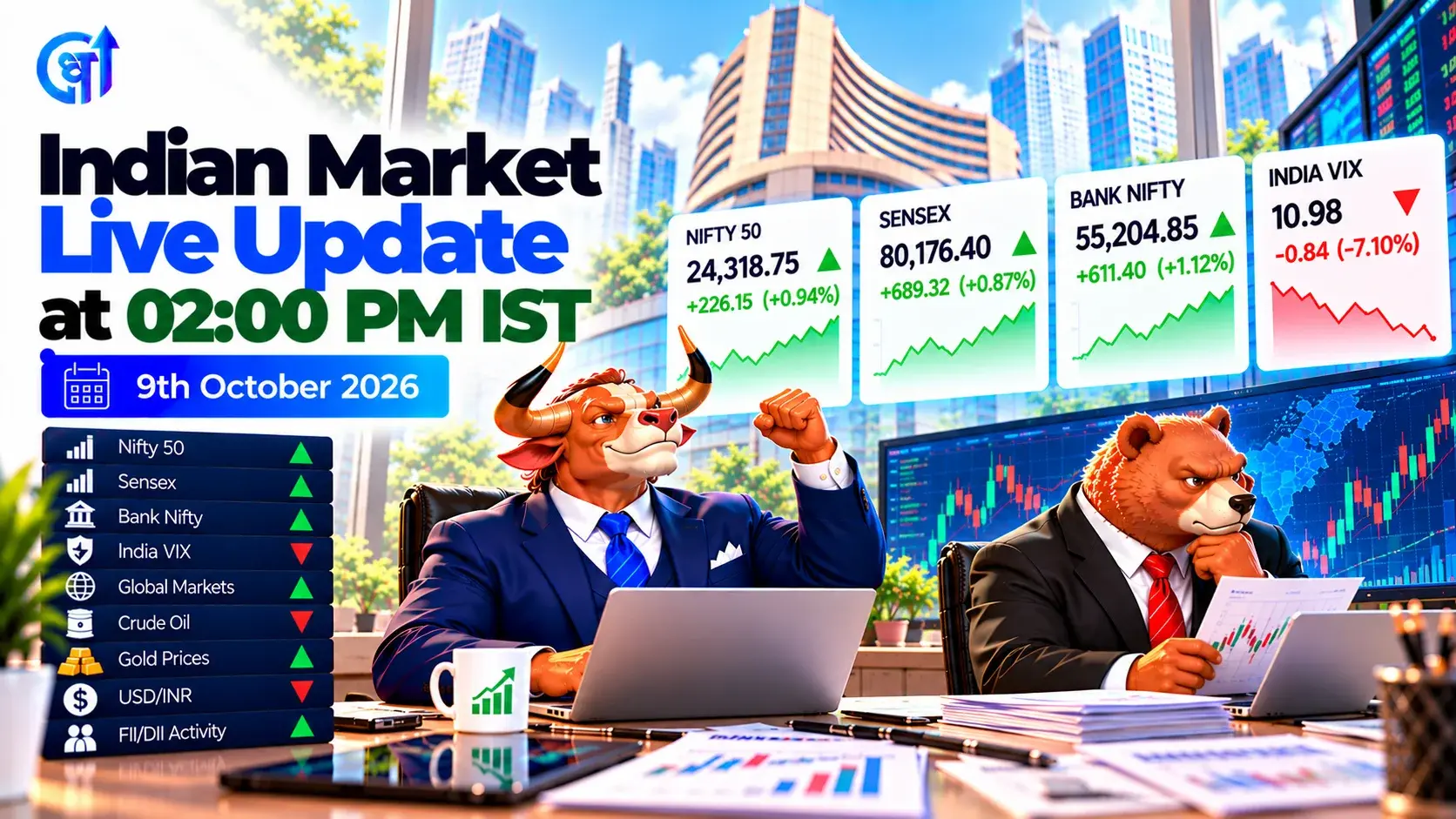
As of 02:00 PM IST, the Nifty 50 was trading around 22,500, up approximately 1.2%, while the Sensex gained over 800 points, up around 1.1%. The Nifty Bank index also showed strength, rising over 1%. The India VIX, a measure of market volatility, eased slightly after a sharp jump on Thursday. Global markets showed mixed cues, with Asian markets generally lower earlier, but European futures pointing to a cautious open. Brent crude oil remained a key concern, hovering near $104 per barrel, while the USD/INR pair traded around 96.95, reflecting continued pressure on the rupee.
Why these stories matter
The strong performance of TCS and the broader IT sector is crucial as it signals resilience in a key export-oriented industry, potentially boosting overall market sentiment and providing a counter-balance to global uncertainties. The market's rebound today, despite persistent macro challenges like high crude oil prices and a weakening rupee, indicates underlying buying interest and a potential technical correction after an aggressive sell-off. However, the continued pressure from crude and currency remains a significant concern for India's inflation trajectory and corporate profitability, especially for import-dependent sectors. The RBI's rate hike and liquidity measures underscore its commitment to price stability, which impacts borrowing costs and economic growth. The SEBI settlement for Adani Group provides regulatory closure on specific past allegations, which can reduce uncertainty surrounding the conglomerate.
What to watch next
- Global Crude Oil Prices: Continued monitoring of geopolitical developments and their impact on oil supply and prices.
- USD/INR Movement: The rupee's trajectory against the dollar will be critical for import costs and inflation.
- FII Flows: Foreign institutional investor activity will be a key determinant of market direction.
- Upcoming Q2 FY27 Earnings: Investor focus will shift to other major corporate earnings reports for further insights into sectoral performance and economic health.
- RBI's Liquidity Operations: Further actions by the central bank to manage systemic liquidity and interest rates.
Sources
- IndiaInfoline: TCS Q2 FY27 Results: Net Profit Rises 4% QoQ to ₹13,884 Crore; Revenue Up 11.2% YoY
- HDFC Sky: Top Gainers & Losers, October 9, 2026 at 12:00 PM IST: TCS Leads Gainers
- Business Standard: Sensex Today | Stock Market LIVE Updates, Friday, Oct 9, 2026
- SCC Online: RBI hikes repo rate to 5.50%; shifts policy stance to 'calibrated tightening'
- Law.asia: SEBI settles Adani's regulatory violations worth INR29.9m
FAQ
1. Why did the Indian stock market rebound today?
The Indian stock market rebounded today primarily due to a strong rally in IT stocks, driven by better-than-expected Q2 FY27 results from Tata Consultancy Services (TCS). Additionally, the market saw a technical recovery after a significant sell-off in the previous session.
2. What were TCS's key Q2 FY27 results?
TCS reported a consolidated net profit of ₹13,884 crore for Q2 FY27, up 4% sequentially, and revenue from operations of ₹73,188 crore, marking an 11.2% year-on-year growth. The company also highlighted annualised AI revenue of $3.1 billion and deal wins worth $9.6 billion.
3. How are crude oil prices impacting the Indian market?
Elevated crude oil prices, with Brent hovering near $104 per barrel, are a significant concern for the Indian market. They increase India's import bill, potentially widen the current account deficit, and fuel domestic inflation, putting pressure on corporate costs and consumer spending.
4. What is the current status of the Indian rupee against the US dollar?
The Indian rupee continues to weaken against the US dollar, trading around 96.95. This depreciation makes dollar-denominated imports more expensive, contributing to inflationary pressures and increasing the cost of foreign debt for Indian companies.
5. What was the RBI's latest monetary policy decision?
The RBI's Monetary Policy Committee (MPC) recently increased the policy repo rate by 25 basis points to 5.50% and shifted its policy stance to "calibrated tightening." This indicates a continued focus on controlling inflation and managing systemic liquidity.
6. What was the SEBI's action regarding Adani Group?
SEBI settled alleged regulatory violations by various Adani Group entities and key personnel related to related party transactions (RPT) and minimum public shareholding (MPS). The settlement amount was ₹29.9 million, concluding these specific regulatory matters.
Disclaimer: This article is for educational purposes only. It does not constitute investment advice. Please consult a SEBI-registered financial advisor before making investment decisions.