





Best Banking Stocks in India 2026
October 26, 2026



TABLE OF CONTENTS
Get AI Summary





Groww, Zerodha, and Angel One are currently the best stock brokers in India by active clients, together holding nearly 60% of the market. Groww suits beginners with its simple interface, Zerodha is best for active F&O traders on Kite, and Angel One offers strong research backing. The right choice depends on your trading frequency, cost sensitivity, and whether you need advisory support.
This comprehensive list of stock brokers represents the top 20 brokers in India and beyond, showcasing the largest stock broker in India by active clients.
| Rank | Stock Broker | Active Clients (2026) | Type | Brokerage Charges |
|---|---|---|---|---|
| 1. | Groww | 1,24,00,000 (approx.) | Discount Broker | Free delivery, ₹20/trade |
| 2. | Zerodha | 68,60,000 (approx.) | Discount Broker | ₹20/trade |
| 3. | Angel One | 67,50,000 (approx.) | Full-Service Broker | Free delivery, ₹20/trade |
| 4. | Upstox | 27,89,896 | Discount Broker | Charges: ₹20/trade |
| 5. | ICICI Securities | 19,38,192 | Full-Service Broker | Varies |
| 6. | Kotak Securities | 14,91,998 | Full-Service Broker | Varies |
| 7. | HDFC Securities | 14,88,982 | Full-Service Broker | Varies |
| 8. | Motilal Oswal | 10,19,877 | Full-Service Broker | Varies |
| 9. | SBICAP Securities | 9,82,704 | Full-Service Broker | Varies |
| 10. | Dhan | 9,67,410 | Discount Broker | Free delivery, ₹20/trade |
| 11. | Mirae Asset Sharekhan | 6,74,378 | Full-Service Broker | Varies |
| 12. | Paytm Money | 6,62,797 | Discount Broker | ₹20/trade |
| 13. | m.Stock | 5,60,995 | Discount Broker | Zero brokerage plans |
| 14. | IIFL Securities | 4,49,886 | Full-Service Broker | Varies |
| 15. | 5Paisa | 4,38,280 | Discount Broker | ₹20/trade |
| 16. | Axis Direct | 4,23,767 | Full-Service Broker | Varies |
| 17. | Share.Market (PhonePe) | 3,49,993 | Discount Broker | Flat ₹20/trade |
| 18. | Geojit | 2,48,888 | Full-Service Broker | Varies |
| 19. | Fyers | 2,43,923 | Discount Broker | Free delivery, ₹20/trade |
| 20. | Alice Blue | 2,00,000 | Discount Broker | ₹15/trade |
Many investors compare specific brokers before switching. Here is how the most searched matchups break down.
| Comparison | Winner For | Key Difference |
|---|---|---|
| Zerodha vs Angel One | Zerodha for pure trading tools, Angel One for research | Angel One offers dedicated research reports, Zerodha focuses purely on execution speed |
| Zerodha vs Groww | Groww for beginners, Zerodha for active traders | Groww has a simpler interface, Zerodha's Kite platform suits F&O and technical traders |
| Dhan vs Zerodha | Dhan for options traders switching from Zerodha | Dhan offers a more advanced options chain and strategy builder for F&O-heavy traders |
| Upstox vs Angel One | Upstox for execution speed, Angel One for guidance | Upstox prioritises fast order execution, Angel One pairs execution with relationship-manager support |
| HDFC Sky vs Zerodha | Zerodha for cost, HDFC Sky for banking integration | HDFC Sky connects directly with HDFC Bank accounts, Zerodha remains cheaper for high-frequency trading |
For a detailed cost comparison specific to your trading volume, use Dhanarthi's calculator to see the exact difference between any two brokers.
Let's begin with the comprehensive evaluation. I have done personal testing on the majority of these platforms, and I will be revealing my truthful insights, good and bad.
In the year 2020, Groww made its way into the stockbroking field, and even though there were some initial concerns, it soon emerged as the best stockbroker in India by active clients.
The company that was first associated only with mutual funds, Groww, won the hearts of the masses due to its user-friendly and easy-to-use platform. One of the major advantages of the app is that even inexperienced investors can easily operate it without any assistance.
Among the leading stock brokers in India, Groww stands out as one of the most accessible for beginners and is counted among the reliable trading brokers in India.
Active Clients: As of 2026, Groww has approximately 1.30 crore active users, which makes it the biggest stock broker in India.
Established: 2016
Key Features: No commission on equity delivery, elegant design, quick account opening, and strong mutual fund integration.
Complaints: Very few (exact numbers not mentioned)
Best For: Newcomers and long-term investors who prefer a seamless and easy-to-use experience.
Zerodha was the first company to introduce discount broking to India in 2010, and it still is the best option for professional traders. Its main advantage is in its powerful platforms, Kite and Console, that provide quick execution, sophisticated charting, and an uncluttered interface. For the very fast, dependable, and good quality tools. For professional traders, Zerodha is still the gold standard.
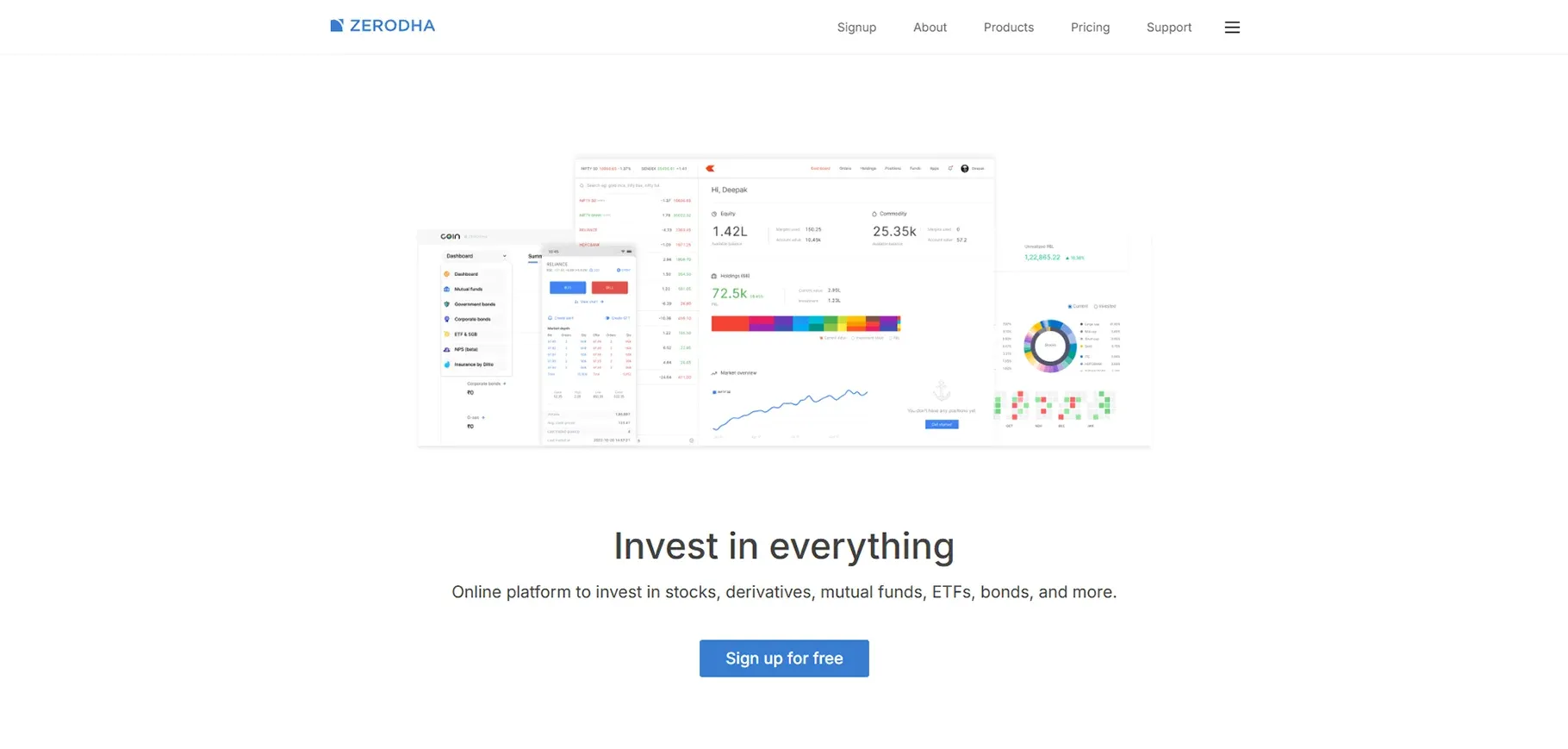
Active Clients: 79.57 Lakhs
Established: 2010
Key Features: ₹20/trade (F&O), advanced charting (Kite platform).
Complaints: Moderate, high resolution rate.
Best For: Active traders and technical analysts.
Angel One, established in 1987, offers the wealth of experience that the majority of new-age brokers cannot even come close to.
The strength of their research is what differentiates them from others, as it has been backing the company in providing comprehensive, trustworthy and professional market analyses.
Angel One has emerged as an excellent option for investors who depend on expert insights and data-driven recommendations by mixing traditional research skills with modern discount pricing.
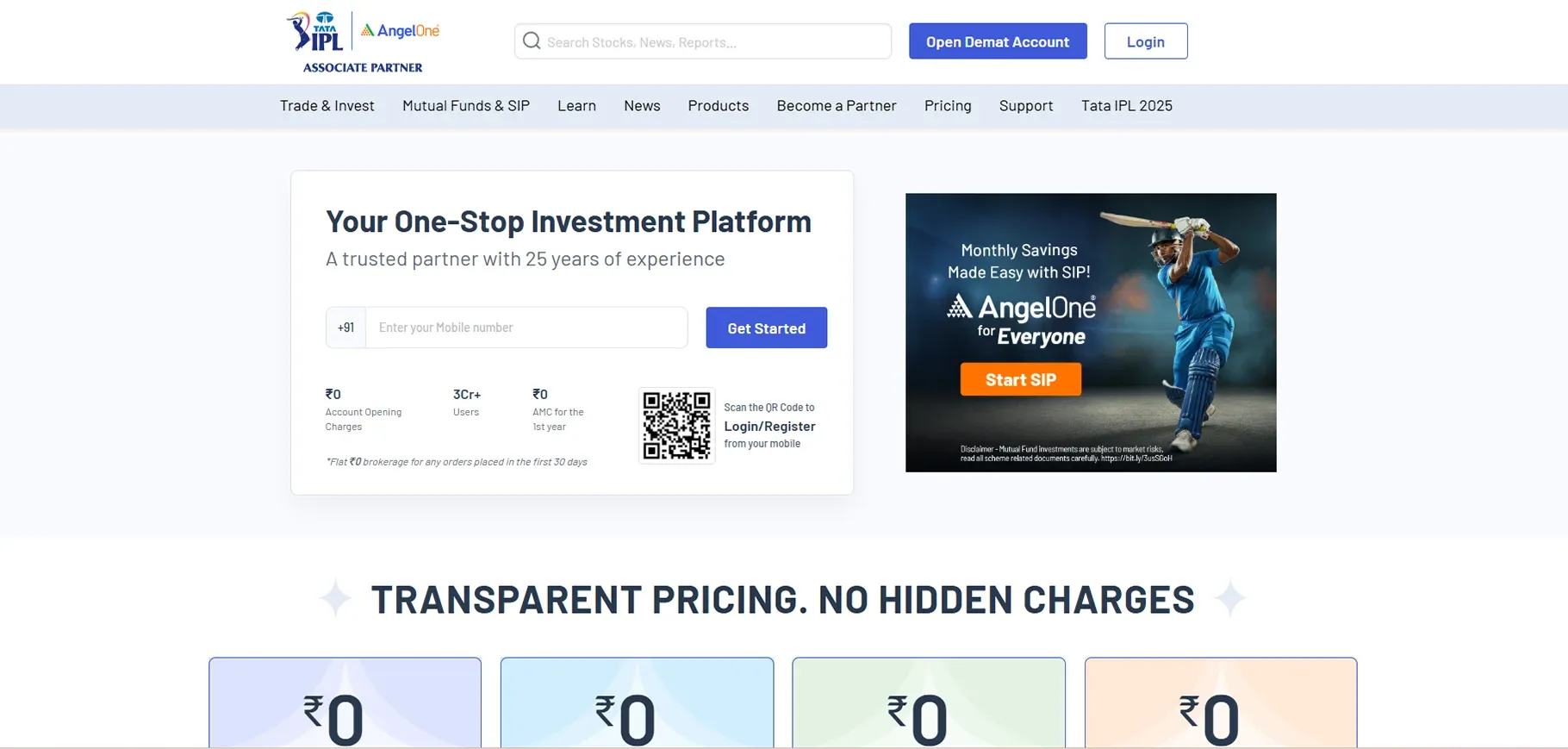
Active Clients: 76.49 Lakh+
Established: 1996
Key Features: flat ₹20/trade to its users, strong research reports.
Complaints: Moderate, good resolution.
With the help of major investors, Upstox has established itself in the market as a broker that is trustworthy for active and high-volume traders. The broking company's main edge over others is its extremely quick order execution, which works even when the market is Inconsistent. Besides, Upstox is a good option if you prioritise fast trades and a robust support system.
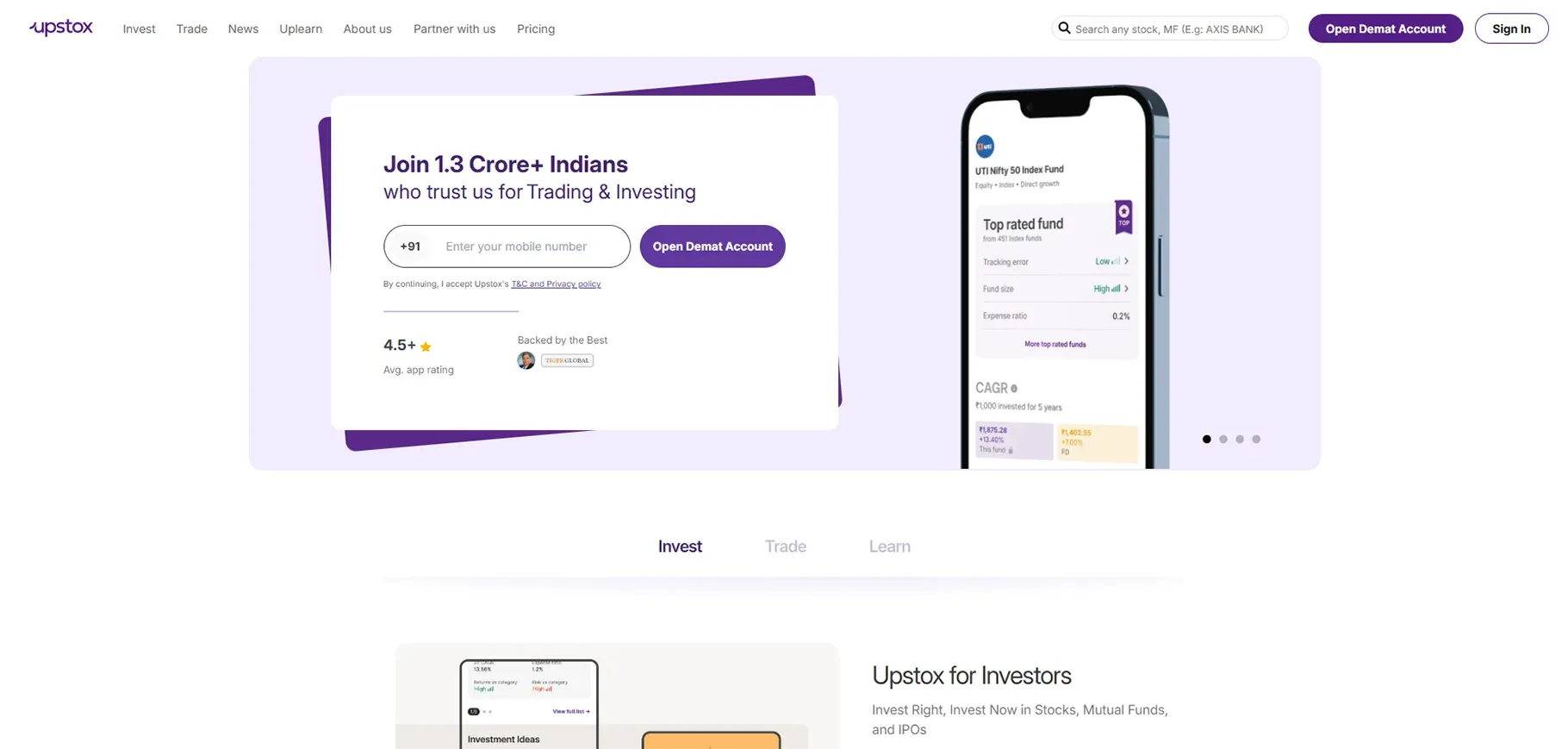
Active Clients: 27.89 Lakh+
Established: 2009
Key Features: This opens the way for the investor to pay only ₹20/trade, and, besides that, the platform also serves professional investors well.
Complaints: The platform receives a lot of complaints, but the Upstox staff very quickly resolves them.
Best For: Traders who watch their expenses closely.
ICICI Securities is a celebrated full-service stockbroker known for providing an all-access and trustworthy investing experience.
The main feature of the account is the 3-in-1 account, which connects your trading, demat, and ICICI Bank account, allowing easy and instant transferring of funds.
Since it is backed by one of the safest banks in India, it offers not only a secure but also a very smooth and convenient investing process for all types of investors.
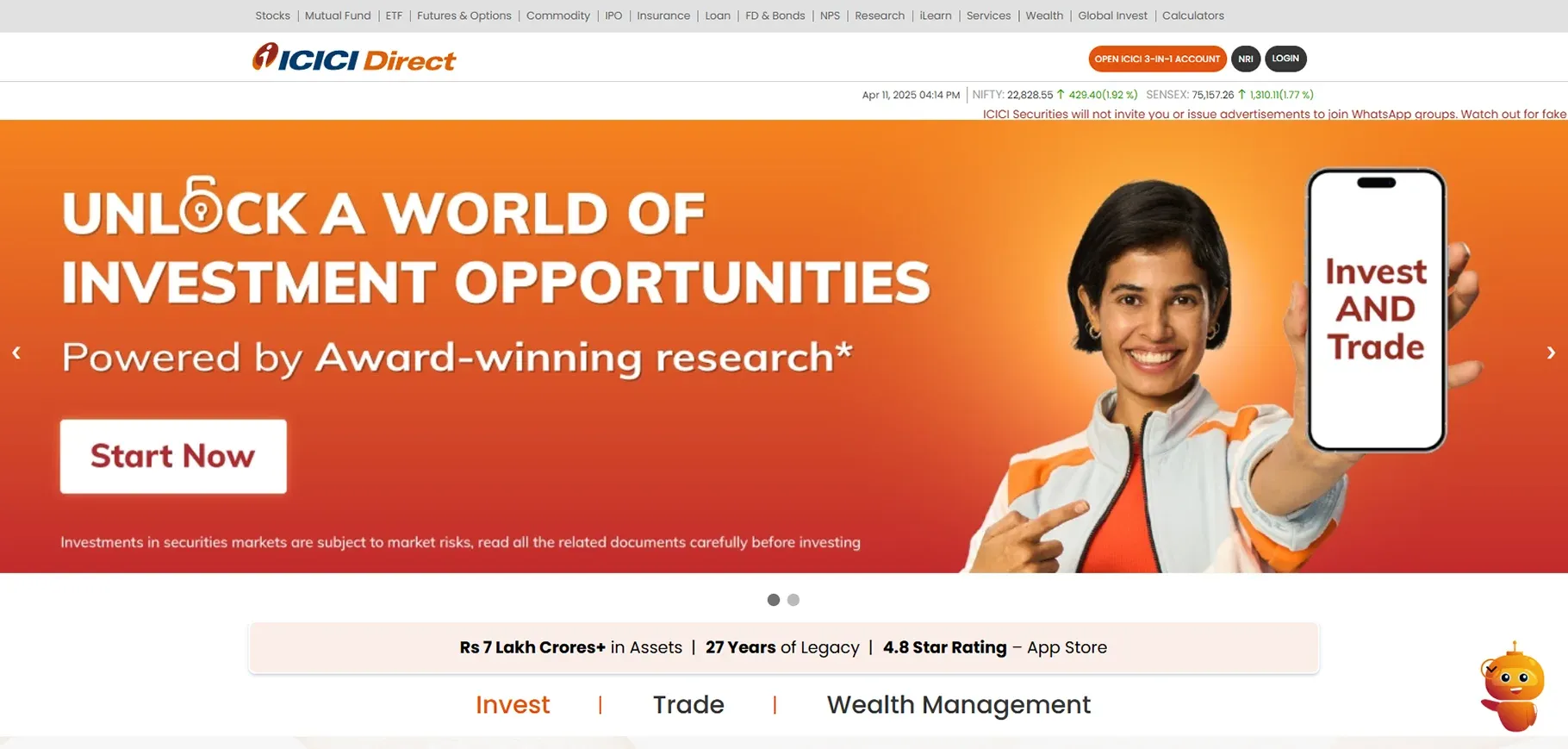
Active Clients: 19.38 Lakh+
Established: 1995
Key Features: All-in-one, excellent research & IPO access.
Complaints: Very few, high-quality support.
Best For: Marketplaces looking for research-based trading, and also ICICI bank account holders.
Kotak Securities takes the best features of Kotak Mahindra Bank and gives a full wealth management experience. It is known for its personalised portfolio management services, particularly for investors with ₹25 lakhs or more.
Brokerage fees of ₹49 per order and account fees of ₹750 make it a choice for people who are ready to pay the price for professional assistance rather than opt for the low-cost option.
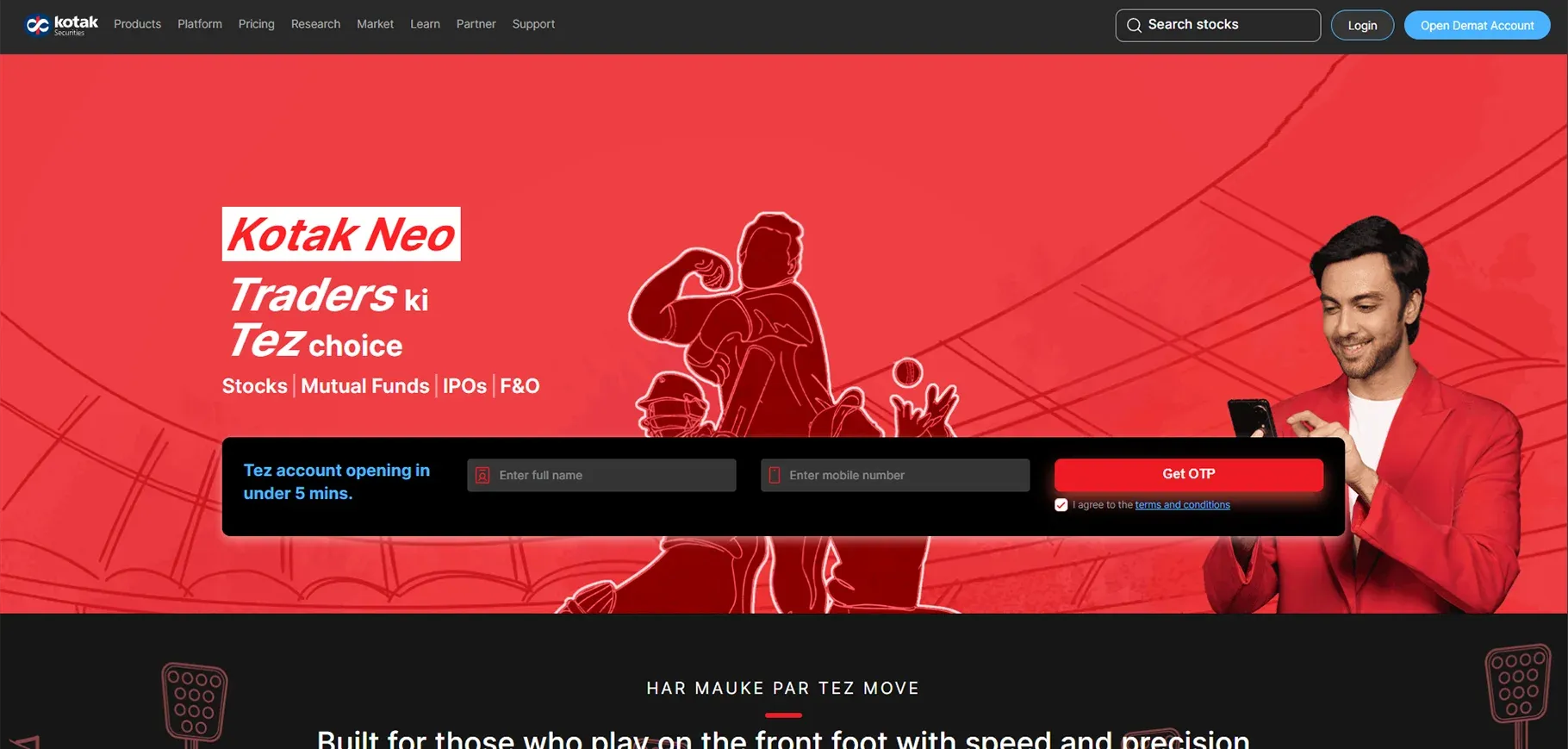
Active Clients: 14.91 Lakh+
Established: 1994
Key Features: Full-service broking, robust research, and wealth management.
Complaints: Minimal, due to the relationship managers available all the time
Best For: Investors wanting a mix of digital and advisory services, also a great alternative for Kotak 811 online account customers.
HDFC Securities provides an Easy and trustworthy investing process supported by the largest private bank in India. The main point of its power is the perfect connection with HDFC Bank, allowing for quick fund transfers, speedy settlements, and easy pledging of investments.
Recognised as one of the best share brokers in India, HDFC Securities is often considered a reliable and best trading company for investors seeking seamless transactions and strong backing.
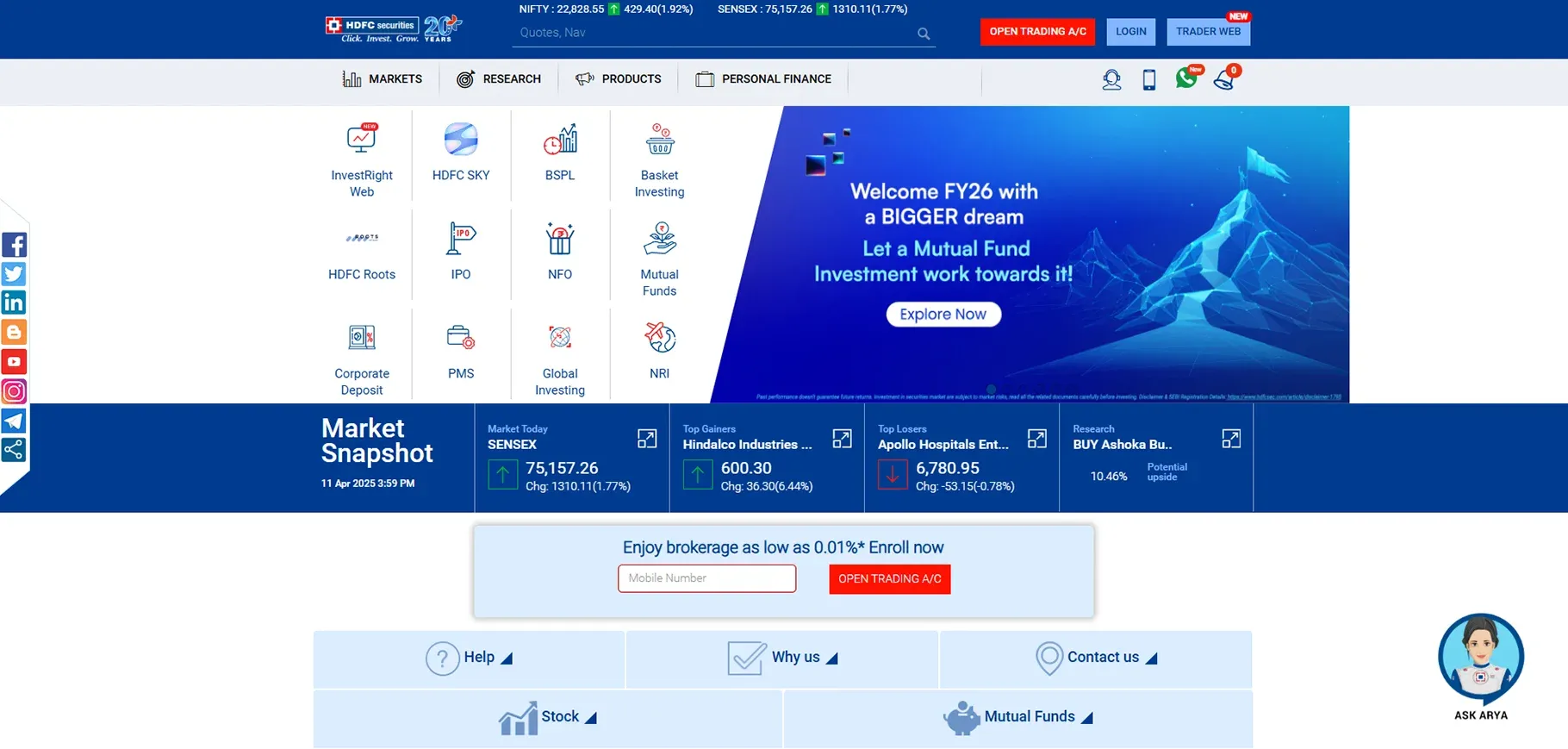
Active Clients: Over 1.488 million
Founded: In the year 2000
Main Attractions: Trading based on research, IPO's buying access and professionally managed portfolios.
Grievances: Almost none, but quickly resolved.
Most Suitable For: Investors with a long-term perspective and those who require guidance.
Motilal Oswal is celebrated for its excellent research and long-term experience, positioning itself as a solid choice for serious fundamental investors.
By means of comprehensive wealth creation studies, sector reports, and model portfolios, it provides substantial insights that guide long-term investors in their decision-making process.
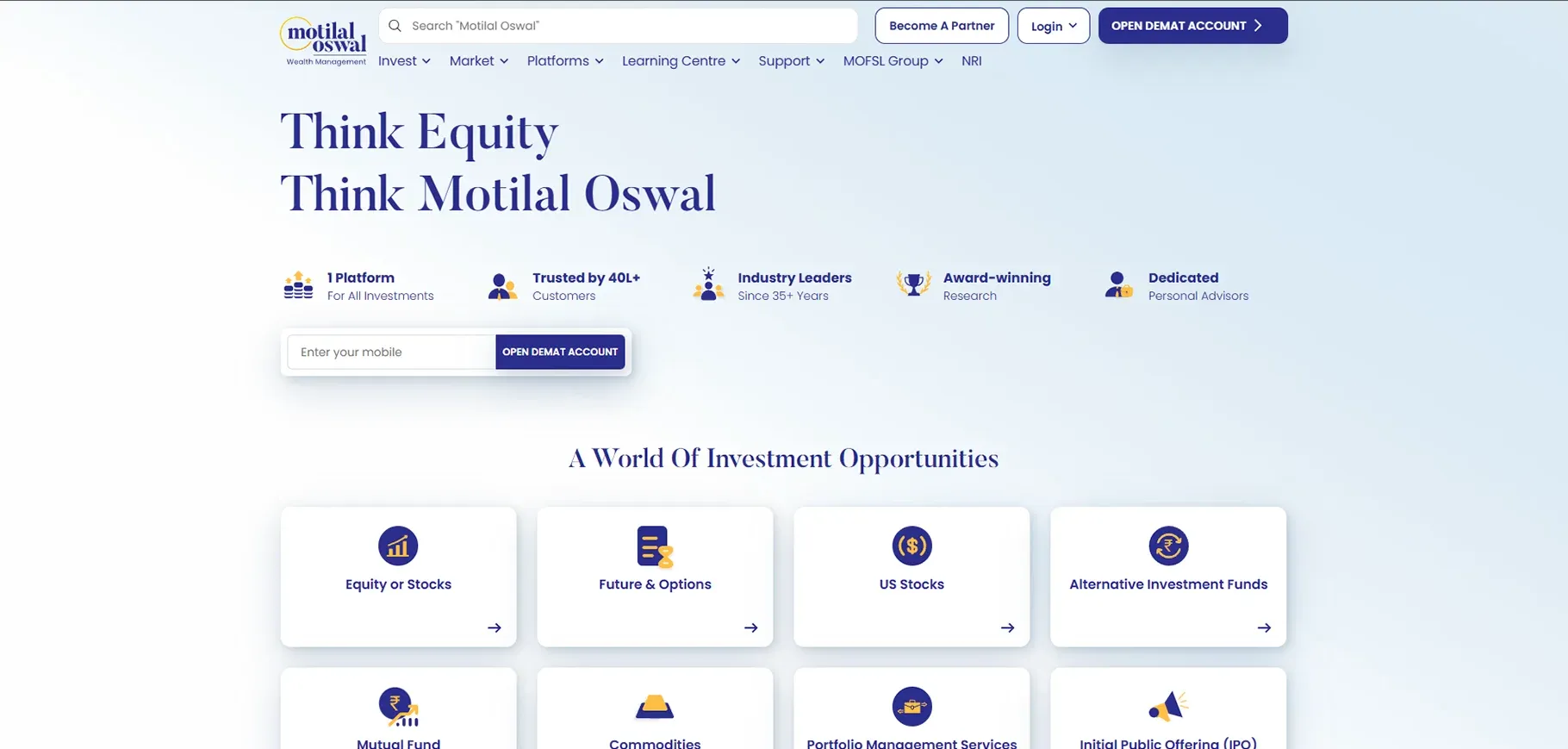
Active Clients: 10.19 Lakhs and more
Founded: 1987
Main Highlights: PMS services, 30 days free of brokerage trading
Complaints: Moderate in number, but quickly solved.
Ideal For: Retailers and investors who need outstanding research.
SBICAP Securities is an investment choice which is dependable and easy to use, particularly for existing SBI account holders. The major advantage of SBICAP Securities is its perfect integration with banks and great accessibility in second and third-tier cities.
Despite having higher brokerage and an older-looking platform, it gives traders a dependable service, average research, and no charges for a lot of SBI clients. It is suitable for risk-averse investors who are more focused on safety, knowledge, and the convenience of the largest government bank in India.
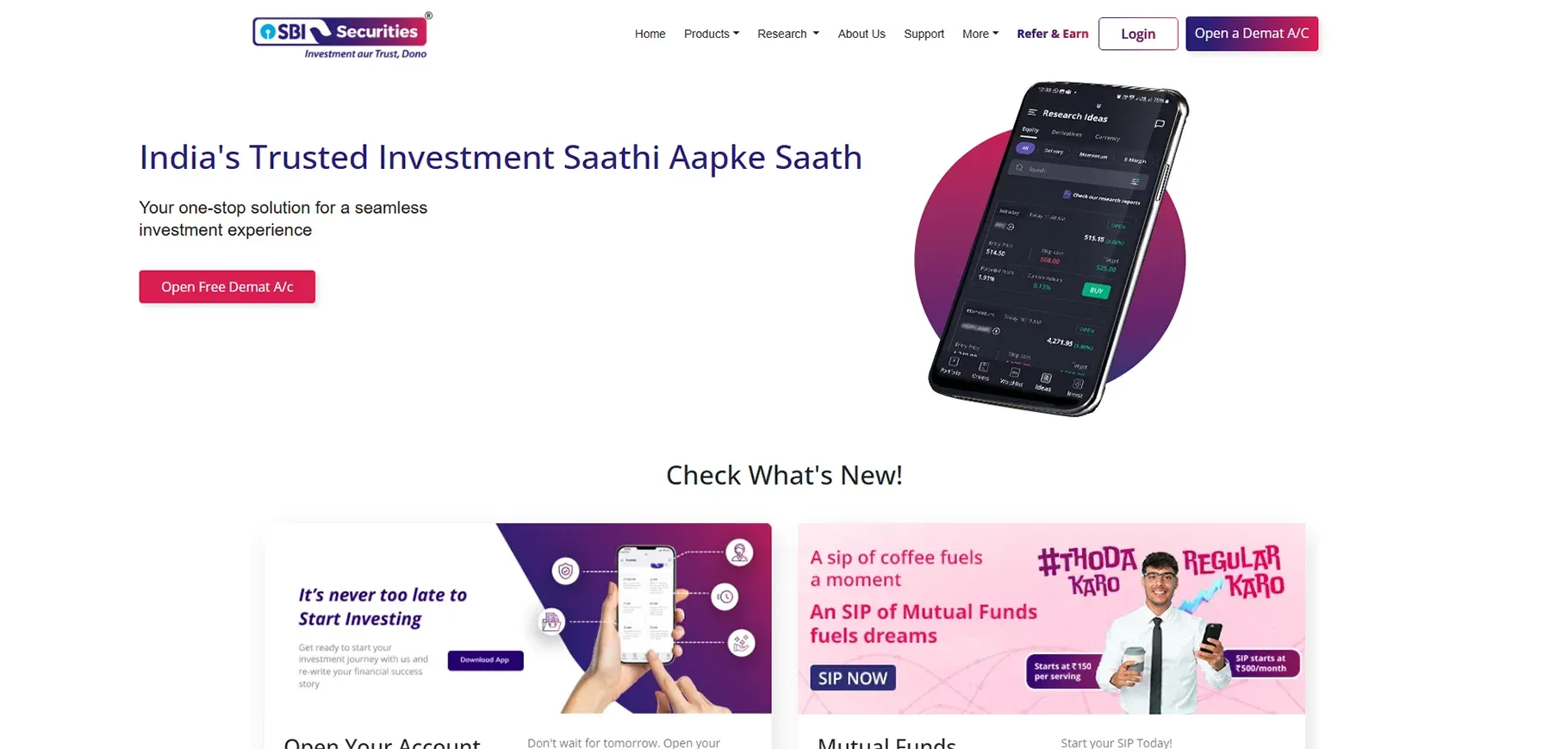
Active Clients: Over 982,000
Founded: 2006
Main Advantages: Security with the support of a bank, and brokerage plans with very low rates.
Customer Complaints: Rare, but reliable customer support is in place.
Ideal For: Risk-averse investors who prefer brokers that work with banks, and also a great and safe choice for customers of SBI Bank.
Dhan, initiated in 2021, has rapidly turned out to be a choice of preference among F&O and options trading operatives. Its most important advantage is its sophisticated options instruments, options chain, Greeks, and a powerful strategy builder superior to the majority of competitors.
With no delivery brokerage, flat ₹20 orders, no AMC, and TradingView integration, Dhan presents a fast, contemporary, and trader-centric platform.
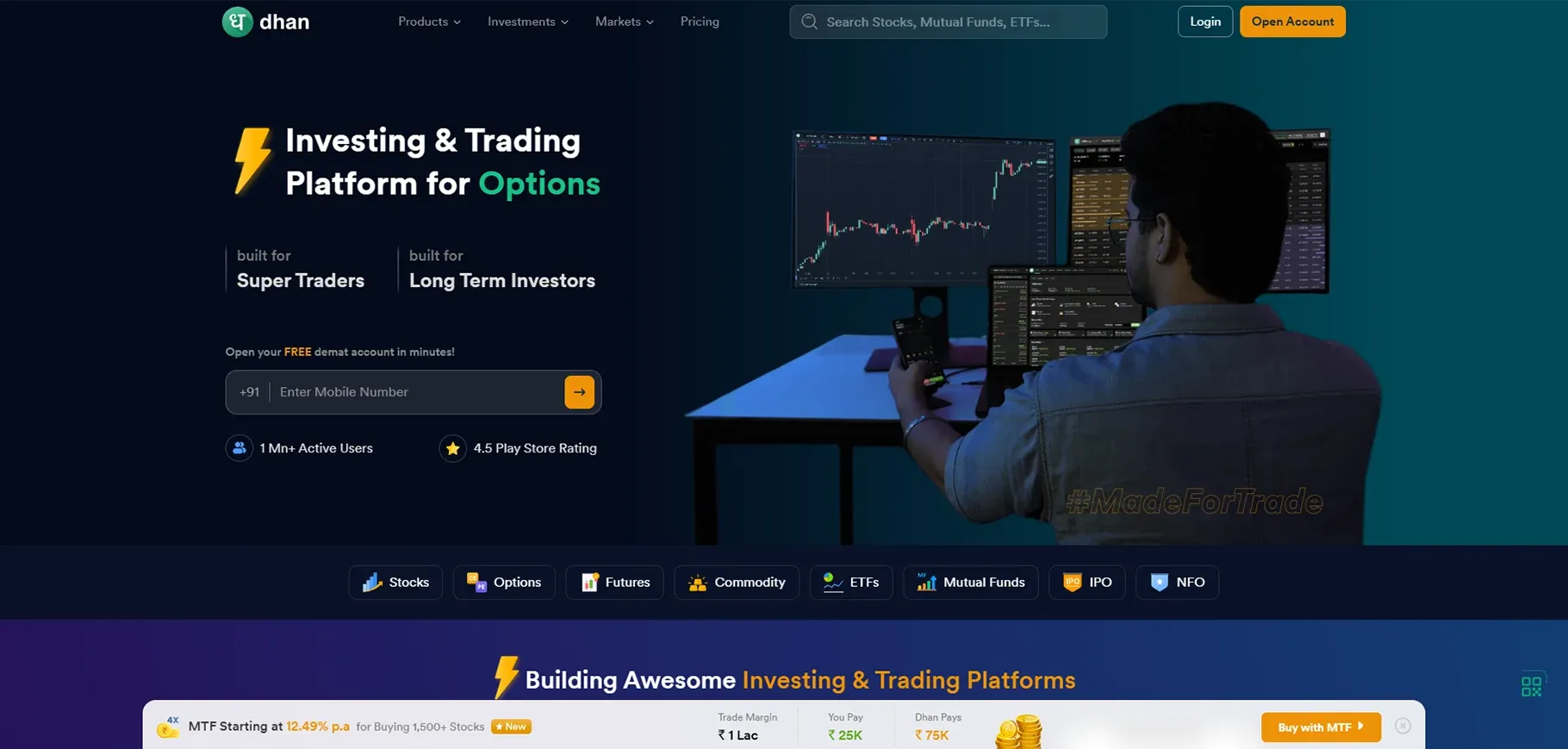
Active Clients: Over 967,000
Founded: 2021
Primary Attributes: Nominal fee of ₹20 per trade, high-end charts.
Complaints: Minimal (as it is a new platform).
Most Suitable For: Traders skilled in technology wanting a similar platform as Zerodha.
In addition to having a solid equity IPO access participation, Sharekhan has two decades of experience and a reputable research service, as the most important reasons to choose the firm. It is backed by Mirae Asset, and ESO has competitive brokerage, very good advisory and a vast range of investment products.
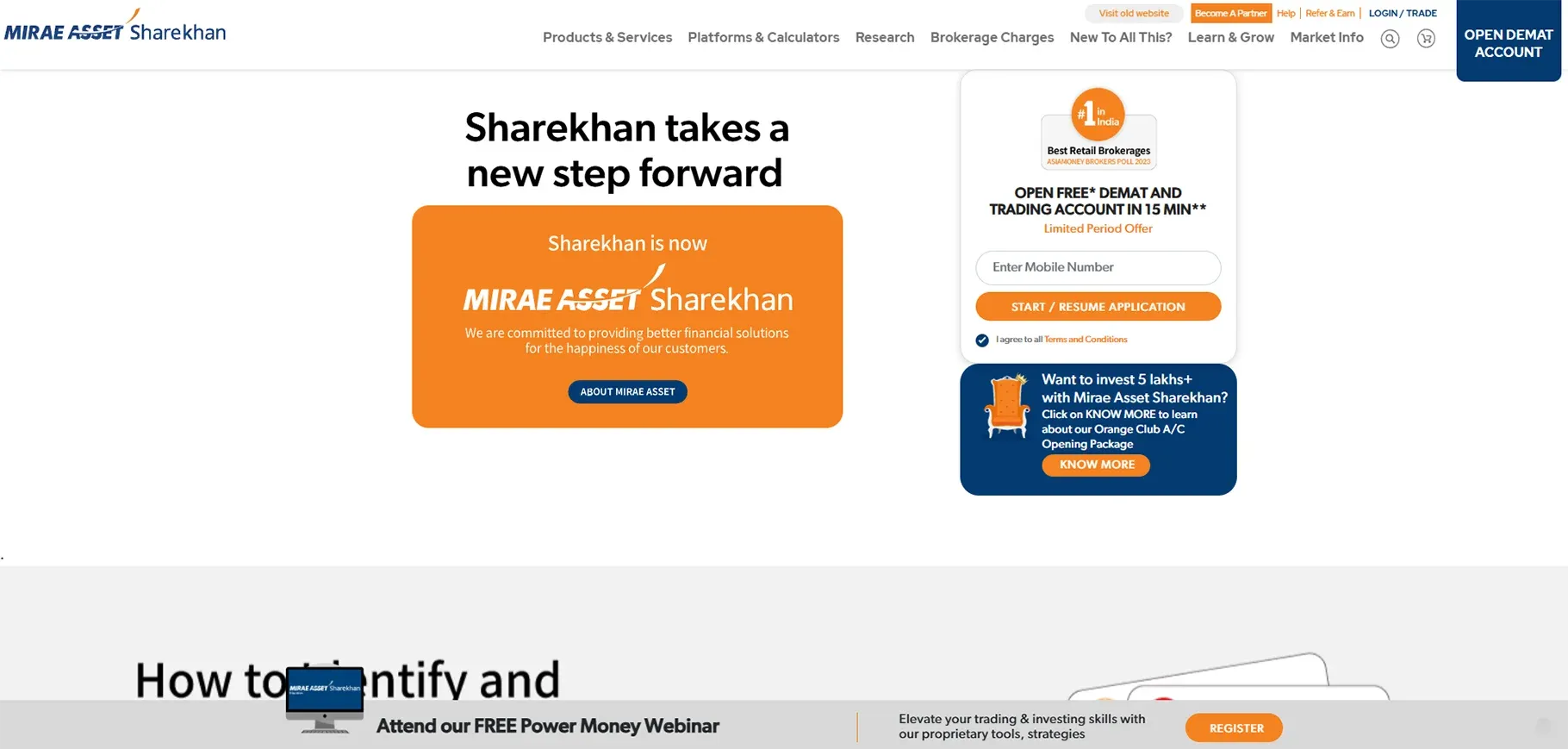
Active clients: 674,000.
Established 2000
Main characteristics: A combination of the discount and research model, with over 100 branches across India.
Problem reports: Average, but with a strong emphasis on resolution.
Ideal for: Investors who require the support of both online and offline channels.
Paytm Money is a user-friendly platform that is made for beginners, and it is also recognised for its strong mutual fund experience as well as smooth integration with Paytm Wallet. It provides no-commission direct MF plans, free account opening, and low broker charges.
The application has a clean and user-friendly interface, but the stock trading features are limited. Mainly ideal for new investors who are concentrating on mutual funds.
Active Clients: Over 662,000
Established: 2017
Key Features: No brokerage fees for the initial 10 days, then just ₹20 per trade.
Complaints: Based on the reviews and information found online, frequently, customers using Paytm money frequently report having very poor support, and the main issue is transaction-related.
Best For: Paytm users who want smooth UPI integrations.
m.Stock by Mirae Asset is a low-cost electronic broker giving the least brokerage
in the industry, along with no AMC and free account creation. The neat and trustworthy app takes care of all the basic trading requirements.
It is a perfect match for active traders who are concerned about costs, as it saves them a lot with a flat rate of ₹15, although no advanced features, research, and advisory services are provided.
Active Clients: Over 560,000
Established: 2022
Key Features: Free equity delivery, zero account opening fee.
Complaints: Insignificant (just starting up).
Best For: Investors with a limited budget and beginners.
IIFL Securities shines in the area of commodity trading, providing customised research and tools for precious metals, crude oil, and farm products. The online platform plays a part in a diversified investment strategy by providing global market news and advisory services.
Although equity brokerage and AMC are on the higher side, this is a place to go for traders wanting strong commodity knowledge and a wide-ranging portfolio creation that is not limited to just stocks.
Active Clients: More than 449,000
Established:1995
Key Features: Comprehensive services, solid IPO and mutual fund sales.
Complaints: Average, but with a specific attention to wealth clientele.
Best For: Those requiring personalised portfolio counselling.
5Paisa is a brokerage that has a perfect mix of low prices and good features, which gives it the position of being the best choice for traders who are careful about their budgets.
It has stockbroking with good prices, a low AMC, and a reasonable trading platform, supporting the trade of shares, derivatives, and the use of margin as well. Although it lacks in the area of advanced features and research, 5Paisa remains a reliable, cheap solution for investors who are looking for basic functionality with no high costs.
Active Clients: More than 4.38 Lakhs
Established: 2016
Key Features: ₹20 for each trade, tools for algorithmic trading.
Complaints: A small number, but with very helpful support.
Best For: Algorithmic and active traders will find this platform an ideal choice.
Axis Direct uses the experience that Axis Bank has gained in wealth management to provide clients with portfolios built by professional advisors, integrated with banking, insurance, loans and a comprehensive financial planning service. If you're an affluent investor, this service will be the best choice for you.
Although there is a high cost and minimum investment requirement, the Axis Direct platform provides clients with superior wealth advisory services and total asset management support to meet serious investors' needs.
Active Clients: Over 423,000
Established: Year 2009
Key Features: Security backed by a bank, research reports.
Complaints: Very few, with prioritised customer support for Axis Bank clients.
Best For: Customers of Axis Bank who want to have the service merged.
Share. Market, backed by PhonePe, brings UPI simplicity to stock investing with instant fund deposits and zero brokerage on equity delivery.
The clean, beginner-friendly app covers essential trading needs, offers free account opening and zero AMC, and leverages PhonePe’s brand trust. Ideal for beginners and PhonePe users seeking quick, hassle-free trading without advanced features.
Active Customers: 349,000+
Established: 2023
Main Features: No brokerage, UPI-friendly.
Complaints: In the year 2026, complaints are very few since it is a fresh platform.
Most Suitable For: PhonePe users desiring to have a combined finance app.
Geojit Financial Services offers strong research-backed investing with over 40 years of experience. Retail investors get access to institutional-quality company and sector reports.
While brokerage and AMC are higher than discount brokers, the platform provides good customer support and a variety of investment products. Ideal for long-term investors who value detailed research in decision-making.
Active Clients: 248,000 +
Established: 1994
Key Features: Excellent NRI services, low SIP costs.
Complaints: Very few, strong retention of clients.
Best For: NRI and SIP investors.
Fyers is a technology-first broker offering fast, reliable, and feature-rich trading platforms. With zero AMC, TradingView integration, advanced order types, and strong options analytics, it excels during high-volatility markets. Ideal for good with technology and algo traders, Fyers ensures stable performance, sophisticated tools, and a user-friendly interface, though research and customer support are limited.
Active Clients: 2.43 Lakh+
Established:2015
Key Features: Free equity delivery, advanced charting (TradingView).
Complaints: Low, with a tech-first approach.
Best For: Traders needing TradingView integration.
The main focus of Alice Blue is on algorithmic trading through its platform, along with the exceptionally good API support. The zero AMC feature, very low brokerage, backtesting, and live monitoring of the Strategy make it handy for algo traders and quants.
Though there is a subscription for advanced features and support is very limited, the platform is great for the good with technology traders who want to try out the automated trading strategies.
Active Clients: Data not specified (within top 20)
Established:2006
Key Features: ₹15/trade, white-label solutions.
Complaints: Moderate, with an increasing user base.
Best For: The Alice Blue platform is well-suited for franchise seekers and low-budget traders.
Here goes my elaborate but still quite simple explanation of the subject matter. A stockbroker is, in fact, nothing but your opening to the stock market. If you're new to investing, understanding what a stockbroker is becomes the foundation of your trading journey.
Imagine them as the third party that carries out your buy and sell orders at stock markets like NSE and BSE. Only through a brokerage can you trade on these exchanges indirectly. It is similar to desiring to take an aeroplane but requiring a ticket counter to secure your seat. The broker not only gives you that entrance but also provides a trading platform where you can place your orders.
Something that I learned through experience is a must: to always ensure that your broker is registered with SEBI (Securities and Exchange Board of India). SEBI is the regulatory body of financial markets in India, and the brokers who are SEBI registered go along and adhere to the very strict standards set by the regulatory body in money protection.
I have witnessed situations where people lost all their money just because they believed in unregulated brokers that vanished overnight. A broker being SEBI-registered signifies that they are liable, governed, and your money is relatively safer. You can check the registration status of any broker on the SEBI website before opening an account with them.
In reality, brokers make their living through various means, which most people never acknowledge. The foremost source of income is the brokerage fees that they charge on each stock transaction of the client. A few brokers apply a percentage-based fee according to the value of the trade, while others have a fixed per-trade charge.
However, that is not the end of it. The list of brokerage income sources goes on to include, among others, the monthly fees for providing a demat account, the monthly fees for holding a demat account, the interest earned from margin financing, and the transaction fees. Being aware of this, I was able to select a broker whose profit model matched my trading habits.
The Indian broking industry fundamentally divides into two categories: discount brokers and full-service brokers. Understanding the difference is crucial for making the right choice.
Discount brokers follow a simple philosophy: low-cost execution with minimal frills. They charge a flat, low brokerage (often ₹20 per trade regardless of transaction size) and don't provide advisory or research services.
Flat fee structure: Whether you trade shares worth ₹10,000 or ₹10 lakhs, you pay the same flat fee (typically ₹20 per order). This is incredibly cost-effective for large transactions.
Self-service model: You make all investment decisions independently. The broker provides the platform and execution, but no guidance.
Technology-first approach: Discount brokers invest heavily in platform development, mobile apps, and trading tools since that's their primary differentiator.
Zero or low AMC: Many discount brokers charge minimal or zero annual maintenance charges.
For active traders, the cost savings are enormous. If you place 100 trades monthly with a ₹20 flat fee versus 0.5% percentage brokerage, you could save lakhs annually. Discount brokers have democratized trading by making it accessible to everyone, regardless of capital size.
The platforms are generally modern, fast, and feature-rich because they compete on technology rather than relationship management. You get transparency in pricing with no hidden charges.
Based on my analysis, here are the top discount brokers:
Zerodha: Best overall for active traders and F&O
Groww: Best for beginners and long-term investors
Dhan: Best for options trading
Upstox: Best for high-volume traders
m.Stock: Best for budget-conscious traders
Full-service brokers take a comprehensive approach. They charge higher fees but provide research, advisory, wealth management, and personalised service.
Percentage-based brokerage: Charges are typically 0.05% to 0.50% of transaction value, which adds up quickly but includes additional services.
Research and advisory: You get access to detailed research reports, investment recommendations, and market insights from professional analysts.
Relationship managers: Dedicated managers guide you through investment decisions, help with portfolio construction, and provide personalised service.
Comprehensive services: Beyond trading, you get wealth management, financial planning, insurance, loans, and tax advisory under one roof.
For beginners or those lacking investment knowledge, the guidance is invaluable. The research reports, sector analyses, and stock recommendations help make informed decisions. High-net-worth individuals benefit from personalised wealth management and tax planning.
The integrated banking services (3-in-1 accounts) offer genuine convenience. Trust and credibility of established banking brands provide psychological comfort, especially for large investments.
Here are the leading stock brokers in India offering full service:
ICICI Securities: Best for banking integration and HNI clients
Kotak Securities: Best for wealth management
HDFC Securities: Best for HDFC Bank customers
Motilal Oswal: Best for research quality
Axis Direct: Best for portfolio management
| Feature | Discount Brokers | Full-Service Brokers |
|---|---|---|
| Brokerage | ₹0-20 flat per order | 0.05%-0.50% of transaction |
| Research | Basic or none | Comprehensive professional research |
| Advisory | None | Personalised investment advice |
| Relationship Manager | No | Yes, for HNI clients |
| Account Opening | Free or minimal | ₹500-1000 |
| AMC | ₹0-300/year | ₹400-800/year |
| Best For | Self-directed traders | Beginners & HNI investors |
| Platform Technology | Modern, feature-rich | Varies, often dated |
| Customer Support | Email/chat, basic | Phone, dedicated managers |
| Additional Services | Minimal | Wealth management, banking, insurance |
Quick Verdict: For most self-directed traders in India, Zerodha and Groww remain the top overall picks, Zerodha for active trading tools and Groww for beginner simplicity. Choose a full-service broker like ICICI Securities or Kotak Securities only if you specifically need research support or relationship management.
Which should you choose? It depends on your profile. If you're comfortable making independent decisions and trading actively, discount brokers save you significant money. If you're new to investing, have substantial capital, or value professional guidance, full-service brokers' higher costs might be justified.
In my experience, many investors start with full-service brokers to learn the ropes, then gradually transition to discount brokers as they gain confidence. There's no shame in paying for guidance when you're starting—consider it an educational investment.
My experience provided me with a conveniently structured framework for selecting the best trading company.
First of all, make sure that you know what you want before you compare brokers. Do you want to divide your money for a long period with the expectation of receiving a big financial return, or do you prefer to be an active trader who buys and sells on the very same day? Are you going to limit your investment to stocks, or are you also going to dabble in the trading of futures and options, commodities, or Forex?
In the beginning, I invested for the long term; therefore, I picked a broker that didn’t charge anything for delivery. Your objectives will lead you to the right broker.
What is your trading frequency? In case you are buying a handful of stocks every month and keeping them for some time, the cost of brokerage would not be a big issue. However, if, like I'm doing these days, you are trading several times a day, even very low per-trade commissions will amount to a substantial amount.
Discount brokers are the ones that traders with high activity levels get the most benefit from, while infrequent investors might count more on the advisory services of full-service brokers than on the savings from the lower costs.
Merely focusing on the displayed rates is not enough. It is essential to compute your true costs according to your trading habits. I came up with a spreadsheet that compared the total costs of my usual monthly trades through various brokers, and the outcome was very surprising.
The difference in the case of a person who has 20 delivery trades and 50 intraday trades monthly could be in thousands of rupees every month between the brokers.
All day long, the trading platform is going to be your place, so it should be a cosy one. I run my tests for order execution speed, chart quality and technical indicators, ease of navigation, mobile app performance, and reliability during market volatility.
Some SEBI-registered brokers offer very good desktop platforms but have bad mobile apps, or vice versa. This is important to me because I do mobile trading very often.
Sooner or later, you will require assistance, no matter if it is a technical problem or a question regarding fees. I have experienced brokers where getting support was almost impossible, and others where the problems were solved in a matter of minutes.
Before you start working with them, make sure you test their support. Ask a question via email and monitor how fast they get back to you. Confirm if they provide support through phone calls, emails, and chats.
I cannot overemphasise this: exclusively use brokers registered with SEBI. Go to the SEBI website and find the broker in their list of registered intermediaries. This single act of caution protects you from deceiving platforms.
Additionally, verify if they are part of the stock exchanges and have their registration with the depositories, such as NSDL or CDSL.
Real user feedback is very informative. I used the broker's website as just one source of information and read reviews on several other platforms as well. Take note of recurring issues with fund withdrawal delays, platform crashes, or imposition of secret charges.
All brokers have their problems, but if there are frequent complaints about major issues, it is a warning sign.
Most of the brokers provide demo trading accounts that allow the user to test the platform without putting their real money at risk, which I highly suggest as the first step. You will learn to use the interface, practice placing orders, and check if the platform matches your trading style.
To mention only a few, the brokers such as Upstox and Angel One are ones that stand out with their delightfully paper trading features for practising.
I'd like to share some points that would have helped me get a better understanding of how it all fits together.
It is important to comprehend the entire fee structure, not just the brokerage part. For example, a broker that promotes no brokerage might be receiving substantial account maintenance or transaction fees. Therefore, it is necessary to determine the total cost of ownership according to your trading style.
Nowadays, most brokerages do not charge for account opening; however, I have come across fees going from nothing up to ₹500. If you are not actively trading, then annual maintenance fees become more important. Many brokers offer relaxing AMC terms if you have a certain amount of trading activity.
The platform you are working with is the main instrument. My criteria are quick order filling, very few breakdowns or technical problems, proper charting facilities, instant market data, and a user-friendly interface.
A slow or malfunctioning platform can lead to loss of money due to missed chances or delays in execution.
Certainly, reports that are well done will make your research easier, even if you rely mostly on your own research. Certain discount brokers have started to offer research reports along with recommendations. Personally, when I am interested in carrying out an in-depth analysis of stock fundamentals, I usually make use of tools like Dhanarthi's screener to efficiently compare companies, which goes well with the services provided by my broker.
Quick and helpful support is more important than you think. I've experienced urgent problems that required immediate resolution during trading hours. Responsive brokers will help you save time, stress, and possibly even money.
In case you are a beginner trader, educational materials will be of great help. A few brokers present webinars, video tutorials, articles, and courses on trading and investing. Especially Angel One and Groww shine in this regard.
It is necessary for the traders who carry out margin trading or F&O operations to be aware of the margin requirements and interest charges. The brokers may provide different leverage multiples and impose different interest rates on margin funding.
These days, I guess I almost perform 70% of my transactions by means of the mobile apps. The application ought to have all the desktop's features, such as fast login, rapid order placement, instant notifications, and excellent charting tools.
Your money must be separated and safe. Look for signs of two-factor authentication by the broker, encryption of data transfer, and client funds being kept apart from operational funds.
Definitely, different investing styles require different arrays of features. This is what I gain from them.
A simple platform should have educational resources attached to it. Groww has a user-friendly interface and is ideal for new investors. Additionally, Angel One provides very good educational resources along with a trading platform.
If you are new to investing, you should be more concerned with learning than with paying brokerage fees. If you choose slightly more expensive brokers that will help you learn, it may be worth it in the beginning.
Speed, low costs, and advanced charting are the requirements of active traders. Zerodha and Upstox are champions in this area with flat ₹20 per trade charges, quick execution, and high-end technical analysis tools via Kite and ProWeb platforms.
These are my personal choices for performing day trades, as the speed of execution affects the profit in the volatile market.
Long-term investors are the ones who gain the most from the zero-delivery brokerage. This has been the case almost everywhere as leading discount brokers have included it among their services. Zerodha, Groww, Upstox, and Angel One are undoubtedly the best possible options for the implementation of buy-and-hold strategies.
To be able to analyse the companies before making a long-term investment, I find that websites such as Dhanarthi's screener facilitate financial statement analysis through their orderly data presentation.
The trading of options and futures necessitates the use of sophisticated instruments as well as excellent margin facilities. Among the brokers for trading derivatives, Zerodha is at the top of the list thanks to its cutting-edge Sensibull integration for options analysis. Moreover, ICICI Direct and Kotak Securities provide a wide range of F&O tools.
Understanding concepts like option Greeks becomes essential when trading derivatives. The margin requirements and the interest rates differ greatly, so if you regularly trade F&O, make sure to compare these factors carefully.
There are brokers who are really good at mutual fund investing. Groww is one such broker that has been a mutual fund platform since the very beginning and still is the best for this. On the other hand, Zerodha's Coin platform allows direct investment into mutual funds without any commissions charged.
If mutual funds are the area you are mainly interested in, then pick a broker that has a large variety of mutual funds, and there are no transaction fees for orders related to mutual funds. You can also explore our guide on the best mutual funds for SIP investment to make informed decisions about your portfolio.
NRIs have specific requirements and documentation needs. ICICI Direct, HDFC Securities, and Kotak Securities have established NRI account processes with good support for international banking.
The account opening process is slightly complex for NRIs, so dedicated support is required.
In case your capital is limited to a great extent, steer clear of those brokers who have high account maintenance fees. With no or very little maintenance fees and no minimum balance stipulations, Groww and Upstox are open for small investors.
The process of opening a trading account has become significantly simpler compared to the older days. Whether you're looking for the best demat and trading account in India or just starting out, I will guide you through the entire process and give you an overview of what to expect.
For tax identification, you'll be required to present a PAN card, for address proof and e-KYC aadhar card, a recent picture, and proof of bank account like a cancelled cheque or bank statement, plus your signature.
Remember to link your PAN to Aadhaar, as it has now become a compulsory requirement for the opening of financial accounts.
Nowadays, the majority of brokers provide completely digital account opening via e-KYC. The procedure consists of filling out an online application form, uploading the required documents, participating in a video KYC where a representative examines the documents via video call, and finally, signing the agreement electronically.
My most recent account was opened purely on my mobile device in less than 15 minutes. It was the e-KYC process that made it so much easier.
It usually takes 24 to 48 hours for the account to be activated after the e-KYC process is completed. However, if the process is done during the market hours, some brokers could activate the accounts within a few hours.
When the account is approved, login credentials and trading account details will be sent to you via email and SMS.
When executing your initial trade, it is best to start with a small amount in order to be able to better grasp the procedure. Confirm that you are acquiring the right stock, know about the different kinds of orders, such as market and limit orders, and make sure to check all fees before you give your acceptance.
I lost some money on the first trades I made because I was nervous and did not know the platform well. It's better to practice with small amounts at first and familiarize yourself with essential trading tips for beginners before committing larger capital.
Thus, its significance is indispensable concerning your cash. I am always investigating the following.
Go to the SEBI website (sebi.gov.in) and find the registered intermediaries list. Look for your broker's name. If they are not there, don't even think about opening an account with them, no matter what they say.
All registered brokers show their SEBI license and are very proud of it.
Your broker must be a depository participant of NSDL or CDSL. It indicates that the broker can manage your demat account for holding shares in an electronic format. Check this out on the official depository sites.
Investor Protection Funds are set up by stock exchanges for reimbursement of investors in the event of default by a broker. Although this measure does not guarantee total protection, it provides an extra layer of safety.
Account protection against unauthorised access is provided by security features such as two-factor authentication for logging in and transaction authorisations. After I open an account, I always activate these features right away.
When you add money, prefer direct bank transfers to third-party payment methods. Confirm that the account is indeed the broker's before your transfer of funds. Verified accounts are pale compared to those of the established brokers.
The broking industry is evolving rapidly. Here's what I can see coming down the track based on current trends.
AI is progressively utilised in stock analysis and trading ideas generation. There are some brokers who are already giving AI-based recommendations, and this practice will become even more advanced.
The movement for zero brokerage on delivery trades is expected to continue for other segments as well. Brokers are considering different ways to make money, such as through interest on deposits, payment for order flow, and value-added services.
The option of purchasing part of costly stocks will let more people get into investing. In case you are not able to buy a stock worth ₹50,000, you can invest ₹5,000 in a single share of 0.1. This facility is going to be available in India pretty soon.
Globally, social trading platforms are winning more and more over the traders, and, in fact, they allow you to follow the trades of successful traders who are conducive to profitable trading. Copy trading may be the section where these Indian brokers will be the first to introduce such features.
In the course of regulatory changes, brokers will adopt cryptocurrency and tokenised asset trading as well as traditional securities trading, thus offering a seamless platform for all investments.
The testing of voice commands for trading and market queries is currently underway. Order placement via voice assistants is likely to become the norm during driving or multitasking activities very soon.
At present, trades are settled in T+1 (a day after the trade). The trend in the industry is towards instant settlement or T+0, where the seller gets the money straight away during market hours. This will bring about a remarkable change in capital efficiency and trading flexibility for investors across all categories.
I have made most errors too. You can take some instruction from my blunders.
The most affordable broker might not necessarily be the best one. I changed my broker once in order to save five rupees on every transaction, but found myself suffering from very bad platform reliability, which cost me a lot more via missed trades and technical issues.
Take into account the overall value, not only brokerage.
These small transaction costs, demat fees, and different charges mount up. Take a close look at the whole fee schedule. When my first bill showed charges that I didn't expect, I was taken aback.
Don't ever pass over this verification. Scam sites sometimes appear to be very professional with superb websites and high-profile promises. SEBI registration is the prime safety check for you.
A defective platform is a cause of difficulties in trading, and it can result in losing money. I remained on a bad platform that was difficult to use for a long time simply because changing it seemed to be too much trouble, but the comfort of switching to a better platform was overwhelming.
You'll need support eventually. Don't realise the importance only when yoI'mtuck with an urgent issue and getting no response. Test support quality before committing.
As of 2026, Groww, Zerodha, and Angel One together account for nearly 6 in 10 active trading accounts on the NSE, making them the three most trusted names by sheer client adoption. The overall industry has seen active client numbers decline since late 2024, following SEBI's tighter F&O margin regulations, but the top three discount brokers have continued to gain share as smaller full-service brokers lose ground.
Trust in a broker is best measured through three factors: SEBI registration status, net worth reported to the exchanges, and complaint resolution history on SEBI's SCORES portal. Always cross-check these three before assuming a large client base alone means a broker is trustworthy.
This ranking is based on NSE active client (UCC) disclosures, publicly reported brokerage structures, and hands-on platform testing across order execution, mobile app performance, and customer support response time. Active client data is cross-checked monthly against NSE's official broker-wise disclosures, and this page is updated whenever a broker changes its pricing or a new NSE snapshot is released.
In India, the selection of the appropriate stockbroker relies on your trading style, investment objectives, and platform familiarity. In general, active trading is done with discount brokers such as Zerodha or Upstox due to their low costs and availability of professional tools, while beginners get more support from full-service brokers such as ICICI Direct. The zero delivery brokerage rates should be the main concern for the long-term investor.
Before making any commitment, verify the SEBI registration, try out the platforms, and compute the total costs involved. Reading user reviews and considering strong customer support can help make the decision easier. With Dhanarthi, start with a small investment, continue learning, and make informed decisions to grow your presence in the market with confidence.
Disclaimer: This article aims to provide general information about financial topics. It is not a recommendation to buy or sell any investment. For investment decisions, please consult a professional financial advisor.
Top 30 Share Brokers in India (2026): Ranked by NSE Active Clients
1. Which broker is best in India?
Groww currently leads with 1.3 crore active users, making it the largest broker in India. However, the "best" depends on your needs—Zerodha suits active traders, Angel One offers strong research, while Groww is perfect for beginners. Choose based on your trading style and budget.
2. What are the top 5 brokers in India?
The leading stock brokers in India are Groww (1.3 crore clients), Zerodha (79.5 lakh), Angel One (76.4 lakh), Upstox (27.8 lakh), and ICICI Securities (19.3 lakh). These SEBI registered brokers offer reliable platforms, low fees, and strong customer support for different investor types.
3. Which is the largest broker in India by active clients?
Groww is the largest broker in India with over 1.3 crore active clients as of 2025. It overtook Zerodha recently due to its user-friendly platform and zero delivery charges. Zerodha ranks second with 79.5 lakh clients, still leading among active traders and professionals.
4. What are the types of stock brokers in India?
There are two main types of stock brokers—discount brokers charge flat ₹20 per trade with no advisory services, while full-service brokers charge 0.05%-0.50% but provide research, wealth management, and dedicated support. Your choice depends on whether you prefer low costs or professional guidance.
5. How do I choose the best stock broker in India?
Start by defining your goal: long-term investing or active trading. Compare brokerage charges against your actual trading frequency, check platform speed and app reviews, and always verify SEBI registration on sebi.gov.in before opening an account. For beginners, prioritise ease of use and educational resources over the lowest brokerage fee.
6. What is the difference between discount and full-service brokers?
Discount brokers like Zerodha charge flat ₹20 per trade with no advisory, ideal for self-directed traders. Full-service brokers like ICICI Securities charge percentage-based fees but offer research reports, relationship managers, and wealth management services—better for beginners needing guidance and HNI clients.
7. Are all brokers in India SEBI registered?
All legitimate trading brokers in India must have SEBI registration. Before opening any account, verify the broker's registration on SEBI's official website under registered intermediaries. This protects your funds and ensures regulatory oversight. Never trade with unregistered platforms, regardless of their promises.
8. Which is the best broker to invest in US stocks from India?
For US stock investing from India, ICICI Direct, HDFC Securities, and Kotak Securities offer reliable international trading services. Among newer platforms, INDmoney and Vested Finance specialize in US markets. Check currency conversion fees, remittance charges, and platform features before choosing for international investing.
9. How many demat accounts are allowed in India?
You can open multiple demat accounts in India—there's no legal limit. Many investors maintain accounts with different brokers for specific purposes: one for long-term investing, another for active trading. However, managing multiple accounts means paying AMC for each, so consider costs before opening several.
10. What is the best demat and trading account in India?
Groww offers the best overall demat and trading account for beginners with zero delivery charges and simple interface. Zerodha remains top for active traders with advanced tools. ICICI Securities suits those wanting banking integration. Your best choice depends on trading frequency, capital size, and need for advisory.
11. Who is the biggest stock broker in India 2026?
Groww is the biggest stock broker in India in 2026 with 1.3 crore active users. It grew rapidly from a mutual fund platform to India's largest brokerage by offering free delivery trades, easy account opening, and beginner-friendly interface, surpassing traditional leaders like Zerodha.
12. Which is the largest stock broker in India 2026?
By active clients, Groww is the largest stock broker in India in 2026 with over 13 million users. Zerodha ranks second with 7.9 million clients, followed by Angel One with 7.6 million. These three dominate the list of stock brokers, together serving over 28 million Indian investors.
13. What are the top 10 demat accounts in India?
The top 10 include Groww, Zerodha, Angel One, Upstox, ICICI Direct, Kotak Securities, HDFC Securities, Motilal Oswal, SBICAP, and Dhan. All are SEBI registered brokers offering secure demat services. Discount brokers charge ₹0-300 AMC, while full-service brokers charge ₹400-800 annually with added benefits.
14. Which broker offers the lowest brokerage charges?
Alice Blue and m.Stock offer the lowest charges at ₹15 per trade. Most leading stock brokers in India like Zerodha, Upstox, Angel One, and Groww charge flat ₹20 per trade for intraday and F&O, with zero brokerage on delivery. Calculate total costs including AMC before deciding.
15. Can I change my stockbroker in India?
Yes, you can easily switch between trading brokers in India. Open an account with your new broker, then submit a DIS (Delivery Instruction Slip) to transfer shares from your old demat to the new one. The process takes 3-7 days. Many investors maintain multiple accounts for different purposes.
16. Which broker gives the best value for money for cost-conscious traders?
For traders who actively compare brokerage, account charges, and app quality before switching, Zerodha and Groww typically offer the best overall value with flat ₹20 per trade and zero delivery brokerage. m.Stock and Alice Blue undercut them slightly at ₹15 per trade but offer fewer research tools, so value depends on whether you prioritise cost or features.
17. Which broker is best for a trader switching from Zerodha for F&O?
Traders moving from Zerodha for F&O usually look at Dhan for its advanced options chain and strategy builder, or Upstox for faster order execution during high volatility. Both offer similar flat ₹20 pricing, so the switch typically comes down to platform speed and options analytics rather than cost.
Share Market
IPO
Artificial Intelligence
Semi Conductor