




Best Nifty Next 50 Index Fund India 2026
October 20, 2026



TABLE OF CONTENTS
Get AI Summary






Most investors lose money because they neglect to conduct stock market analysis, which represents the vital research step. They buy a stock because someone on YouTube said so, or because it was trending on Twitter. They wonder about the reasons their portfolio experiences continuous financial loss.
The guide provides a detailed procedure to evaluate stocks, which you can use for your investment analysis. The guide helps both beginners and experienced market participants to discover profitable stocks while maintaining their confidence. If you're just getting started, our beginner to pro guide on financial and technical analysis is a great place to begin.
The process of purchasing stock needs to be treated as a business acquisition. The same logic applies here.
Three solid reasons exist that demonstrate how stock research should be conducted.
Avoid value traps. The value of a stock does not always match its current market price. Investors need to understand that certain stocks trade at low prices because their companies possess poor business performance, high debt levels, and operate in declining sectors.
Understand actual market trends. The analysis process enables you to identify actual market trends that exist beyond the superficial market movements.
Reduce panic selling. The 10 percent drop in stock value will not lead you to panic sell when you have established your reasons for buying a stock. My experience shows that investors who conduct proper research experience less anxiety during market downturns.
The greatest analysis boils down to two major approaches in analyzing a stock, which most successful investors consider using bits and pieces from both of the approaches.
The stock market fundamental analysis process enables investors to determine a company's actual value. You assess the business through its revenue and profit, its debt and management capabilities, and its future growth opportunities. The goal is to figure out if the stock is priced fairly or not.
Technical analysis investigates price charts together with trading volumes and pattern movements. The system enables you to track short-term price changes while determining the optimal moments for entering or exiting positions.
The simple rule requires you to use fundamental analysis when your investment period lasts three to five years or longer.
When people ask me how to analyse stocks for investment, I always say the same thing: there is no shortcut, but there is a clear process.
The correct method will lead to success when you use these seven steps, which you should apply in every situation. The process provides beginners with basic steps to conduct fundamental analysis.
The first step for you should be to determine your understanding of the company's revenue generation methods. The statement appears obvious, yet most individuals fail to act on it. The investors immediately enter the market after they observe a prestigious stock. Take Asian Paints as an example.
The business operates through one basic function, which involves paint sales. The company establishes its excellent reputation through three core business advantages, which include its extensive Indian distribution network, its strong brand reputation, and its ability to set prices. Competitors cannot easily replicate that particular advantage.
Before you put money into a company, you should ask two important questions. First, how does it make money? Second, does it have something that protects it from competition? You must leave the situation if you cannot provide definite answers to both questions.
The correct stock selection process starts with an examination of the sector to which a particular stock belongs. The industry currently experiences growth, or it faces a size reduction. The tailwinds refer to the industry growth factors that will drive its expansion. The headwinds refer to the elements that will decrease the pace of industry development.
The Indian EV sector currently operates under three strong tailwinds, which include government support, increased fuel costs, and rising public understanding of electric vehicles. A company in this space may benefit simply because the tide is rising. Check out our analysis of best EV stocks in India to see this in practice.
You can access industry reports through SEBI's website, while you can examine DRHP documents of new firms and track news that pertains to specific sectors. This process functions as the main differentiator that enables intelligent long-term investors to achieve their goals.
These are rather persuasive lines; figures can never deceive when you are privy to what to do.
Focus on three key figures first:
Revenue growth: The company needs to achieve consistent yearly growth between 10% and 15% for its operations. The company requires an explanation of all sudden increases and complete decreases in its operations.
Net Profit and Margins: The concomitant growth in revenue and contraction in profit is an ulterior suicidal strategy; you expect both to be going up.
Debt-to-Equity Ratio: The best outcome occurs at a point that remains below 1.
Here is a quick reference table to guide you:
| Metric | Healthy Benchmark | Red Flag Zone |
|---|---|---|
| Revenue Growth | 10–15% YoY | Declining or erratic |
| Net Profit Margin | Above 10% | Below 5% or falling |
| Debt-to-Equity (D/E) | Below 1 | Above 2 |
| Return on Equity (ROE) | Above 15% | Below 10% |
Understanding the debt-to-equity ratio is particularly important when screening for financially healthy companies. I have personally found that using a financial statement analysis tool makes this step much faster. The platform provides a complete financial overview, which enables users to conduct efficient comparisons between different stocks.
Numbers show you what occurred. Management predicts upcoming events through its forecasts. A mediocre business with exceptional leadership will achieve better results than a great business with ineffective management. The evaluation of leaders requires three specific elements for assessment.
Promoter holding percentage: Promoters who control more than half of the company stock demonstrate their commitment to the business. Their decision-making process will be cautious because they face the largest financial risks.
Salary vs Profit ratio: The situation becomes problematic when the MD receives high compensation from a company that generates no profits.
Past governance track record: The management team has faced previous scandals and legal proceedings, and government enforcement actions. A quick Google search here goes a long way.
I've noticed that the management category is often where beginners spend the least, and it's also where the most surprises are hiding.
Knowing how to spot excellent businesses, however, does not guarantee profits; a business has to be picked from the group at a reasonable price.
The most common valuation tool is the P/E Ratio (Price-to-Earnings):
P/E Ratio = Stock Price / Earnings Per Share (EPS)
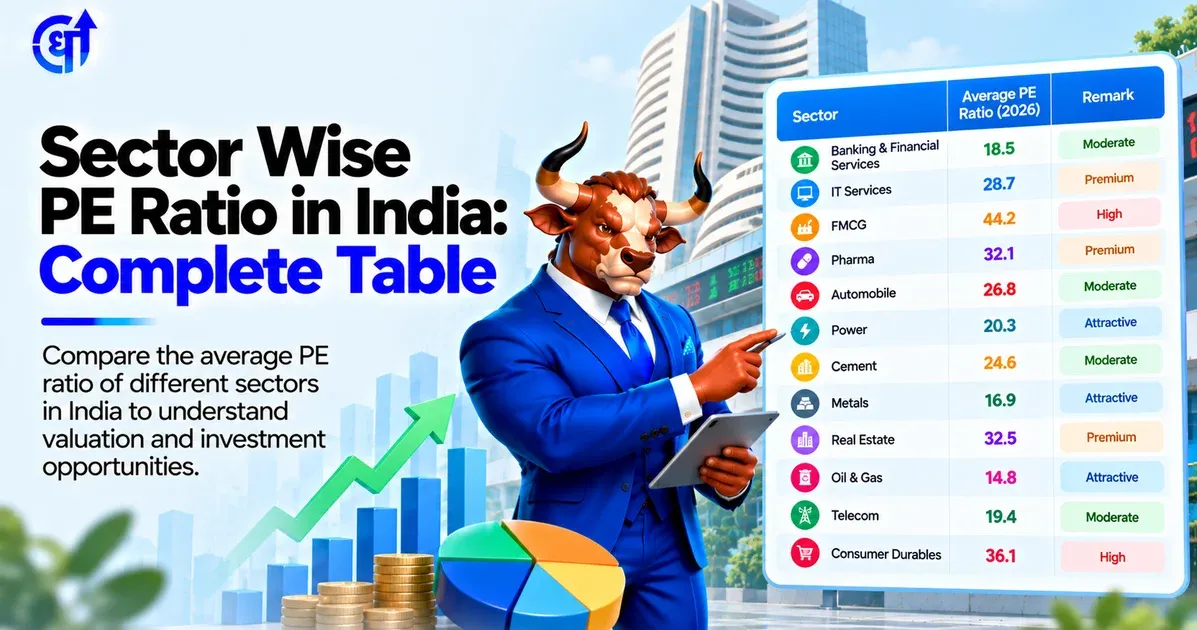
The stock market anticipates significant future expansion of the company, which shows a high P/E ratio. A low P/E ratio indicates that the stock may be undervalued or that the business is experiencing difficulties. The proper method to assess a company's P/E ratio requires you to compare it with the industry average instead of comparing it to the whole market.
EPS (Earnings Per Share) holds equal value to other financial metrics. A rising EPS over three to five years is a sign of consistent profitability. Always verify that ROE (Return on Equity) exceeds 15% because this indicates the company generates strong returns on shareholder investments.
The process that most articles omit to perform creates its most tremendous value because your completion of the task enables you to distinguish yourself from others.
Never judge a stock in isolation. Evaluate the stock together with two or three comparable companies from its industry that have the same market capitalization. Understanding the difference between large cap vs mid cap vs small cap stocks helps you compare the right peers against each other.
The two businesses show their strength through the same price comparison, which shows their performance in the market.
The Dhanarthi stock screener simplifies this process for you. The system will generate your top candidates within minutes after you apply filters for sector, market cap, P/E, and ROE.
This is your final safety check before you invest.
Some stocks contain undisclosed dangers that become detectable through in-depth examination. Watch out for:
Pledged promoter shares: If promoters have pledged a large portion of their stake as loan collateral, that is a major warning sign.
High and rising Debt-to-Equity: The company will face financial destruction because of its excessive debt, which remains unmanageable despite its current strong profit performance.
Auditor resignations: The departure of a well-respected auditor indicates that there are serious discrepancies in the financial records.
Inconsistent or negative cash flows: A company can show accounting profits but still have negative free cash flow, which means it is not actually generating real money.
Related-party transactions: The company faces danger because it conducts significant transactions with promoter-related entities, which lack proper explanation.
The red flags will not appear in the news articles. But if you look at the annual report and the screener data carefully, they are usually there.
Learning how to analyse a stock before investing is not complicated — but it does require patience and a clear process. First, you need to understand the business. Then, you should assess the industry outlook. Next, you will perform a financial analysis. Afterward, you should evaluate the integrity of the management team. The next step is to assess the company's valuation. You need to compare the results with competing companies while you continue to monitor potential dangers.
The investors who consistently make money in the stock market are not the luckiest — they are the most prepared. A platform like Dhanarthi financial report analysis makes your stock analysis fundamental journey easier, especially when you are just starting.
Create your checklist, complete each step, and let the fundamental analysis results work for your advantage.
Disclaimer: This article is for educational purposes only and should not be considered as financial or tax advice. Tax laws are subject to change, and individual circumstances vary. Please consult with a qualified chartered accountant or tax advisor for personalized guidance based on your specific situation.
1. How to analyse a stock before investing in India?
Start by understanding what the company actually does and how it makes money. Then check its financials, debt levels, management quality, and valuation. Compare it with similar companies in the same sector. This step by step fundamental analysis process helps you invest with confidence, not guesswork.
2. What is the difference between fundamental and technical analysis?
Fundamental analysis looks at a company's actual business, profits, debt, and management to find its real value. Technical analysis studies price charts and trading patterns to time entry and exit points. For long term investors, fundamental analysis of stock market data is the more reliable approach to use.
3. What is stock market analysis and why does it matter?
Stock market analysis is the process of researching a company before putting your money in. It helps you avoid bad stocks, spot real opportunities, and stay calm during market dips. Investors who skip this step are basically guessing, and that is usually why portfolios keep losing money over time.
4. How to find good stocks for long term investment in India?
Look for companies with consistent revenue growth, low debt, strong management, and a clear business advantage over competitors. Use a stock screener to filter by P/E ratio, ROE, and debt levels. Stocks that pass all these checks are usually the best candidates for long term wealth building.
5. How to select stocks for investment in India as a beginner?
Begin with businesses you already understand, like paint, banking, or FMCG. Check if the company has been growing its profits steadily over 3 to 5 years. Make sure debt is low and promoter holding is above 50 percent. These basics cover most of what you need to start investing smartly.
6. How to find if a stock is undervalued or overvalued?
Compare the stock's P/E ratio with the industry average. If it is trading significantly below the sector average without any business reason, it may be undervalued. Also check P/B ratio and free cash flow. A stock with strong fundamentals but a low price is usually a solid buying opportunity.
7. What is considered a good P/E ratio in India?
There is no universal answer since it depends on the sector. Generally, a P/E below the industry average is considered attractive. For example, banking stocks at a P/E of 8 to 12 may be reasonable, while tech stocks at the same level could actually be very cheap relative to their growth.
8. How to do fundamental analysis of stocks step by step?
First understand the business model. Then study the industry outlook. Next check revenue growth, profit margins, and debt levels. After that evaluate management quality and promoter holding. Then check valuation using P/E and ROE. Finally compare with peers and look for any red flags in the financials.
9. How to analyse share market trends before picking a stock?
Track the sector the company belongs to and check whether the industry is growing or shrinking. Look at government policies, competition, and consumer demand in that space. A company in a growing sector benefits from strong tailwinds, which often means better long term returns even without major business changes.
10. What financial ratios should I check before investing in a stock?
The most important ones are the P/E ratio for valuation, Debt to Equity ratio for financial safety, Return on Equity for profitability, and net profit margin for operational efficiency. A healthy stock typically shows ROE above 15 percent, debt below 1, and consistent profit margins year over year.
11. How to research stocks using annual reports and screeners?
Download the company's latest annual report from its website or BSE. Look at revenue trends, profit growth, and cash flow statements. Then cross check the numbers on Screener.in to compare them with peers. This combination of reading and screening is the most reliable way to research stocks properly.
12. How to choose a stock to invest in for the long term?
Pick companies with a clear business advantage that competitors cannot easily copy, consistent profit growth over 5 years, and management with a clean track record. Avoid stocks with high pledged promoter shares or rising debt. These filters alone will remove most bad stocks from your long term watchlist.
13. What are the biggest red flags to watch out for when analysing a stock?
Watch for high promoter share pledging, sudden auditor resignations, rising debt with falling profits, negative free cash flow, and unexplained related party transactions. These warning signs are usually buried in the annual report but they are there if you look carefully before putting your money in.
14. How to analyse stocks for investment without being a finance expert?
You do not need a finance degree. Just focus on a few simple things: Is the company making more money each year? Is the debt low? Is management honest? Is the stock price fair? Using a stock screener makes this even easier by showing all these numbers in one place side by side.
15. Why do most investors lose money in the stock market?
Most people buy stocks based on tips, trending news, or social media hype without doing any research. They skip the fundamental analysis of stock market basics entirely. When the stock drops, they panic and sell. Investors who do their homework before buying almost always handle market dips much better.
Share Market
IPO
Artificial Intelligence
Semi Conductor