

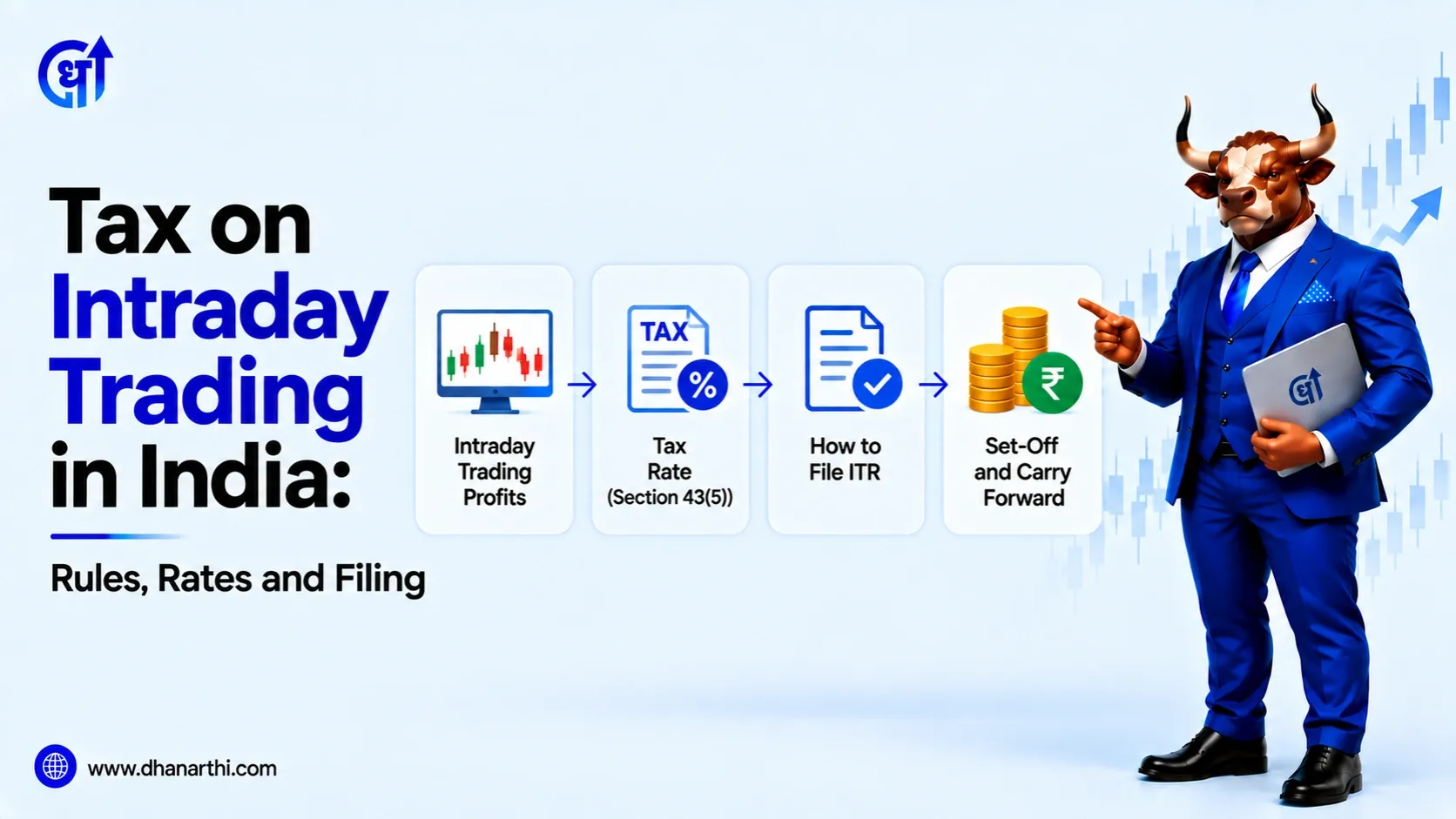

Tax on Intraday Trading in India: Rules, Rates and Filing
September 15, 2026



TABLE OF CONTENTS
Get AI Summary






People who wish to invest in India's 30 leading companies without selecting specific stocks can use a Sensex ETF as their most straightforward solution. Beginners face their main challenge because multiple AMCs provide almost identical investment products to customers.
The companies all track the same index. The companies all maintain an identical portfolio of 30 stocks. You must determine which option to select and assess whether this investment suits your requirements.
This guide will assist you in achieving your solution. We will present the complete Sensex ETF list, which shows fund distinction and assists you in assessing financial goals. Before diving in, if you are also comparing broader investment vehicles, you may find it useful to read about mutual funds vs index funds to understand where Sensex ETFs fit in the larger picture.
The presentation uses straightforward language that avoids technical terminology to deliver information that users can apply in real situations.
A Sensex ETF is an exchange-traded fund that passively tracks the S&P BSE Sensex, which serves as India's oldest stock market benchmark that includes 30 large-cap companies. The ETF maintains an identical stock weighting of 30 stocks, which it holds in the same proportion as the index. As the Sensex increases, the ETF value increases.
The fund operates through passive management, which prohibits any fund manager from executing actual buying or selling operations. The BSE Sensex ETF provides its main advantage over actively managed funds because its operational expenses remain extremely low.
The first important aspect to understand is that BSE ETFs operate on stock exchanges as tradable assets, which require investors to establish demat accounts for purchasing them. If you are new to the process of selecting a broker, reading about share brokers in India can help you get started with the right platform. The process of investing through an AMC does not permit the direct investment methods that mutual funds offer to their clients.
Most people get confused between a Sensex ETF fund and a Sensex index fund. They both track the same index, but they work quite differently. Here is a simple breakdown:
Trading: A BSE index ETF trades live on the stock exchange during market hours. An index fund is bought or sold at the end-of-day NAV only.
Demat account: You need a demat account for a BSE ETF. Index funds do not require one.
Minimum investment: ETFs can be bought for the price of one unit. Index funds often have a minimum SIP amount.
Liquidity: ETFs can be sold anytime during stock market trading hours. Index fund redemptions take 1 to 3 business days to process.
Neither is universally better. It depends on how you prefer to invest.
When I look at the BSE Sensex ETF list, what strikes me most is how similar these funds look on the surface. Same index, same 30 stocks. But the differences in cost, size, and liquidity can genuinely affect your long-term returns. Here is a comparison table of the top Sensex ETF options available in India right now.
| Fund Name | AMC | AUM (approx.) | Expense Ratio | NSE Symbol |
|---|---|---|---|---|
| SBI BSE Sensex ETF | SBI Mutual Fund | ~Rs. 1,22,409 Cr | 0.04% | SETFSNSX |
| ICICI Prudential BSE Sensex ETF | ICICI Prudential MF | ~Rs. 26,281 Cr | 0.02% | SENSEXIETF |
| UTI BSE Sensex ETF | UTI Mutual Fund | ~Rs. 544 Cr | 0.05% | SENSEXBETA |
| Nippon India ETF BSE Sensex | Nippon India MF | ~Rs. 23,641 Cr | 0.04% | SENSEXBEES |
| HDFC BSE Sensex ETF | HDFC Mutual Fund | ~Rs. 9,37,232 Cr | 0.05% | HDFCSENSEX |
| Kotak BSE Sensex ETF | Kotak Mahindra MF | Smaller AUM | 0.05% | KOTAKSENSEX |
| Axis BSE Sensex ETF | Axis Mutual Fund | Smaller AUM | 0.05% | AXISNIFTY |
| Mirae Asset BSE Sensex ETF | Mirae Asset MF | ~Rs. 28.7 Cr | 0.05% | SENSEXETF |
| DSP BSE Sensex ETF | DSP Mutual Fund | ~Rs. 8.84 Cr | 0.08% | DSPSNSX |
| Motilal Oswal BSE Sensex ETF | Motilal Oswal MF | Smaller AUM | 0.05% | MOGSENSEX |
Note: AUM and expense ratio figures are approximate and sourced from publicly available data as of early 2026. Always verify the latest figures on the respective AMC websites before investing.
Now, let me walk you through the five most widely tracked funds individually.
The SBI Sensex ETF has become the largest Sensex ETF in India because it was launched in March 2013 and currently holds the highest asset under management. The company operates with assets exceeding Rs. 1.22 lakh crore, which makes it one of the most liquid entities. Investors can monitor the SBI Sensex ETF share price through both the NSE and the BSE stock exchanges. The fund exists as the most straightforward option for beginners who seek to invest in established large funds.
This is one of the oldest Sensex ETF funds in India, launched way back in January 2003. The fund distinguishes itself through its expense ratio, which remains at 0.02%, the lowest expense ratio among all current Sensex ETFs. The ICICI Prudential BSE Sensex ETF requires attention from long-term investors who prioritize cost reduction as their main investment strategy.
The UTI Sensex ETF started trading on the NSE under the SENSEXBETA symbol when it launched in August 2015. The fund has a smaller AUM than SBI and Nippon, yet remains a valid investment choice from one of India's leading fund management companies. The investment option matches United Trust of India customers who want to combine their existing assets into a single investment vehicle.
The Nippon India Sensex ETF, which people commonly refer to as Sensex BEES ETF, became one of the first passive investment products to launch in India. With total assets under management at approximately Rs. 23,641 crore and an expense ratio of 0.04%, the fund provides investors with strong liquidity options and dependable performance tracking. Investors can easily track the fund's share price because it conducts daily trading on the NSE.
The HDFC Sensex ETF is backed by one of India's largest mutual fund houses. The HDFC Sensex ETF share price is relatively affordable at around Rs. 82 to Rs. 93 per unit, making it accessible even for smaller investors. The product has an expense ratio of 0.05%, and it carries strong brand recognition. The fund works well for investors who currently hold HDFC Mutual Fund shares. If you are also evaluating other passive options in this space, exploring the best gold ETF in India can help you understand how ETF structures compare across asset classes.
Here is something I have noticed: most investors pick the best Sensex ETF based on brand name alone. Your current decision proves to be valid, yet your smarter choice requires you to examine four particular elements. The following process will guide you through the steps.
The fund applies its annual charge as a percentage of your investment amount. Think about it this way: if you invest Rs. 1 lakh in a best Sensex ETF with an expense ratio of 0.02% versus one at 0.07%, that difference might seem tiny. But over 20 to 30 years of compounding, it adds up to a meaningful amount of money. You should select the fund with the lowest expense ratio when you compare funds that follow the same index.
People frequently overlook this particular matter, but I consider it to be highly important. The tracking error shows how closely the ETF tracks actual Sensex returns. A lower tracking error means the fund is performing well. A higher tracking error shows that some of the performance results have been lost during the process. You should always verify this number when you compare the BSE Sensex ETF list.
Larger AUM usually indicates that more investors are executing daily trades of the ETF. This results in tighter bid-ask spreads, which facilitate smoother transaction processes. The liquidity of a low-AUM ETF leads to price execution that results in worse outcomes for buyers and sellers. The SBI BSE Sensex ETF and Nippon India Sensex ETF provide investors with higher liquidity than they find in smaller, newer ETFs.
The information found here becomes highly important when you intend to purchase and sell exchange-traded fund units throughout the day. The bid-ask spread represents the distance between the current buying price and selling price at that specific time. The transaction cost decreases with every trade because the spread becomes narrower. The situation holds less importance for investors who choose to acquire assets and maintain them for extended periods. The situation requires tracking when you conduct numerous trades with high-value assets.
The Dhanarthi stock screener enables users to analyze financial data through various metrics, which show multiple ETFs and funds in one location. The system provides me with the essential information I need to compare different options through its side-by-side display, which does not require me to check each AMC website separately.
This is probably the most common question I come across. Let me give you a straight answer.
The BSE Sensex ETF tracks the S&P BSE Sensex, which has 30 of India's largest companies listed on BSE. A Nifty 50 ETF tracks the NSE Nifty 50, which covers 50 large-cap companies on NSE.
Here is a quick comparison:
Diversification: Nifty 50 holds 50 stocks versus 30 in the Sensex. Slightly more diversified.
History: The Sensex has a longer track record, going back to 1986. Nifty 50 started in 1996.
Performance: Both indices have delivered similar long-term returns. The difference in any given year is usually marginal.
Liquidity: Nifty 50 ETFs tend to have higher overall trading volumes in India.
The two options provide access to India's largest large-cap companies, which are considered to be the best in the country. Your decision about which option to select depends on your investment goals, time horizon, and comfort with either exchange.
Dhanarthi provides fundamental stock analysis tools that enable users to study the basic concepts underlying the assessment of index constituents.
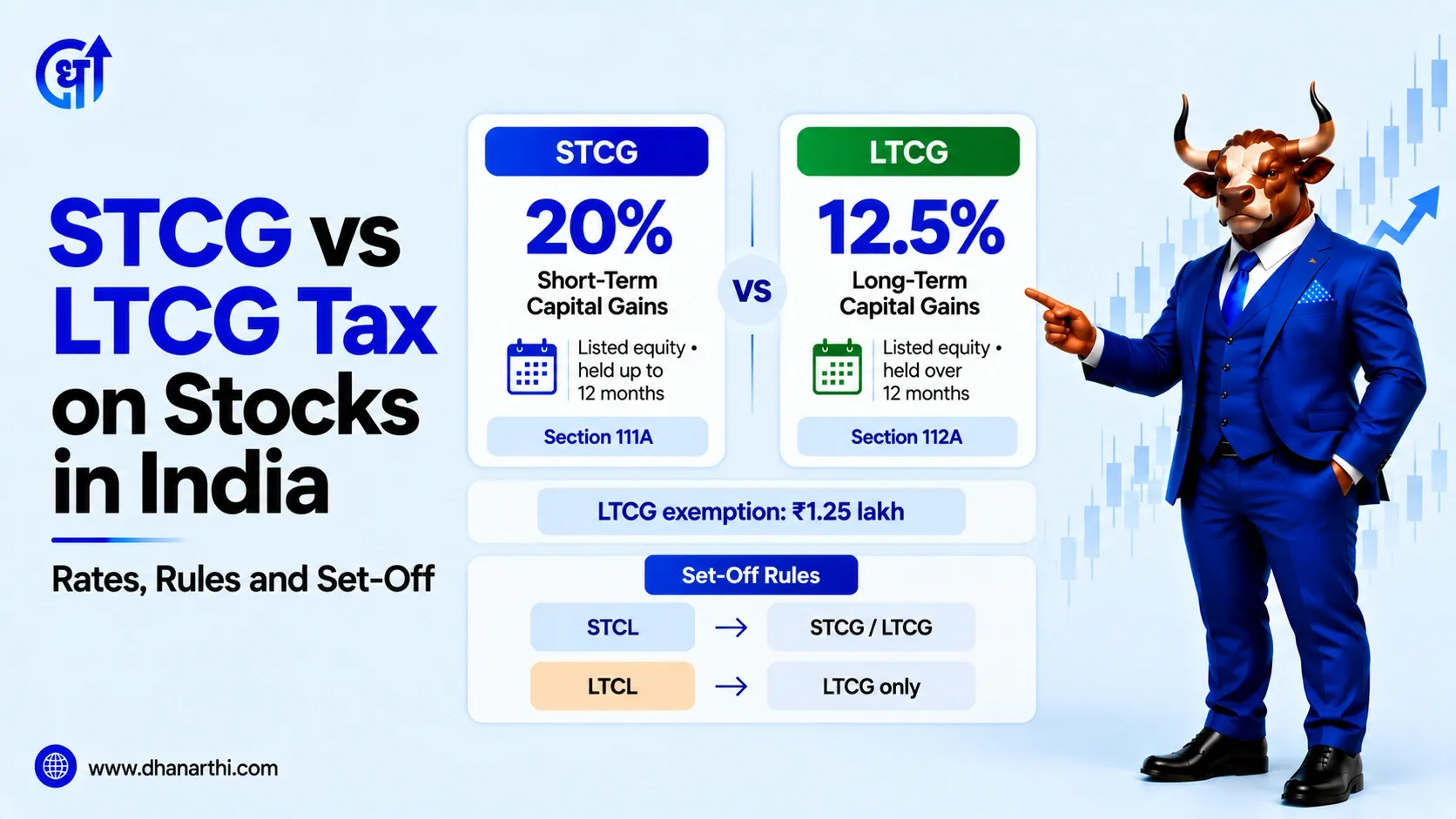
Sensex ETFs are classified as equity-based investment funds, which leads to their taxation as regular equities under Indian tax laws. The current system operates according to regulations established in the 2024 Union Budget.
Short-Term Capital Gains (STCG): If you sell your ETF units within 12 months of buying, the gains are taxed at 20%.
Long-Term Capital Gains (LTCG): If you hold for more than 12 months, gains above Rs. 1.25 lakh per financial year are taxed at 12.5%. Gains up to Rs. 1.25 lakh remain tax-free.
For a deeper understanding of how gains are calculated on market-linked instruments, the guide on capital gains tax on IPO and unlisted shares covers several relevant scenarios. Tax regulations undergo modifications during every Budget announcement. I always recommend speaking to a qualified tax advisor or chartered accountant before making investment decisions based on tax implications alone.
Lending honesty to my speech, I must state that most articles only inform readers about investment eligibility criteria. The information needs to be complete because I will show you who should invest and who should not.
This is a good fit for you if:
This is probably not the right fit if:
Your decision-making process reaches true understanding when you understand both sides of the situation. The Dhanarthi StockGuru AI Financial Research Assistant provides you with tools to examine ETF holdings and stock data until you are ready to make your investment decision.
The simplest and most affordable method for investing in India's thirty largest companies exists through the use of Sensex exchange-traded funds. This beginner-friendly investment option suits both new investors and those who wish to transition from fixed deposits to stock market investments.
Investors who aim to select a suitable Sensex ETF for their long-term objectives should examine tracking error, expense ratio, AUM, and liquidity because these aspects represent essential factors that determine performance. Base your fund selection process on the fund's actual performance data instead of relying on your existing knowledge about particular fund brands. First, compare the organizations through numerical data, and then visit the AMC websites to obtain current information before making your selection.
Do you want to research further before making your investment? The Dhanarthi Deep Scan tool provides users with complete financial analysis capabilities for all Sensex companies through its deep stock research feature. The tool helps you reach better investment results through its ability to enhance your decision-making capabilities.
1. What is a Sensex ETF and how does it work?
A Sensex ETF is a fund that tracks the S&P BSE Sensex index, which includes India's top 30 large-cap companies. It trades on the stock exchange just like a share. When the Sensex goes up, your ETF value goes up too. You need a demat account to invest in it.
2. Which is the best Sensex ETF in India for long-term investment?
The best Sensex ETF for long term depends on three things: expense ratio, tracking error, and liquidity. Right now, the ICICI Prudential BSE Sensex ETF has the lowest expense ratio at 0.02%, while the SBI BSE Sensex ETF leads in AUM and liquidity, making both strong choices for long-term investors.
3. What is the difference between a Sensex ETF and a Sensex index fund?
Both track the same 30 stocks, but they work differently. A BSE Sensex ETF trades live on the stock exchange and needs a demat account. A Sensex index fund is bought at end-of-day NAV and does not need a demat account. ETFs offer more flexibility, while index funds are simpler to start with.
4. What is the SBI Sensex ETF share price today?
The SBI Sensex ETF share price changes throughout the trading day since it trades live on NSE and BSE under the symbol SETFSNSX. You can check the latest price directly on your broker app, NSE website, or BSE website. It is one of the most actively traded BSE ETFs in India.
5. What is the expense ratio of the top Sensex ETFs in India?
Most Sensex ETFs in India have a very low expense ratio, typically between 0.02% and 0.08%. The ICICI Prudential BSE Sensex ETF charges just 0.02%, the lowest in the BSE Sensex ETF list. The SBI BSE Sensex ETF and Nippon India Sensex ETF both charge 0.04%.
6. Is the HDFC Sensex ETF a good option for beginners?
Yes, the HDFC Sensex ETF is a solid choice, especially if you already invest with HDFC Mutual Fund. The HDFC Sensex ETF share price is affordable, roughly between Rs. 82 and Rs. 93 per unit. It has a 0.05% expense ratio and is backed by one of India's most trusted fund houses.
7. How is tax calculated on Sensex ETF gains in India?
Sensex ETFs are taxed as equity funds. If you sell within 12 months, short-term capital gains are taxed at 20%. If you hold for more than 12 months, long-term gains above Rs. 1.25 lakh are taxed at 12.5%. Gains below Rs. 1.25 lakh per year remain completely tax-free.
8. What is the Nippon India ETF BSE Sensex and is it reliable?
The Nippon India Sensex ETF, also called Sensex BEES ETF, is one of the oldest passive funds in India. It has an AUM of around Rs. 23,641 crore and an expense ratio of 0.04%. It trades actively every day on NSE, which means buying and selling is easy without worrying about poor liquidity.
9. Sensex ETF vs Nifty 50 ETF: which one should I choose?
The BSE Sensex ETF tracks 30 companies on BSE. The Nifty 50 ETF tracks 50 companies on NSE, giving slightly more diversification. Long-term returns from both have been similar. If you prefer a broader spread, go with Nifty 50. If you like India's oldest benchmark index, a best Sensex ETF works just as well.
10. Who should not invest in a Sensex ETF?
A Sensex ETF is not ideal for everyone. If you do not have a demat account, if you want regular dividend income, or if you are trying to beat the market actively, this is not the right product for you. ETFs only match index returns, not outperform them. They suit patient, long-term, cost-conscious investors best.
Share Market
IPO
Artificial Intelligence
Semi Conductor