

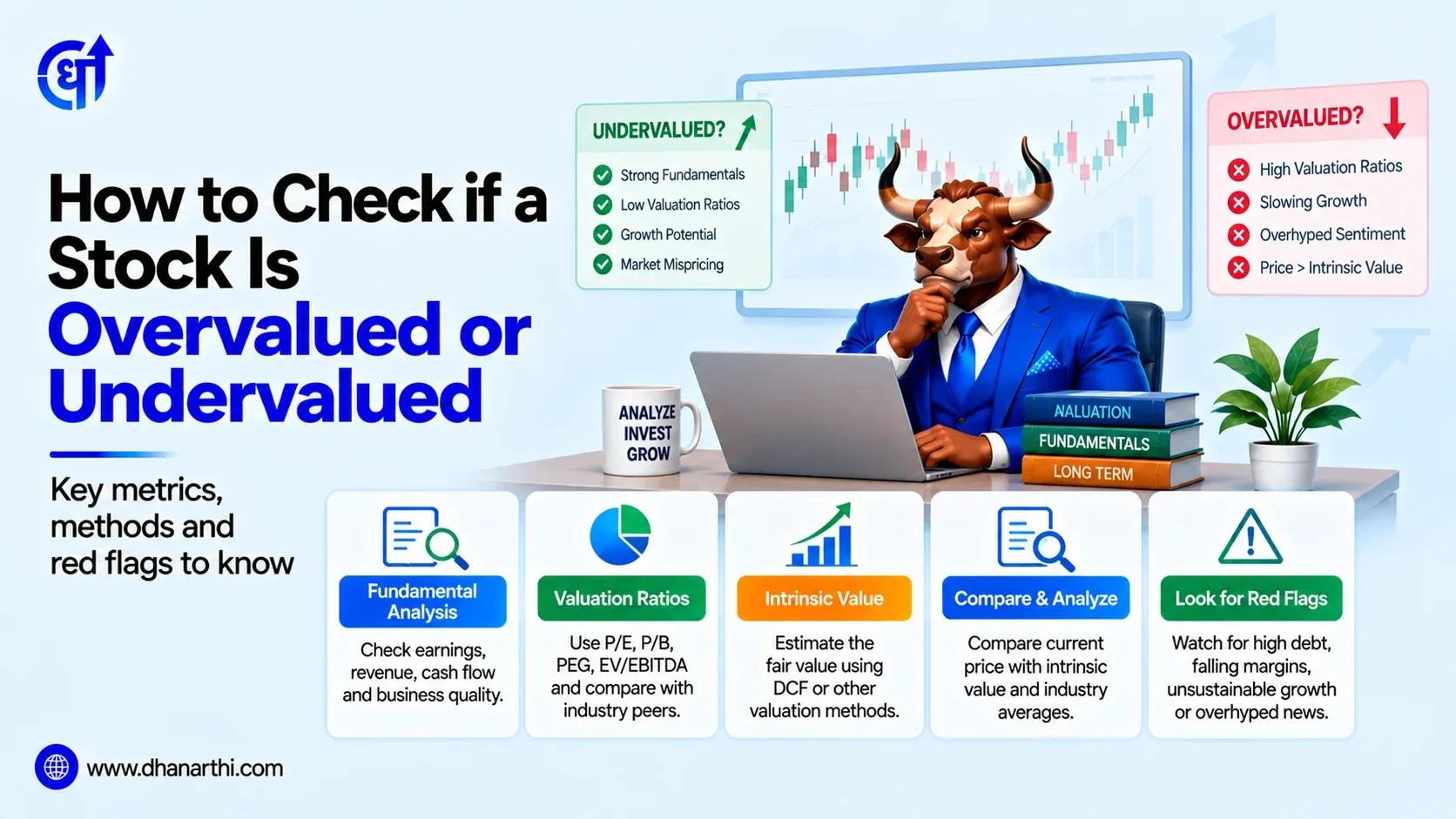

How to Check if a Stock Is Overvalued or Undervalued
September 23, 2026



TABLE OF CONTENTS
Get AI Summary





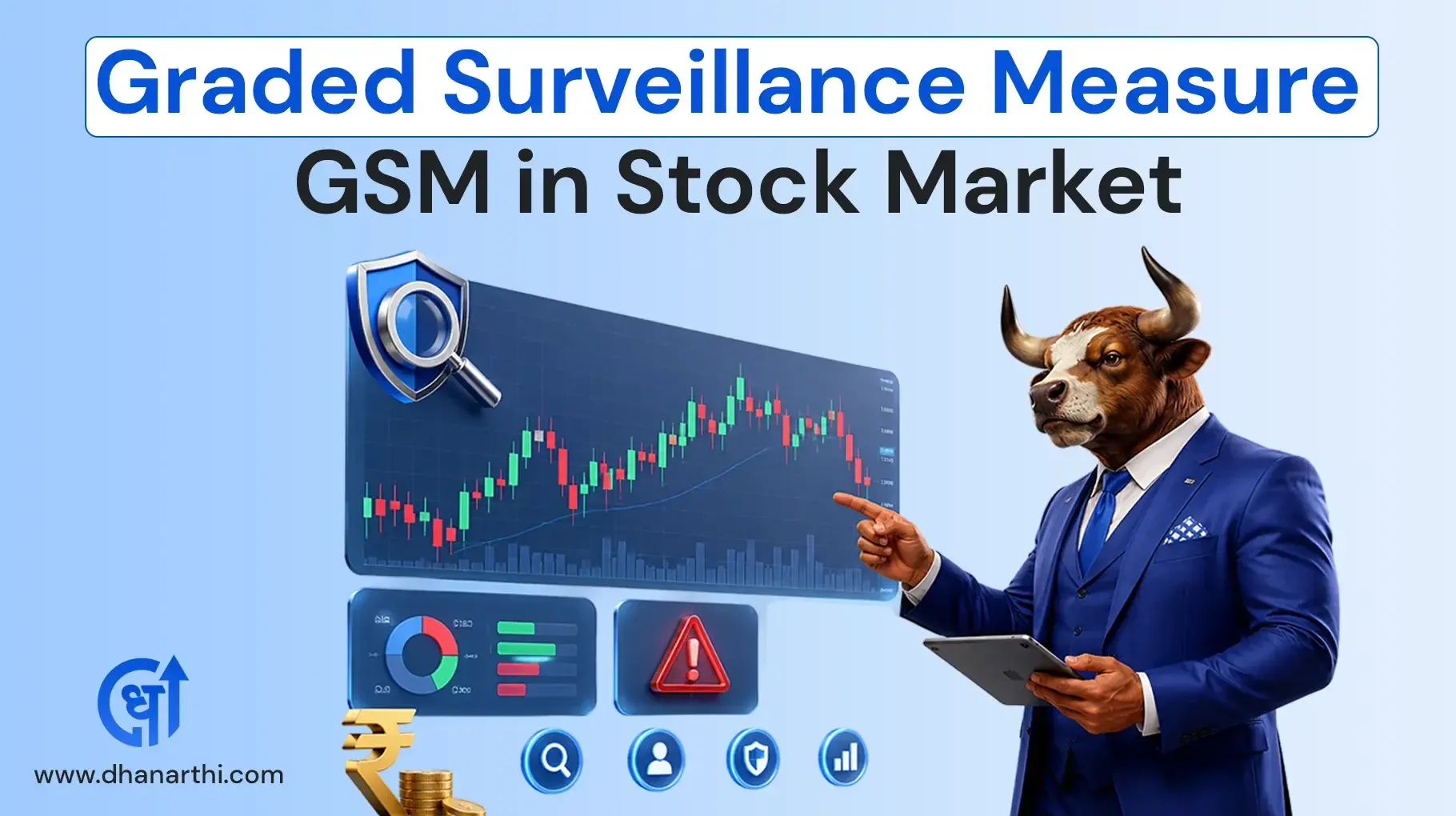
You looked at your trading app, and out of nowhere,e there was “GSM” beside a stock you own, or maybe you were about to buy. So like, what is that label actually saying? Are you supposed to panic right away? And the real question is, can you still sell it?
GSM (Graded Surveillance Measure) is a regulatory framework that SEBI, NSE and BSE jointly put into play, to mark or tag stocks where the price signals seem not aligned with their financial fundamentals.
In this piece, you’ll get a clearer view of the full form of GSM, why certain stocks end up under it, what each step actually means, how it can impact your holdings and ways to find the most recent NSE GSM list along with the BSE GSM list.
If you are new to these concepts, reading about what is SEBI is will give you helpful context before diving in.
GSM's full form is Graded Surveillance Measure.
It is a surveillance framework that SEBI rolled out with help from NSE and BSE, for keeping an eye on stocks where the market prices seem not really in line with their financial health and the underlying fundamentals, like earnings, book value, fixed assets, net worth, P/E ratio, and also market capitalisation.
Definition Box (Featured Snippet): Graded Surveillance Measure (GSM) is an SEBI-led regulatory framework, put in place together by NSE and BSE, which basically flags and then imposes trading constraints on those stocks that show unusual price changes, that don’t really match the company's financial fundamentals.
In simple terms, when a stock's price looks too high for what the company is actually worth, SEBI and the exchanges step in and put it under GSM to alert investors and control risky trading.
A stock is placed under the GSM list when its market price is not really aligned with its financial health or its trading behaviour. SEBI, along with the exchanges, does the identification and periodic scrutiny of these securities on a quarterly cadence. In this context, NSE
Low net worth: The company's share capital plus reserves is too small to support its market valuation
High P/E ratio: The price-to-earnings ratio is far above the sector benchmark without earnings growth to support it
Low market capitalisation: Small-cap and micro-cap stocks with thin fundamentals are more likely to be flagged
Weak earnings or book value: When fixed assets, earnings, or book value do not justify the stock price
Unusual or unexplained price movements over a short period
Sharp volume spikes without any company news or announcements
High levels of speculation or suspected price manipulation
Non-compliance with exchange disclosure norms
Relatable example: Imagine a company that has Rs 10 crore in net worth, but then its stock price seems to push the whole market value to around Rs 500 crore.
This kind of uneven picture really does the trick, and usually it triggers a GSM review, at least that’s how it plays out in practice.
If you want to understand how to read these numbers yourself, this guide on financial analysis definition, types and examples is a great starting point.
The word “graded” is key here. Limits are not applied all at once, as it happens in one breath. The GSM framework works in several stages, each one bringing more heightened oversight and a gradually tightening of buying and selling restrictions, and yes, it all escalates step by step.
| Stage | Key Restrictions |
|---|---|
| Stage I | 100% margin requirement, 5% daily price band |
| Stage II | Trade-to-Trade (T2T) settlement, no intraday trading, ASD applicable |
| Stage III | T2T continues, higher ASD, further tightened price band |
| Stage IV | Severely restricted trading, the highest ASD, and periodic call auction sessions only |
What is Trade-to-Trade (T2T)? In the T2T segment, every buy or sell trade must result in the actual delivery of shares. You cannot buy and sell the same stock on the same day. Read about what is intraday trading to understand how this differs from normal trading.
What is ASD? An Additional Surveillance Deposit (ASD) is applicable when securities of the company move to Stage II of the GSM framework and above. It is paid only in the form of cash and is over and above existing margins or deposits levied by the exchanges. Msei
Important tip: The higher the GSM stage, the harder it becomes to exit your position as a buyer. Always check the stage before placing any order.
This is the question most retail investors ask first, and the answer is reassuring.
You do NOT lose your shares. They remain safely in your demat account.
You CAN still sell, but under the restrictions of the current GSM stage.
At Stage II and above, you cannot sell intraday. Only delivery-based selling is allowed.
At higher stages, trading windows may be limited to specific periodic call auction sessions.
GSM does not mean the company is shutting down. It is a regulatory caution, not a closure.
ASD is only required from buyers, not from existing shareholders who want to sell.
Many retail investors sort of panic sell at a loss when they spot the GSM tag, but not really knowing they’re not required to do anything right away, like they think they are forced. Understanding how to analyse a stock before investing can help you make calmer, more informed decisions in such situations.
Both GSM and ASM are surveillance tools, introduced by SEBI and the exchanges, yet they sort of do different jobs. One is more for monitoring, the other for surveillance and checks, so their purposes aren’t the same exactly.
| Parameter | GSM | ASM |
|---|---|---|
| Full form | Graded Surveillance Measure | Additional Surveillance Measure |
| Focus | Financial fundamentals mismatch | Price/volume anomalies in trading |
| Stages | Stage I to Stage IV | Shortlist and Longlist |
| Review frequency | Quarterly | More frequent |
| ASD required | Yes (Stage II and above) | Yes |
| Introduced by | SEBI and Exchanges | SEBI and Exchanges |
In short, ASM sort of flags trading behaviour while GSM flags some fundamental mismatches A stock might show up on both lists at the same time if it hits the criteria for each one, you know , like that.
Visit nseindia.com
Go to Products in the top navigation
Click on Equities
Select Graded Surveillance Measure
Download the latest stage-wise GSM list in PDF or Excel format
Visit bseindia.com
Go to Markets in the top menu
Click on Equity
Under Regulatory Actions, select GSM
The list of all GSM stocks with their stages is available for download
Most brokers throw up a little warning popup, or they put a coloured flag in your face when you try to drop an order on a GSM stock. Just make sure you scan the screen for phrases like “GSM Stage II” or “Trading Restricted” before you go ahead and confirm any order.
If you want to screen stocks based on fundamentals before a GSM listing catches you off guard, the best stock screener at Dhanarthi Screener lets you filter and compare stocks using financial health parameters before you invest.
Liquidity trap: At higher stages, the trading window gets rather narrow and it sort of feels hard to manage. Exiting can take weeks or more; sometimes it drags on for weeks, depending on timing and the exact strategy.
ASD locks up capital: Buyers have cash blocked as ASD, which kind of reduces their capacity to put money into other places, kinda like it’s just stuck there.
Sentiment damage: Once GSM gets announced, you often see lower trading volume happening, and the price momentum kind of slips off, like the speculative traders kinda back out too early.
Stage escalation: A stock can move to a higher stage without much warning, tightening restrictions suddenly.
Speculative price collapse: Once GSM is announced, speculative buyers exit fast, causing sharp price drops.
Using a deep stock research tool like Dhanarthi Deep Scan helps you check a company's fundamentals before buying, so you avoid walking into a stock already on the edge of a GSM listing.
Before buying:
Do you know why this stock is under GSM?
Have you checked the company's financials, including the P/E ratio, debt-to-equity ratio, and book value?
Are you prepared to hold if trading gets restricted at a higher stage?
Is this stock only a small, manageable part of your portfolio?
Red flags to avoid:
Do not buy based on "it will recover" hope alone without verifying fundamentals
Do not ignore the current stage number when placing an order
Do not treat a GSM stock as a short-term trading opportunity at Stage II or above
For a more complete view of evaluating stocks before committing money, the AI Financial Research Assistant at Dhanarthi StockGuru helps you quickly assess whether a company's numbers justify its current stock price.
Graded Surveillance Measure (GSM) is SEBI’s structured way of protecting retail investors from those stocks where the price move is way beyond what the company’s financials can actually justify. It is not really a signal that a firm is shutting down or anything like that, but it is a serious regulatory warning, that should get your full attention immediately.
SEBI put GSM in place mainly so small investors don’t get pulled into risky and speculative stocks. Before you buy or sell a GSM stock, use the checklist above, then check the current stage and,review the company’s fundamentals, quite carefully too.
For more helpful reading, explore our guides on insider trading, EBI regulations and how to pick stocks in India.
1. What is a graded surveillance measure?
Graded Surveillance Measure (GSM) is a SEBI-led framework implemented by NSE and BSE to monitor stocks whose prices are not supported by their financial fundamentals. It places trading restrictions in stages, with each stage increasing the level of control to protect retail investors from speculative or manipulated stocks.
2. What is GSM and ASM?
GSM stands for Graded Surveillance Measure and focuses on stocks where prices do not match company fundamentals like earnings and net worth. ASM stands for Additional Surveillance Measure and targets unusual price or volume behaviour in trading. Both are introduced by SEBI and the exchanges but identify different types of stock risk.
3. Can I sell GSM category shares?
Yes, you can sell shares placed under GSM, but with restrictions depending on the stage. At Stage II and above, intraday selling is not allowed and only delivery-based trades are permitted. At higher stages, the selling window may be limited to specific periodic call auction sessions announced by the exchange.
4. What is GSM 4?
GSM Stage IV is the strictest level under the current framework. At this stage, trading is allowed only during specific periodic call auction sessions and the ASD requirement for buyers is at its highest. Exiting a stock at this stage can be very difficult due to extremely limited trading windows and low market participation.
5. What GSM means?
GSM means Graded Surveillance Measure. It is a regulatory warning system used by SEBI, NSE, and BSE to flag stocks that appear overpriced compared to the company's actual earnings, net worth, book value, or other fundamental indicators. It does not mean the company is bankrupt or being delisted from the exchange.
6. How long does a stock stay under GSM?
A stock stays under GSM until it meets the criteria for removal, which is reviewed quarterly by SEBI and the exchanges. If the company's stock price aligns better with its fundamentals or its trading behaviour normalises over time, it can be moved out of the GSM list during the next scheduled quarterly review cycle.
7. Does GSM mean the company is shutting down?
No, GSM does not mean the company is shutting down. It is a regulatory caution signal from SEBI. The company continues to operate normally and trading continues under the restrictions of the applicable GSM stage. GSM is placed to alert investors, not to signal bankruptcy or closure of the business in any way.
8. Who has to pay the Additional Surveillance Deposit (ASD)?
Only buyers are required to pay the ASD when purchasing a stock under GSM Stage II or above. Sellers who already hold shares in their demat account do not have to pay any ASD. The ASD must be paid entirely in cash and is held by the exchange until the stock moves out of the GSM framework after a review.
9. How do I check if a stock is under GSM?
You can check the GSM list on the NSE website under the Equities section or on the BSE website under Regulatory Actions. Most broker platforms display a warning or tag when you try to place an order on a GSM stock. The lists are updated regularly by SEBI and the exchanges based on quarterly review schedules.
10. Can a GSM stock be removed from the list?
Yes. Stocks are reviewed quarterly and those that no longer meet the GSM inclusion criteria can be moved out of the framework. If the company's financial health improves, its stock price becomes more reasonable relative to fundamentals, or it achieves full compliance with disclosure norms, the exchanges can remove it after a formal review.
Share Market
IPO
Artificial Intelligence
Semi Conductor