

Stock Red Flags Checklist: 7 Warning Signs to Check
October 5, 2026



TABLE OF CONTENTS
Get AI Summary






People buy stocks in the Indian stock market every day without knowing how to select stocks. They follow tips from friends, act on news headlines, or simply buy what is trending. The majority of them end up losing their investments.
The truth is, how to pick stocks in India is not about luck or guesswork. The process requires a precise method that relies on actual information. Investors who use fundamental analysis to make investment decisions will outperform those who pursue short-term market trends, according to my professional experience.
This guide explores eight essential measurement tools that enable you to make better stock selections with increased trustworthiness.
Before you even open a stock screener, ask yourself one question: Why are you investing?
Your goal changes everything. The need to wait through market fluctuations exists when you plan to use your investment for retirement purposes two decades from now. Your method to choose stocks for permanent investment will change based on your requirement to receive profits within two to three years.
You should evaluate your capacity to take risks through an honest assessment of your risk appetite. The stock selection method that benefits aggressive investors will not succeed with conservative investors.
You need to comprehend the company's operations before you examine any numerical data. Most beginners make this mistake because they skip this fundamental step. They jump straight to charts or share prices. Fundamental stock selection begins with learning about the business model. Ask yourself: Does this company sell something people will always need? Is there a reason customers keep coming back?
What to look for:
Understanding whether to invest in large-cap vs mid-cap vs small-cap companies also plays a key role in aligning your business analysis with your risk profile.
This is where numbers come in. And it is not as complicated as it sounds.
Quantitative analysis requires financial data examination to evaluate a company's overall financial health. The process operates like a medical examination that assesses the wellness of an organization. Here are the five metrics that matter most:
PE Ratio (Price to Earnings) PE Ratio = Market Price / Earnings Per Share. A high PE ratio indicates that the stock price has reached an excessive valuation. A low PE ratio suggests either its current value is below its actual worth or the company faces financial difficulties. You should use sector average PE ratios as your benchmark when making comparisons.
P/B Ratio (Price to Book) The P/B ratio serves as an effective evaluation tool that banks and manufacturing companies with significant physical assets can use to assess their financial worth. A P/B ratio that falls below 1.0 indicates that a company has been undervalued by the market.
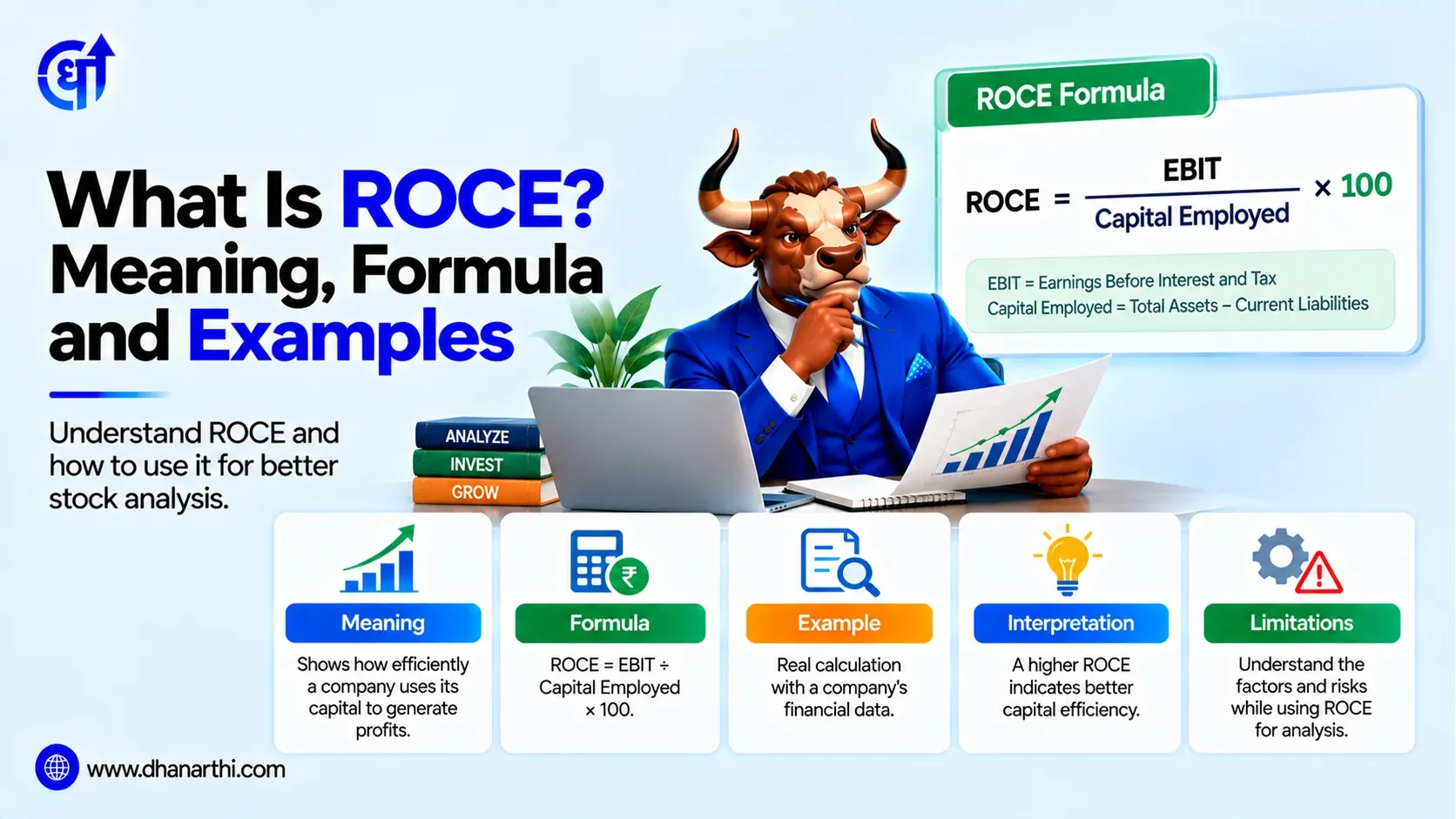
ROE and ROCE (Return on Equity / Capital Employed) These financial performance metrics show how effectively the organization utilizes its funds to generate profits. The company indicates positive performance when its return on equity exceeds 15 percent.
Debt-to-Equity Ratio Debt-to-Equity = Total Debt / Shareholders Equity. The company shows better financial performance when its debt-to-equity ratio decreases. A D/E above 1 means the company owes more than it owns, which adds risk, especially during slowdowns.
EPS Growth The EPS (Earnings Per Share) analysis needs to be done through five years of data to determine its growth pattern. Two consistent years of strong results carry more weight than one exceptional year.
A common misconception among beginner investors is that companies can report profitable financial statements while experiencing cash shortages. Your analysis of financial performance should proceed beyond net profit assessment.
Financial statement analysis requires you to study both the income statement and the cash flow statement together. A company achieves financial stability through its ability to generate Free Cash Flowthe funds remaining after all operational costs and capital spending.
What does this mean for you practically?
Look for companies where:
If a company's profit is rising but its cash flow is falling, that is a mismatch worth investigating before you invest.
The shareholding pattern should be considered as a trust assessment from the company's most knowledgeable stakeholders. Promoters demonstrate their business confidence through their decision to keep substantial shareholding instead of selling.
The stock becomes attractive to institutional investors when professional research teams with deep expertise discover value in it. Understanding what FII and DII activity signals is a key part of reading the shareholding pattern accurately.
Key things to check:
Through my experiences, the shareholding pattern is highly underestimatedit helps identify good stocks and probable investment criteria that most newcomers tend to overlook.
The numbers provide information about past events while management forecasts future events. A company depends on its employees who operate the business. Effective managers can improve the performance of a failing company. Poor management practices will lead to the downfall of a business that generates profits.
What to evaluate:
The best method to evaluate management performance requires reading their annual reports for two to three years. The evaluation process will show you whether they maintain consistent behavior throughout their operations.
The process of choosing stocks through fundamental analysis requires an essential step: determining the true value of a company. The idea here is simpleevery stock has an intrinsic value which represents its fair price based on the actual worth of the business.
Your task requires you to identify stocks that currently trade at prices that either fall below their true worth or approach their actual worth.
How to approach valuation:
Just think about it: You would not pay full price for an old bug-infested house knowing well that it is worth less; the same logic applies to stocks.
The Dhanarthi stock screener provides an efficient stock valuation comparison method, enabling users to screen stocks through multiple financial metrics, including PE, PB, and ROE.
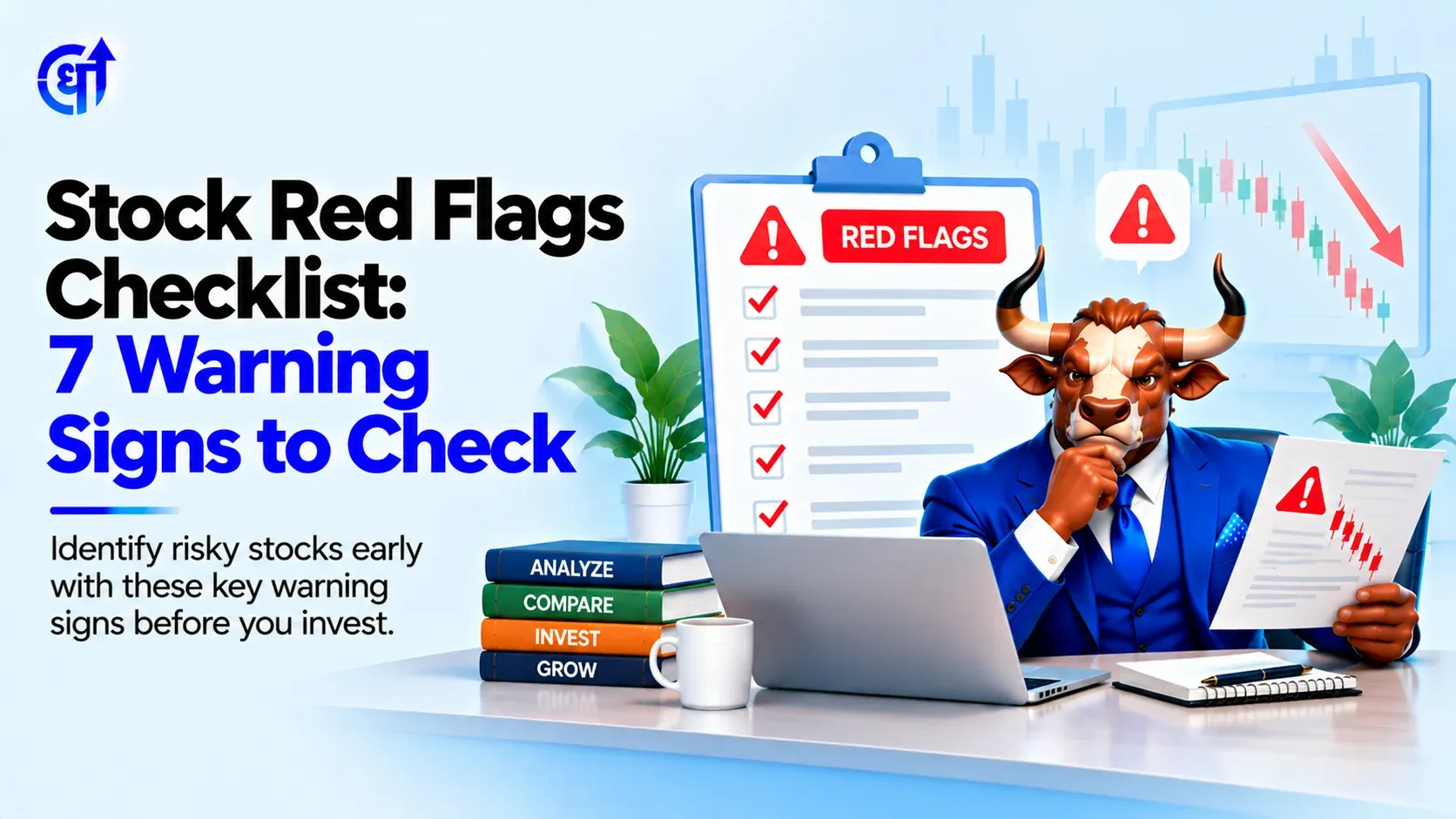
The majority of stock selection articles explain which qualities investors should seek. Only a few explain which aspects traders should avoid. For a comprehensive screening process, review our detailed checklist for red flags in stocks.
Your early warning system operates through this method. You should investigate further before investing if these red flags existeven if a stock meets all seven criteria above.
Watch out for:
Investors who can also recognize broader bullish and bearish market conditions are better positioned to time their entries around these red flags.
I have observed that investors who develop the ability to detect warning signs early become much better equipped to protect their investment portfolio from experiencing severe financial losses.
Reviewing 8 metrics manually for every stock is time-consuming. This is when a good tool saves hours.
The Dhanarthi stock screener lets you filter stocks based on PE ratio, debt levels, ROE, promoter holding, and moreall in one place. The research process becomes faster and more organized through the use of a dependable screener for investors who want to follow a fundamentals-based investment strategy.
Dhanarthi's financial report analysis tools allow users to read balance sheets and cash flow statements without needing an accounting degreemaking them accessible for beginners and experienced investors alike.
The ability to select stocks in India functions as a skill that develops through repeated practice. The 8 metrics in this guidegoals, business quality, financial health, cash flow, shareholding, management, valuation, and red flagsgive you a complete framework for making better investment decisions.
There are no shortcuts. Your personal research will determine the best stocks to buy because no other source will provide better guidance. The structured process, which relies on stock picking fundamentals, enables you to make wise investment decisions instead of taking unnecessary risks. Handle each stock individually, maintain your composure, and the results will follow.
Disclaimer: This article is for educational purposes only and should not be considered as financial or tax advice. Tax laws are subject to change, and individual circumstances vary. Please consult with a qualified chartered accountant or tax advisor for personalized guidance based on your specific situation.
1. How do I start picking stocks in India as a beginner?
Start by defining your investment goal - long-term wealth or short-term income. Then check a company's business model, financial ratios like PE and ROE, and its shareholding pattern. Using a stock screener like Dhanarthi makes this process faster and easier.
2. What is the most important metric for how to select stocks in India?
There is no single metric that does it all. But PE ratio, ROE, and debt-to-equity are the most commonly used starting points. Good stock picking fundamentals combine multiple metrics rather than relying on just one number.
3. How do I know which share is best to buy right now?
The best share to buy depends on your goal and research - not tips or trends. Check the company's financials, valuation, management quality, and shareholding pattern. A stock that looks cheap but has falling promoter holding may not be the right pick.
4. What are the key metrics for fundamental analysis stock selection?
The main metrics are PE ratio, P/B ratio, ROE, ROCE, debt-to-equity, EPS growth, and free cash flow. These help you judge if a company is financially healthy and fairly valued. Cross-checking all of them gives a more complete picture than using any one alone.
5. How do I find good stocks for long-term investment in India?
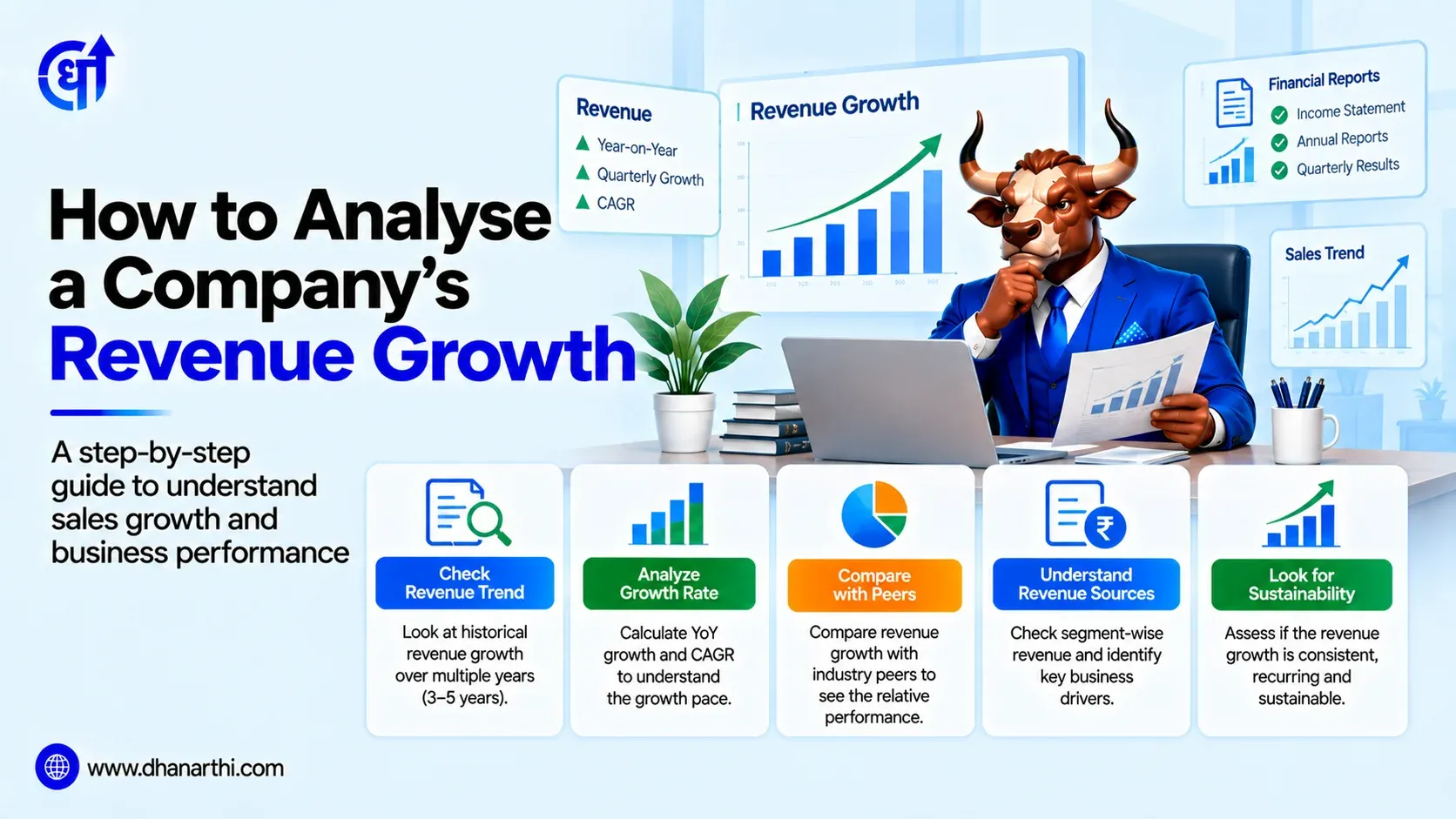
Look for companies with consistent revenue growth over five years, strong free cash flow, high promoter holding, and a clear competitive advantage. Avoid businesses you cannot explain simply. The goal is to find quality companies at a fair price and hold them patiently.
6. Is PE ratio enough to decide if a stock is worth buying?
PE ratio is a useful starting point, but it is not enough on its own. A low PE can mean undervaluation or it can signal trouble. Always compare PE with the sector average, check earnings growth, and review other ratios before making a decision.
7. What is a good ROE for picking stocks in India?
A consistent ROE above 15% is generally considered healthy. It means the company is generating good returns on the money shareholders have invested. Always check ROE over multiple years - a single high year can be misleading without consistent performance.
8. How do I check if a stock is overvalued or undervalued?
Compare the stock's current PE ratio with its historical average and sector peers. Also check its intrinsic value using simple valuation methods. If the market price is significantly higher than the estimated fair value, the stock may not offer a good margin of safety.
9. Why is the shareholding pattern important when selecting stocks?
The shareholding pattern tells you who owns the stock and what they are doing. High promoter holding with no selling signals confidence. Rising FII and DII stakes indicate institutional interest. A high pledge percentage, on the other hand, is a risk you should not ignore.
10. What red flags should I avoid when picking stocks?
Watch for consistently falling promoter holding, high pledge percentage, auditor changes, and companies where profit is rising but cash flow is falling. Also check for large unexplained related-party transactions. These signs often appear before a stock starts to fall sharply.
11. How do I evaluate management quality before investing in a stock?
Read two or three years of the company's annual reports. Check if management is consistent in what they say and what they deliver. Look at how they handled past downturns, how they allocate capital, and whether their communication is honest or full of vague promises.
12. What is free cash flow and why does it matter in stock selection?
Free cash flow is the money a company has left after paying all expenses and making investments. A company that consistently generates positive free cash flow is financially strong. If profits are rising but free cash flow is negative, that mismatch deserves a closer look before investing.
13. Are there any good tools for stock picking in India?
Yes. Tools like the Dhanarthi stock screener let you filter stocks by PE, ROE, debt levels, promoter holding, and more in one place. Dhanarthi's financial report analysis feature also helps beginners read balance sheets and cash flow statements without needing an accounting background.
14. What is the difference between qualitative and quantitative analysis in stock picking?
Quantitative analysis looks at financial numbers - ratios, margins, and growth rates. Qualitative analysis looks at softer factors - business model, competitive advantage, and management quality. Both are important. Strong numbers backed by a good business and honest management is the ideal combination.
15. How many stocks should a beginner hold in their portfolio?
Most experts suggest starting with 8 to 15 well-researched stocks across different sectors. Too few increases risk if one stock falls. Too many becomes hard to track properly. Quality over quantity matters - it is better to deeply understand 10 stocks than loosely hold 30.
Share Market
IPO
Artificial Intelligence
Semi Conductor