



Best Nifty Next 50 Index Fund India 2026
October 20, 2026



TABLE OF CONTENTS
Get AI Summary





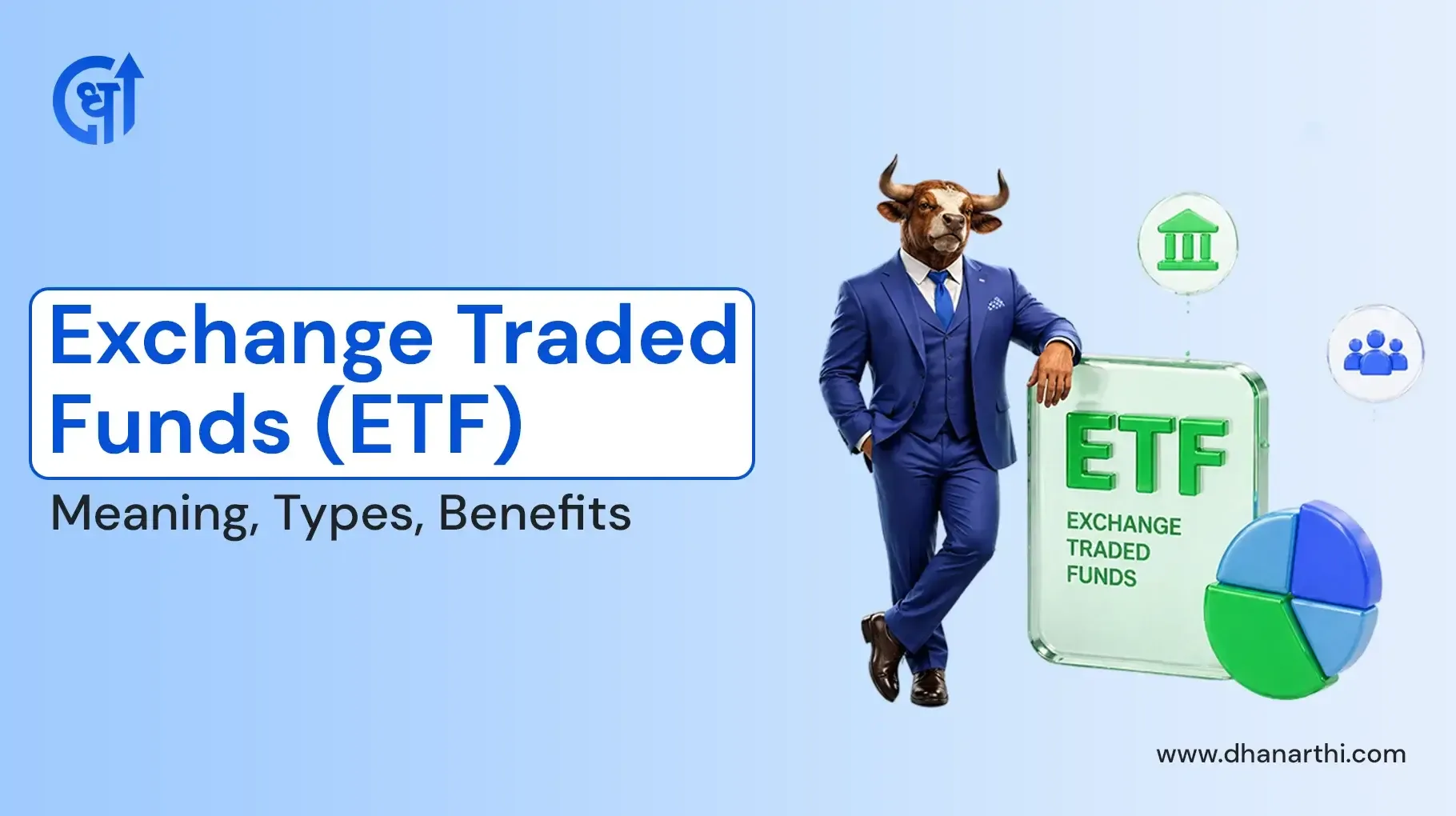
People use the phrase, "I invest in ETFs," during family gatherings, and this expression has become popular on finance-related YouTube content.
Your first response to this information probably began with the question, "What exactly does that term mean?"
The question people ask here concerns which investment category this product belongs to because they want to know whether it functions as a stock, a mutual fund, or an investment that only wealthy individuals can access. This particular problem emerges as the main obstacle that many new users face when they start their investment journey.
This guide presents information about Exchange Traded Funds by explaining their definition and operational system while describing their various types, benefits, and risks. To understand how ETFs compare with other passive vehicles before diving in, you may also want to read this detailed breakdown of mutual funds vs index funds.
The guide presents all the necessary information that users must understand to begin their Exchange Traded Funds investment journey within the Indian market.
The big picture requires explanation before you start examining the details. Understanding the basic concept will make everything else much easier to follow.
An ETF or Exchange Traded Fund functions as a security combination that includes stocks, bonds, and gold that investors can trade through stock exchanges just like they would trade individual shares. The restaurant serves thali meals as complete dining packages for customers who want everything.
Instead of ordering each dish separately, you get a balanced plate in one go. One ETF provides investors with access to multiple stocks because it contains between 50 and 100 different stocks.
ETF = A basket of securities + Traded on a stock exchange + Tracks a benchmark index.
Passively invites your ETF from the index they follow, be it Nifty 50 or Sensex; so whenever the index rises, your ETF rises: it is that simple.
The complete name of the abbreviation ETF is Exchange Traded Fund. The initial exchange-traded fund was launched in the United States in 1993. The Nifty BeES ETF launched by Benchmark Mutual Fund in 2001 marks the introduction of India's first exchange-traded fund. The exchange-traded fund market in India has expanded significantly since that time because investors now have access to hundreds of different funds that cover various investment categories.
(Insert image: Timeline of ETF history in India) ALT text: "History of ETF investment in India from 2001 to 2025"
The operational process of an ETF becomes clear now that you understand its definition. The mechanism is simpler than it sounds.
Asset Management Companies (AMCs) create Exchange Traded Funds (ETFs). The AMC purchases a collection of securities that replicate a benchmark index such as the Nifty 50. The special investors known as Authorized Participants (APs) create and redeem ETF units by handling large blocks. The process ensures that ETF prices maintain continuous alignment with their actual market value.
The stock exchange provides live trading for an exchange-traded fund (ETF), which operates throughout market hours. This means its price keeps changing minute by minute, just like a stock. If you are unfamiliar with how trading hours work in India, this guide on stock market timings in India is a helpful starting point.
This is a concept most beginners miss, so let me explain it clearly.
Ideally, these two should be very close. If the market price moves too far from the NAV, the Authorized Participants step in to correct it. This is called the ETF pricing mechanism, and it is what keeps ETFs fairly valued.
Every ETF tracks a benchmark. The Nifty 50 index ETF, for example, holds the same 50 stocks as the Nifty 50 index, in the same proportion. The fund exists to replicate the index through its operations instead of trying to achieve better results than the index. This investment method, which creates a passive investment style, serves as the basis for ETF operations.
The expense ratio of ETFs is very low because no active fund manager is trying to pick stocks. The main benefit of ETF investment lies in its ability to reduce costs for investors.
(Insert image: How ETF works diagram) ALT text: "How ETF works step by step in the stock market in India."
The various types of ETFs create distinct differences between them. There are several types of ETFs in India that investors can use to achieve different investment objectives. The main ones exist in two different categories, which I will proceed to explain.
Here is a quick overview:
| ETF Type | What It Tracks | Indian Example |
|---|---|---|
| Equity ETF | Stock indices | Nippon India Nifty 50 ETF |
| Gold ETF | Physical gold price | SBI Gold ETF |
| Debt ETF | Government bonds | Bharat Bond ETF |
| Sectoral ETF | Specific sectors (IT, Banking) | Mirae Asset NYSE FANG+ ETF |
| International ETF | Foreign markets | Motilal Oswal NASDAQ 100 ETF |
Let me give you a quick description of each:
Equity ETF: The Nifty 50 and Sensex stock indices track the performance of the stock market index. The market provides the best opportunity for investors to build long-term wealth through equity investments in India. The system provides excellent portfolio planning tools to help new investors who want to build diverse investment portfolios. To understand how different market segments perform, this comparison of large cap vs mid cap vs small cap stocks is worth reading.
Gold ETF: The system monitors the market value of actual gold bullion. The investment solution provides an intelligent method to invest in gold without the need for physical storage. If you want to explore this category further, check out this guide on the best Gold ETFs in India. This ETF stands as one of the most preferred investment choices for conservative investors in India.
Debt ETF: The investment involves purchasing bonds, which are issued by governments and corporations. The investment provides less risk than equity investments, which makes it appropriate for investors who seek dependable returns. The Bharat Bond ETF serves as a popular investment vehicle.
Sectoral ETF: The study concentrates on one specific industry sector which includes banking and IT and pharmaceutical fields. The investment carries a higher reward potential, along with increased risk from its concentrated exposure to particular sectors. Investors interested in this space may find the overview of best IT sector stocks in India useful for context.
International ETF: Indian investors should invest their money into international markets, which include the US NASDAQ. The practice provides benefits for asset distribution throughout different regions.
Each type suits a different investor goal. The right one for you depends on your risk appetite and what you are trying to achieve financially.
ETFs have gained popularity because of their actual benefits to investors. I will explain the main advantages that Indian investors receive from exchange-traded funds.
Low Cost: The expense ratio of ETFs costs less than the management fees that active mutual funds charge. The expense ratio for mutual funds ranges from 1 percent to 2.5 percent, while exchange-traded funds charge between 0.05 percent and 0.5 percent. The savings from this expense difference grow into significant amounts after multiple years.
Diversification: One ETF allows you to invest in multiple securities, which range from dozens to hundreds of stocks. This investment method enables you to manage your risk in an effective manner. It serves as one of the most effective methods for beginners to create diversified investment portfolios.
Real-Time Trading: Investors can trade ETFs throughout the market day because their trading capabilities match those of stocks. The ability to trade ETFs at any time during the day provides investors with an edge over traditional mutual funds, which permit redemption only at the daily net asset value.
Transparency: ETFs provide information about their complete holdings to the public every day. You always know exactly what is inside your fund. The fund content remains hidden until it is revealed to you.
Tax Efficiency: The tax efficiency of ETFs frequently exceeds that of mutual funds. For a deeper understanding of tax on ETFs in India, check out this dedicated guide on capital gains tax for IPO and unlisted shares, which covers Financial Report Analysis and tax planning for investors.
Your investment research needs to assess all investment risks because intelligent investors will study all potential risks before they start investing. The same fundamental investment risks that exist for all investments also apply to exchange-traded funds. The following list provides essential information about exchange-traded fund investment risks, which you must understand.
Market Risk: Most exchange-traded funds (ETFs) use index tracking, which results in their decline during market downturns. Your investment protection system lacks an active manager who safeguards your assets during market downturns. A 20% drop in the Nifty 50 causes your Nifty 50 ETF to drop approximately 20%. Understanding bullish and bearish market conditions can help you mentally prepare for these swings.
Tracking Error: An ETF is supposed to replicate its benchmark perfectly. Real-world operations create a tiny gap between actual performance and expected results, which results in tracking error. A higher tracking error means the ETF is not doing its job well. These details require your review before you proceed with your investment plans.
Liquidity Risk: The liquidity of different exchange-traded funds (ETFs) varies among them. Nifty 50 index exchange-traded funds (ETFs) become highly liquid because of their heavy trading volume, which enables easy transactions. Sector-specific and international exchange-traded funds experience short-term trading volume, which creates challenges for quick selling.
No Outperformance: Since exchange-traded funds exist as passive investment vehicles, they cannot outperform market performance. Active stock research through fundamental analysis and stock selection generates better returns, which you can achieve through platforms that support fundamental analysis vs technical analysis of individual stocks.
The reassuring truth is that for most long-term investors, the simplicity and low-cost investing approach of ETFs more than makes up for these limitations.
This is the question I get asked the most. "Are ETFs better than mutual funds?" The honest answer is: it depends on your style. Let me show you a simple comparison.
| Feature | ETF | Mutual Fund |
|---|---|---|
| Trading | Stock exchange, real-time | Once a day at NAV |
| Minimum Investment | 1 unit (around Rs. 50 to Rs. 500) | Rs. 500 via SIP |
| Management Type | Passive (mostly) | Active or Passive |
| Expense Ratio | Lower (0.05% to 0.5%) | Higher (0.5% to 2.5%) |
| Demat Account | Required | Not required |
The demat account provides you with more control and lower expenses, so ETFs will serve you well. If you want to invest through SIPs without market price concerns, then reading about the best mutual funds for SIP investment plans can help you decide.
The two options do not have one choice that stands as the better option. Intelligent financial planning in India can use both approaches as complementary tools.
Now, let us get practical. Here is the ETF investment process for beginners, broken down into simple steps.
Step 1: Open a Demat and Trading Account The establishment of a demat account stands as the essential requirement that makes ETF investing possible. If you are choosing a broker for the first time, this guide on share brokers in India can help you compare your options.
Step 2: Complete Your KYC You need to submit your PAN card together with your Aadhaar details so that eKYC verification can take place. The process requires 10 to 15 minutes because it operates through a complete paperless system.
Step 3: Search for Your ETF After your account becomes active, you can find the ETF by searching its name or ticker symbol. The ticker symbol "NIFTYBEES" represents the popular Nippon India Nifty 50 ETF.
Step 4: Place a Buy Order The process of buying an ETF requires the same steps that you follow when buying a stock. You need to enter your desired quantity and then verify the current market price before proceeding to order. The process is now complete.
Step 5: Monitor Your Investment You need to check your ETF's net asset value, together with its market price and total return, at regular intervals. You should avoid daily checks because ETFs work best for investors who practice long-term investment with patience.
You can start with as little as Rs. 50 to Rs. 500, depending on the unit price of the ETF you choose.
If you want to research which ETFs suit your portfolio before investing, you can use the Dhanarthi stock screener, which is considered one of the best stock screener tools for Indian investors. The Dhanarthi stock screener lets you filter and compare funds and stocks with ease.
(Insert image: Screenshot of ETF buying process on a trading app) ALT text: "How to invest in ETF India step by step on the trading platform."
Exchange-traded funds are one of the most practical and beginner-friendly tools available in the Indian investment landscape today. The service provides investors with three benefits because they can access low-cost investment options, together with extensive portfolio protection and real-time trading capabilities, and complete visibility of their investment activities.
First-time investors who want to build a passive investment base should evaluate India-based ETFs as their main investment option. You need to identify your purchased item and select an appropriate ETF type for your investment objective, which requires you to remain patient during your investment process.
Begin your journey with small steps that you should maintain consistently, because passive investing will generate long-term results for you. Dhanarthi provides Indian investors with stock analysis tools and investment comparison features to help them navigate their investment decisions more efficiently.
1. What is an ETF in simple terms?
An ETF, or Exchange Traded Fund, is a basket of securities like stocks, bonds, or gold that you can buy and sell on a stock exchange just like a share. It usually tracks an index like Nifty 50 and gives you instant diversification at a very low cost.
2. How does an ETF work in the stock market?
An ETF works by pooling money to buy securities that match a benchmark index. It trades live on the stock exchange throughout the day, so its price keeps changing like a stock. Special investors called Authorized Participants help keep the ETF price close to its actual NAV value.
3. What are the types of ETFs available in India?
In India, the main types of ETFs are equity ETFs, gold ETFs, debt ETFs, sectoral ETFs, and international ETFs. Each type tracks a different asset class. For example, a Nifty 50 equity ETF tracks stocks, while a gold ETF tracks physical gold prices.
4. Is ETF better than a mutual fund for beginners?
Both have their advantages. ETFs have lower expense ratios and can be traded anytime during market hours. Mutual funds allow SIP investments without a demat account. For beginners comfortable with online trading, ETFs are a very cost-effective and flexible starting option.
5. Do you need a demat account to invest in ETFs in India?
Yes, a demat and trading account is mandatory to invest in ETFs in India. Since ETFs trade on the stock exchange like regular shares, you cannot buy them without one. You can open a free demat account with brokers like Zerodha, Groww, or Angel One.
6. What is the minimum investment in ETF India?
You can start investing in ETFs with just 1 unit, which can cost anywhere between Rs. 50 and Rs. 500 depending on the ETF. This makes ETF investment very affordable for beginners who want to start small and gradually build their portfolio over time.
7. What is tracking error in an ETF?
Tracking error is the difference between how an ETF performs and how its benchmark index actually performs. A lower tracking error means the ETF is closely following its index. Always check this before investing, as a high tracking error can quietly reduce your actual returns.
8. Are ETFs safe for long-term investment in India?
ETFs are generally considered safe for long-term investing, especially broad index ETFs like Nifty 50 or Sensex. However, like any market-linked investment, they carry market risk. Sectoral and international ETFs carry higher risk. For patient long-term investors, equity ETFs have historically delivered solid returns.
9. What is the difference between NAV and market price in an ETF?
NAV is the actual value of all securities held inside the ETF divided by total units. Market price is what the ETF is trading at on the stock exchange right now. Ideally, both stay very close. Authorized Participants step in automatically when the gap becomes too wide.
10. Can a beginner invest in ETFs in India without any stock market knowledge?
Yes, beginners can absolutely invest in ETFs even with limited stock market knowledge. Index ETFs are simple to understand since they just follow a market index. Opening a demat account, searching for your ETF, and placing a buy order is a straightforward process that takes very little time.
Share Market
IPO
Artificial Intelligence
Semi Conductor